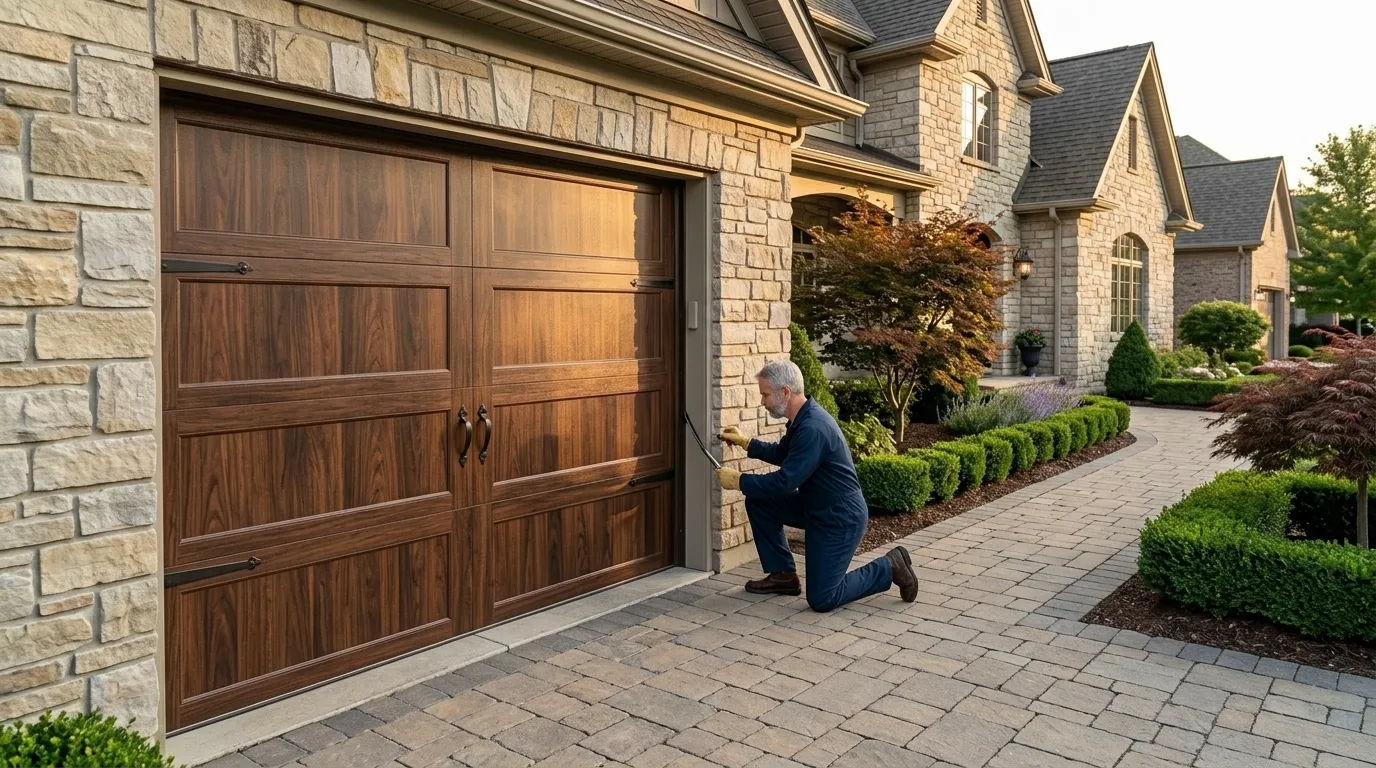
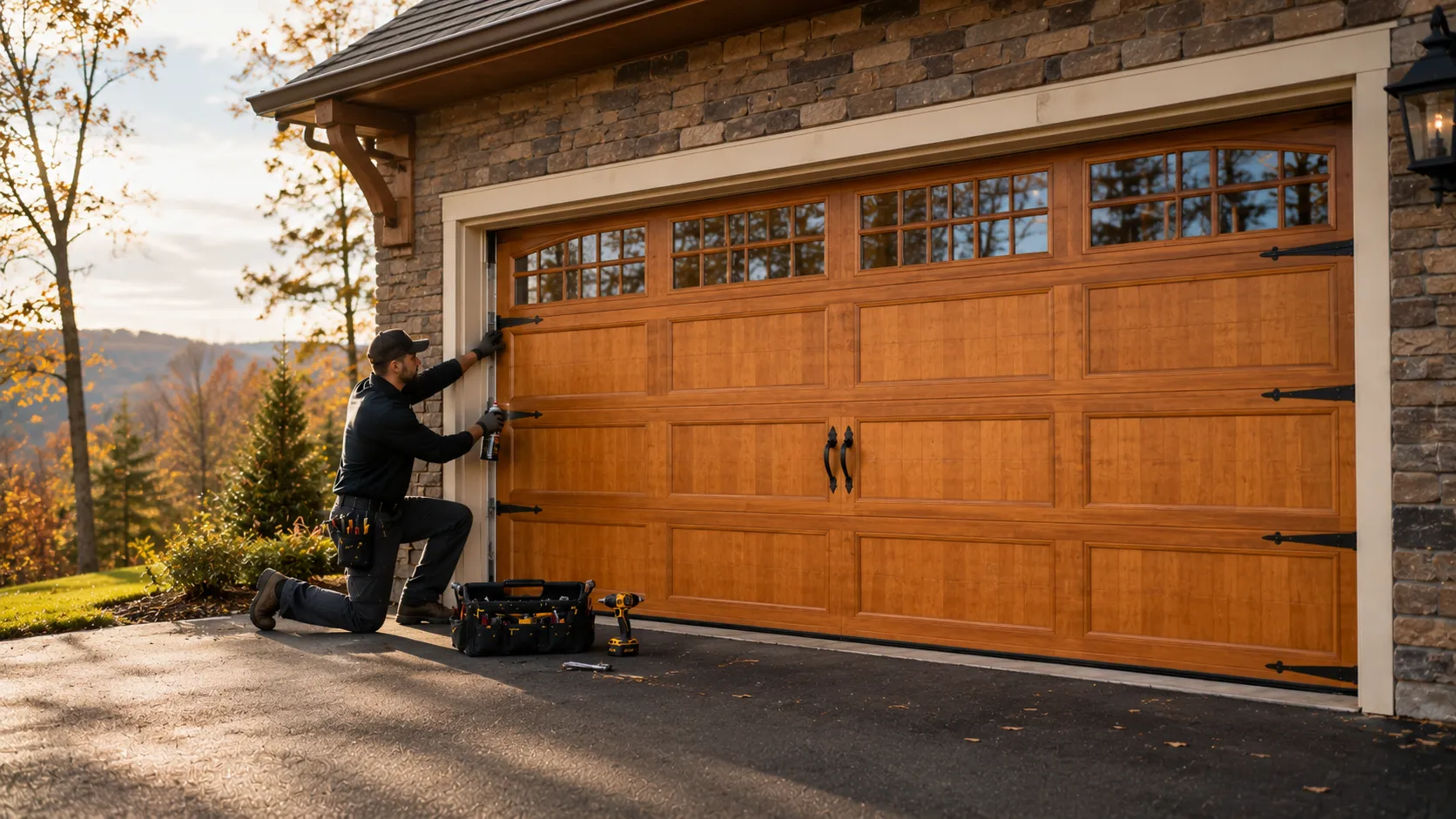
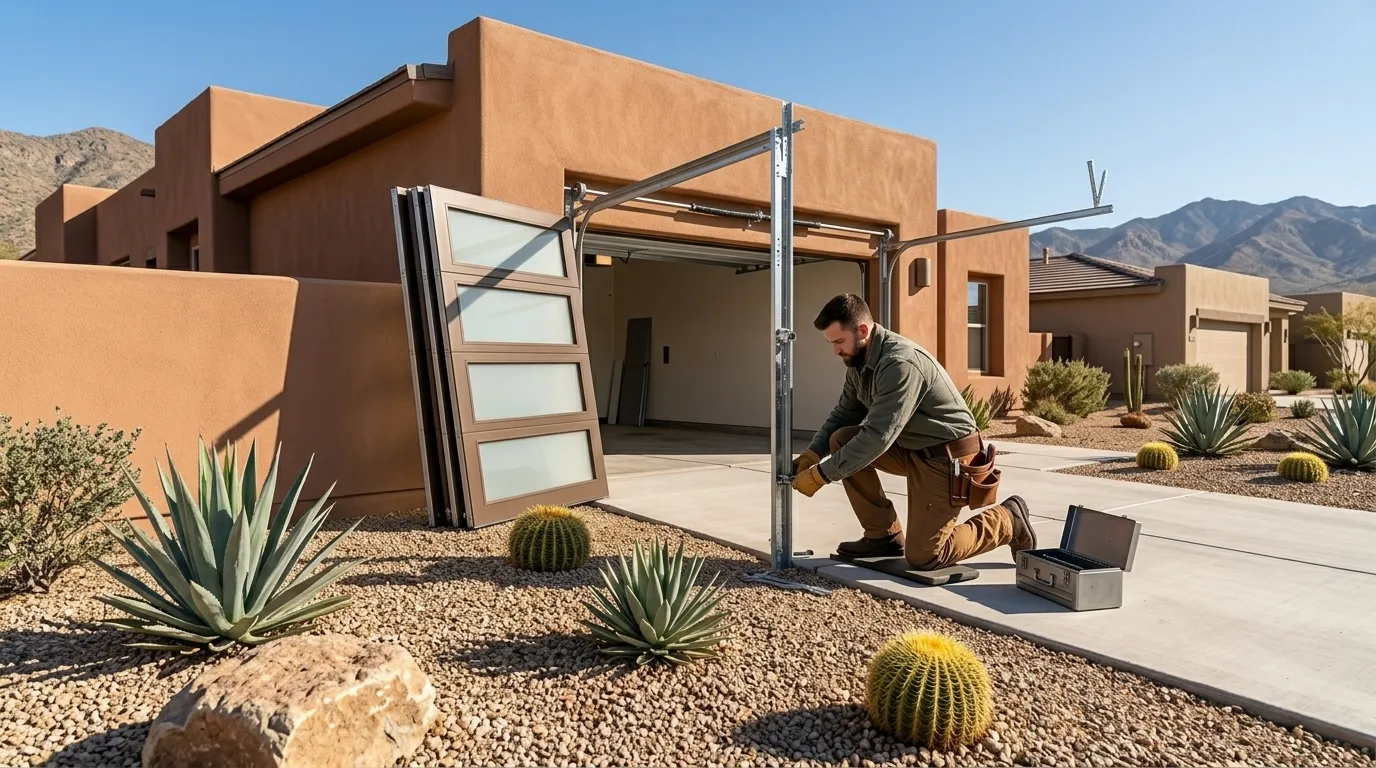
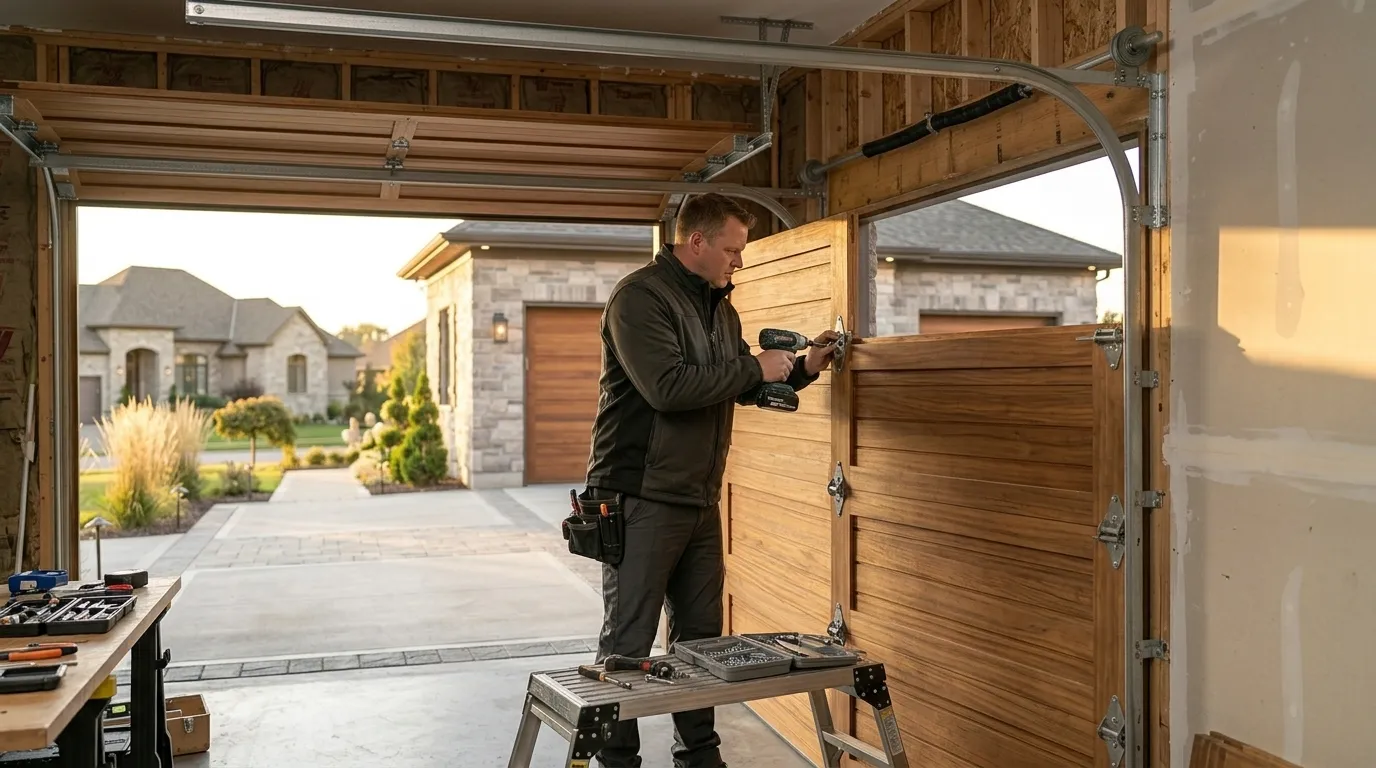
San Marcos houses built 1984-2014 are hitting the age where original torsion springs fail. We repair springs, openers, and tracks across San Marcos, TX.
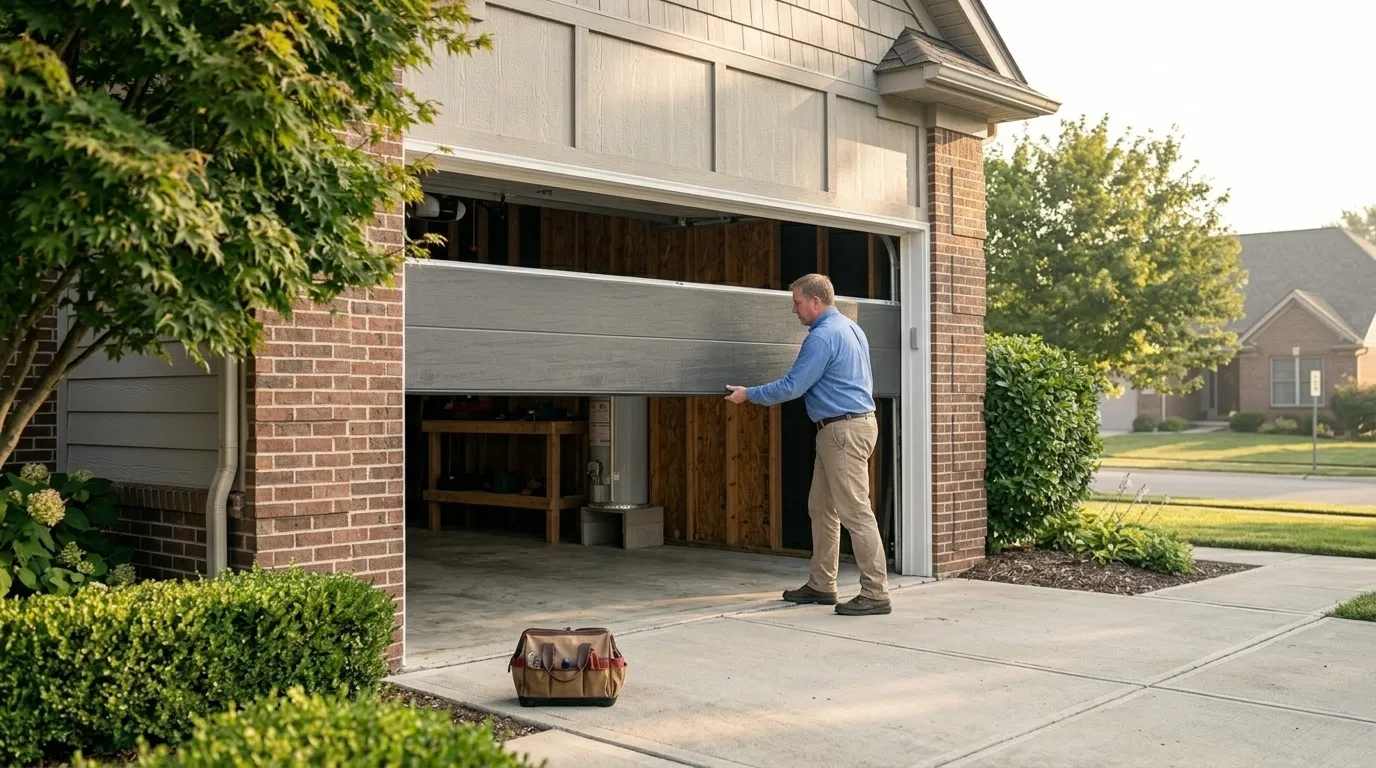
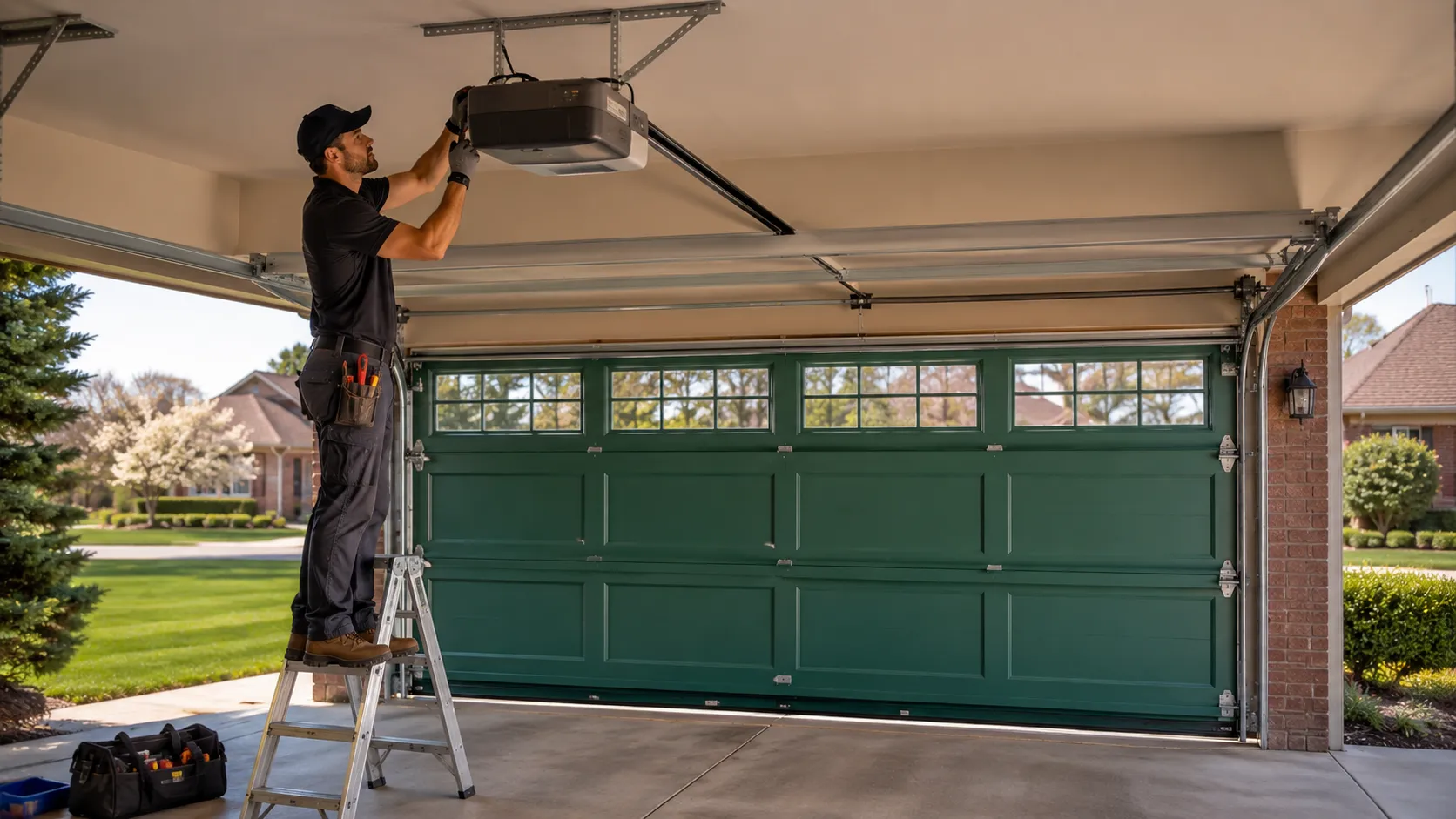
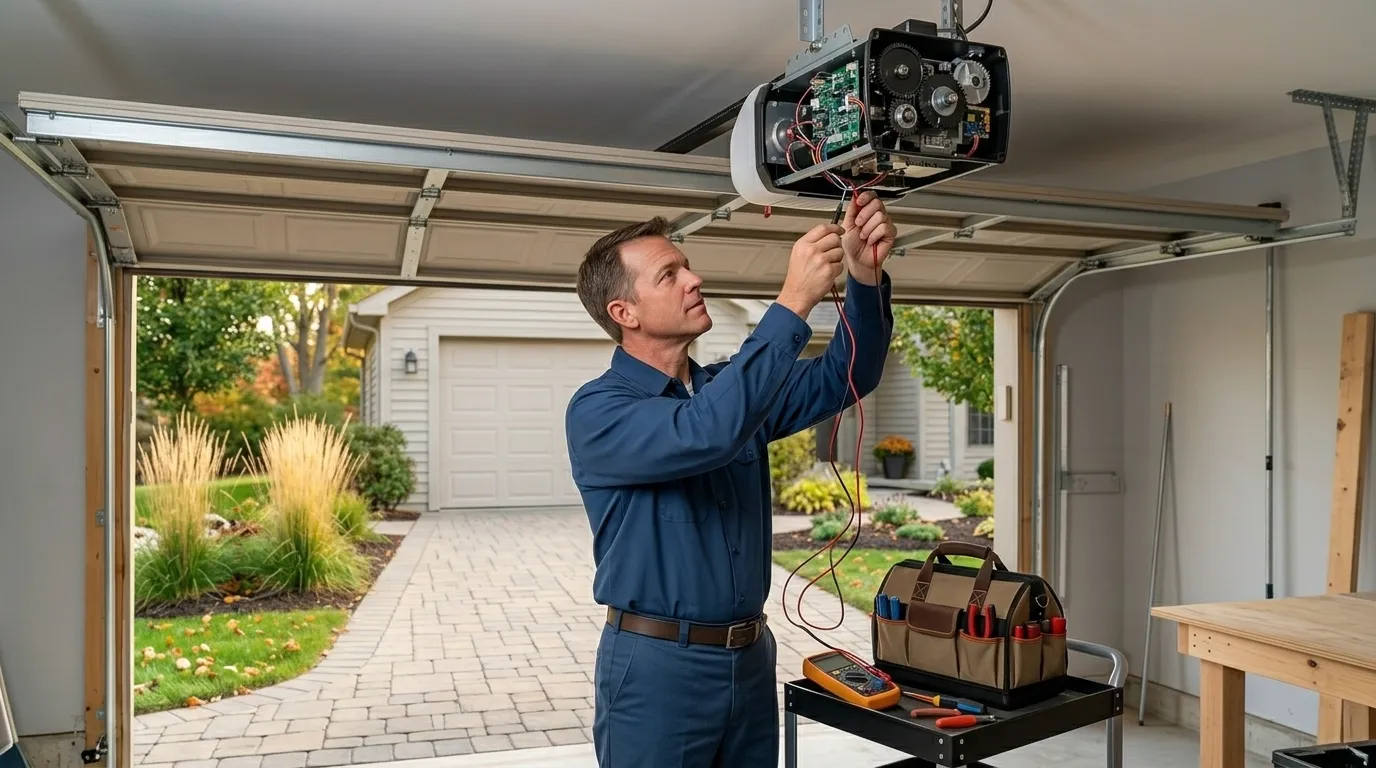
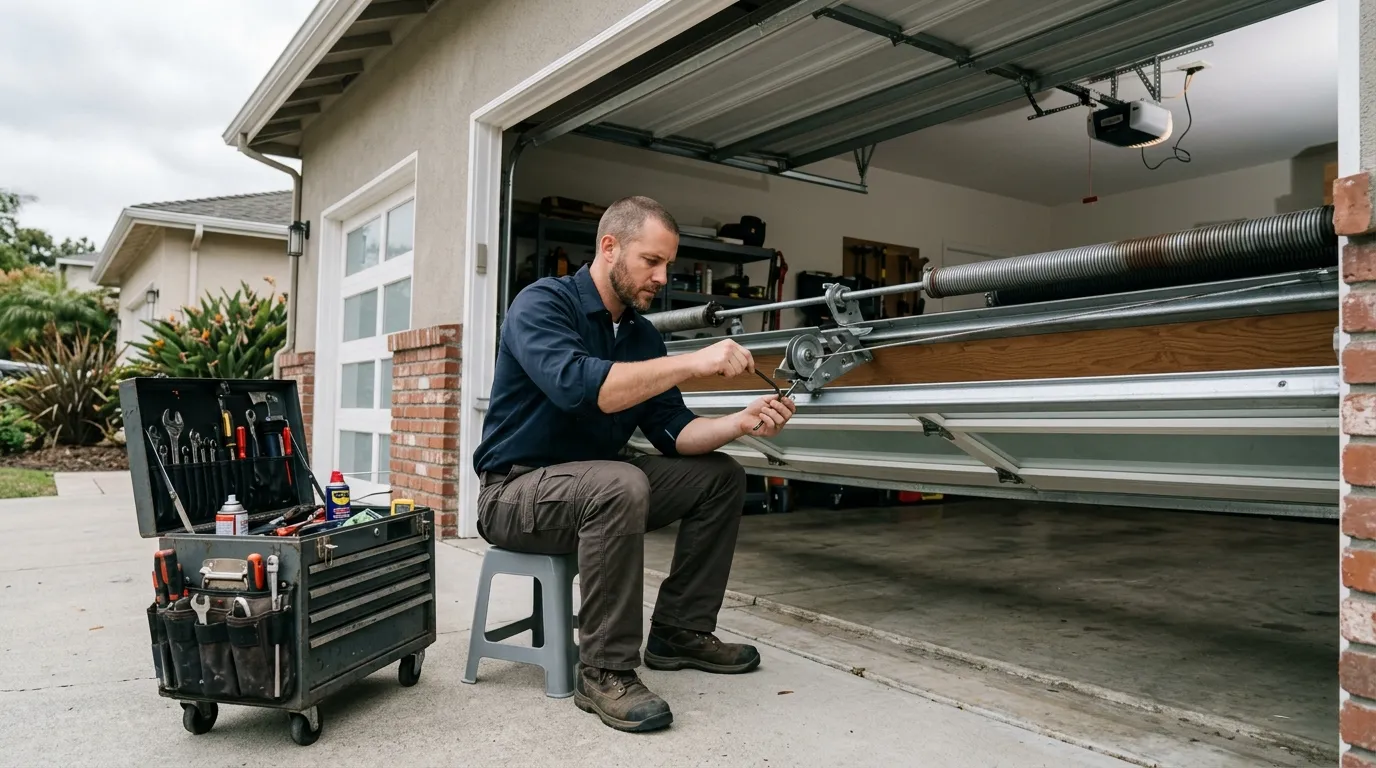
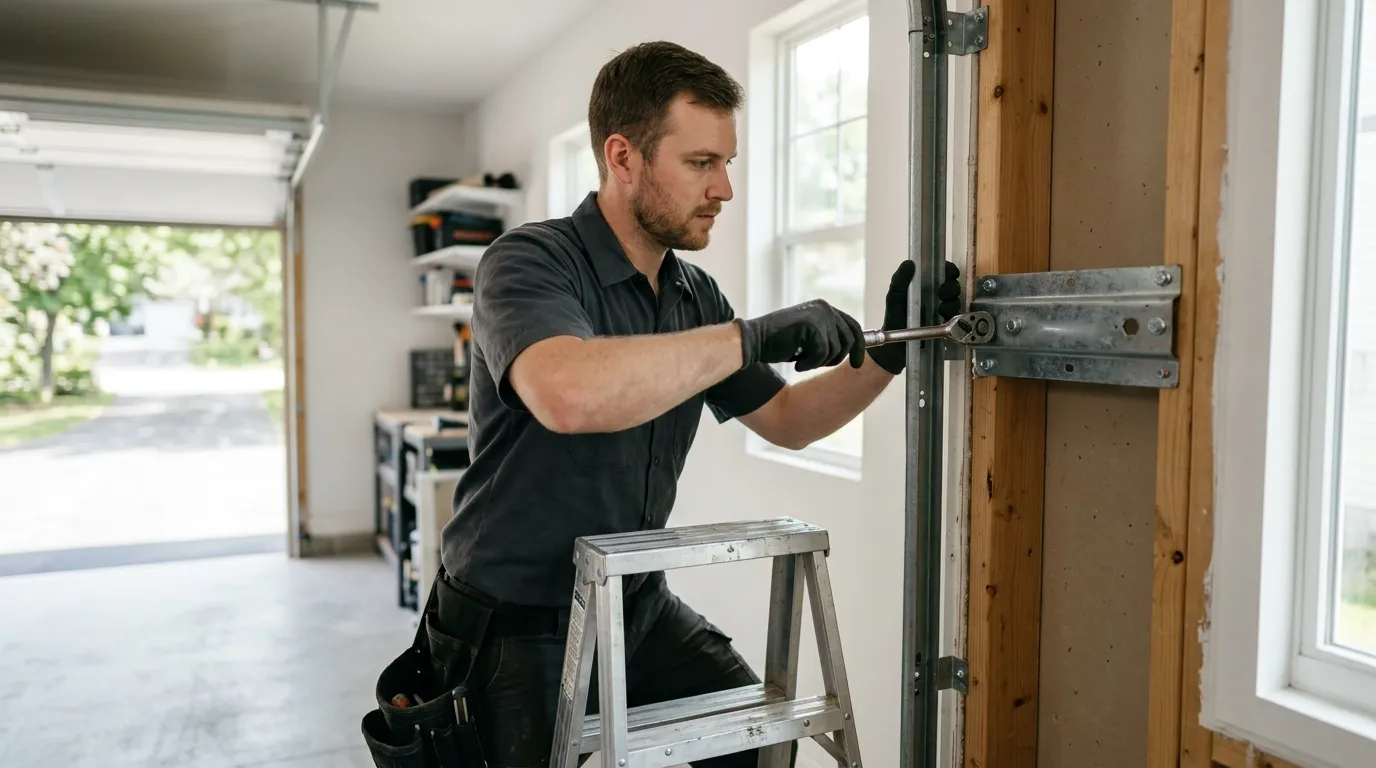
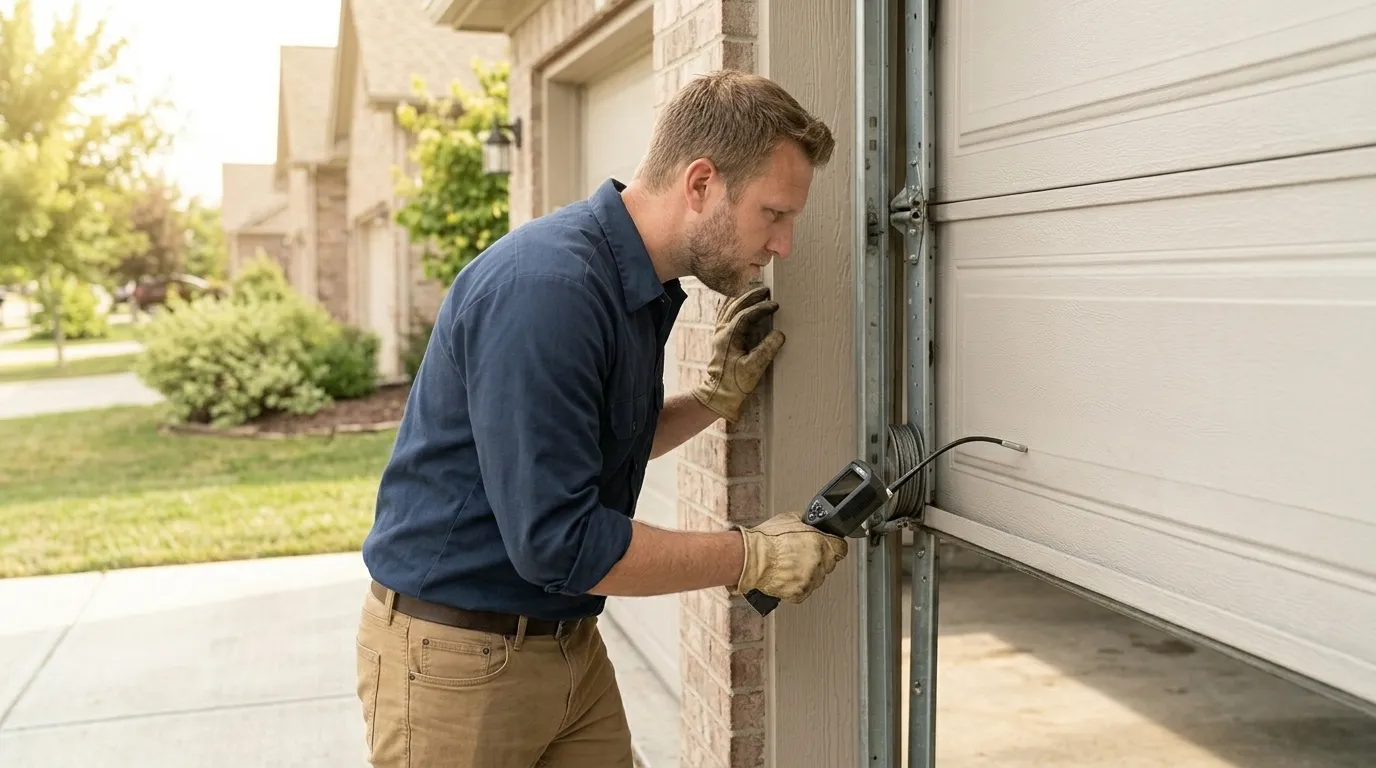
A torsion spring job is not a quick bolt-and-go. We spend time on the diagnosis first - checking the drums, the cable path, the bottom brackets - because a spring that snapped might have taken a cable or a roller with it. Most of San Marcos was built between 1984 and 2014, which means the door hardware across the 16 areas we work is fairly standard: torsion springs on a center shaft, sectional steel or composite panels, extension springs on the older end of that range. That consistency helps. We're not guessing at wire gauge or drum size on most calls, because the housing stock here doesn't have the wide mix of eras you'd find in an older city.
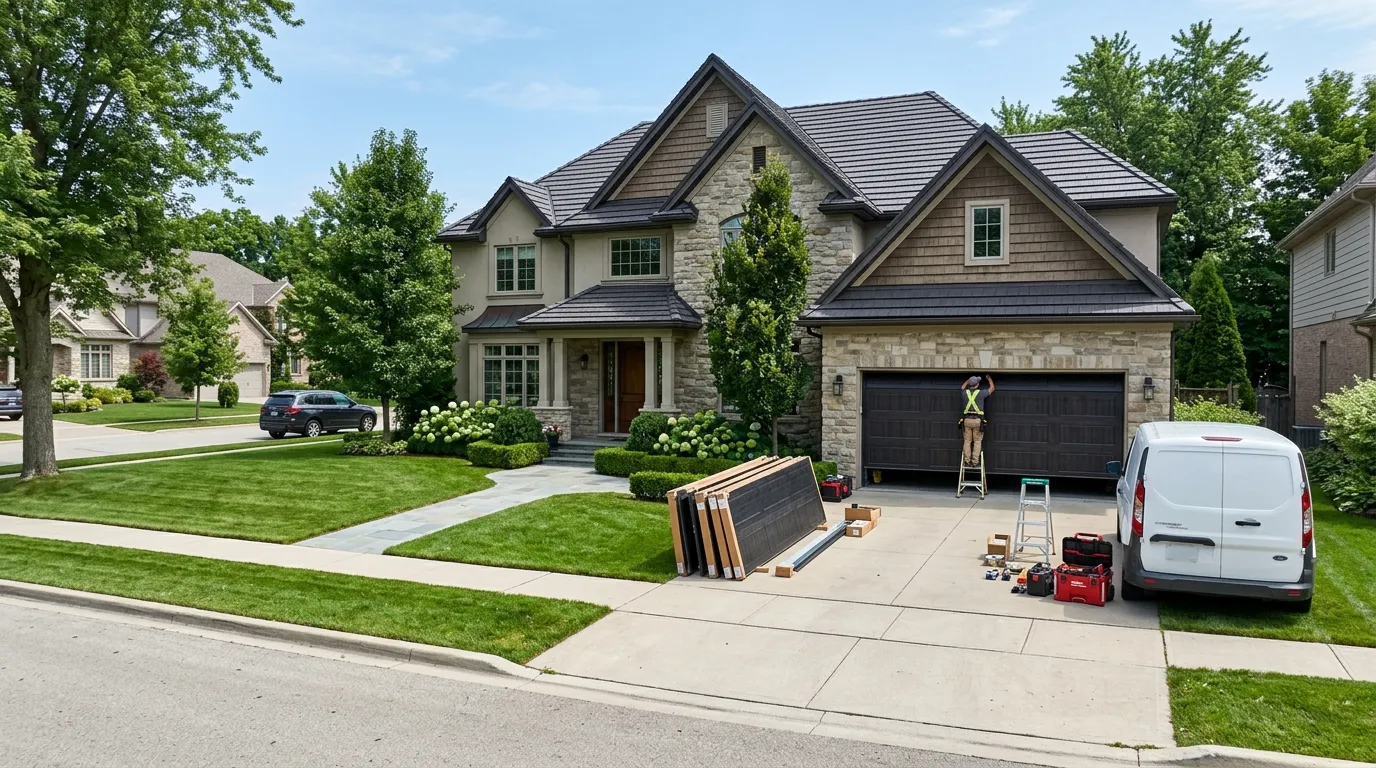
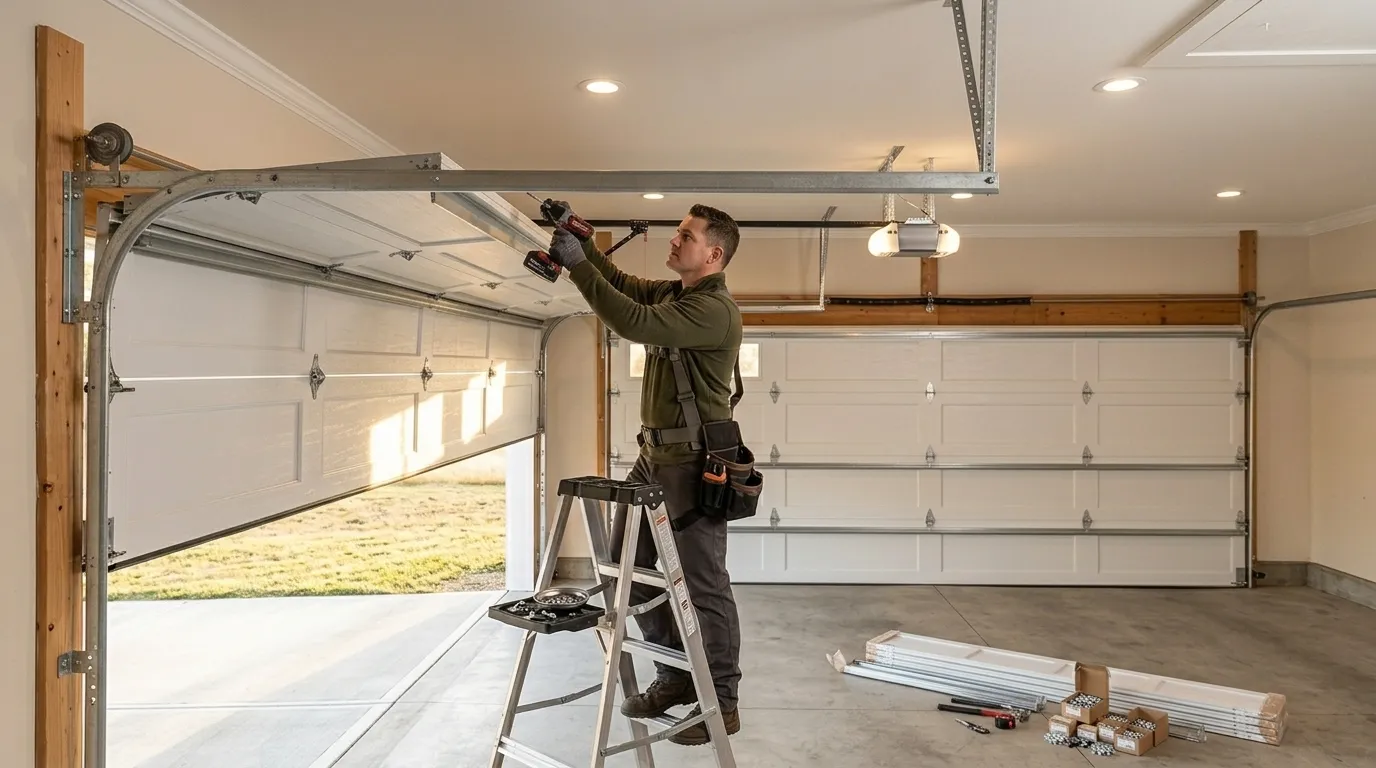
Where a job runs long is when the door itself is a non-standard size - some builders in the newer subdivisions from the 2000s and 2010s used custom widths for three-car garages, and those springs aren't something every supplier keeps on the shelf. On a straightforward torsion spring swap on a standard door, most of the time on site goes to balancing the door afterward, not swapping the spring itself. A door that isn't balanced right after a repair will just wear out the opener next.
What Causes It Around Here
San Marcos sits in a mild climate band, but it's not a climate without swings - winter here still brings the occasional freeze, and that swing from warm afternoons to cold nights is exactly what fatigues galvanized spring steel over time. A torsion spring is rated for a set number of open-close cycles, and temperature swings speed up how fast that steel loses its temper.
Layer that on top of the age of the housing stock. Most of San Marcos, across the 16 named areas we cover, was built between 1984 and 2014, with the bulk of it going up in the 1980s and 90s. That means a large share of the roughly 31,977 owner-occupied houses in the wider service area still have springs that are original, or close to it - 25 to 40 years old on the early end of that build window. Steel springs don't last that long under daily cycling regardless of climate, and the freeze-thaw swing common to this part of Texas just shortens the timeline further. A spring installed when a house was framed in 1988 is well past any reasonable service life today, whether or not it's shown a symptom yet.
How It Shows Up
The most obvious sign is the one nobody misses: a loud bang from the garage, usually when no one's touched the door, followed by the door refusing to move or dropping fast when someone tries the opener. That's a torsion spring letting go under tension.
Before it gets to that point there are usually quieter signs. The door feels heavier than it used to when you lift it by hand with the opener disconnected. The opener strains and groans partway up, or it stalls and reverses instead of finishing the cycle. One side of the door looks like it's lifting faster than the other, which usually means one spring on a double-spring setup has already gone while the other is still holding on. Cables can look slack at the bottom corners even when the door is closed.
A door that's noticeably crooked when it's halfway open, or that won't stay put when you stop the opener mid-cycle, is telling you the spring tension is already gone or close to it. Waiting on that symptom usually means the second spring goes next, often without warning.
What the Repair Takes
A spring repair means matching the wire gauge, coil diameter, and length to the door's weight and track type - get that wrong and the door either won't lift cleanly or will slam under too much tension. On the standard door sizes common across San Marcos's 1984-2014 housing stock, that's usually a straightforward match. On older extension-spring setups from the earlier end of that build era, or on the wider custom doors some newer subdivisions used, sourcing the right part can take longer, and that's a limitation worth being honest about - not every spring size sits on every truck.
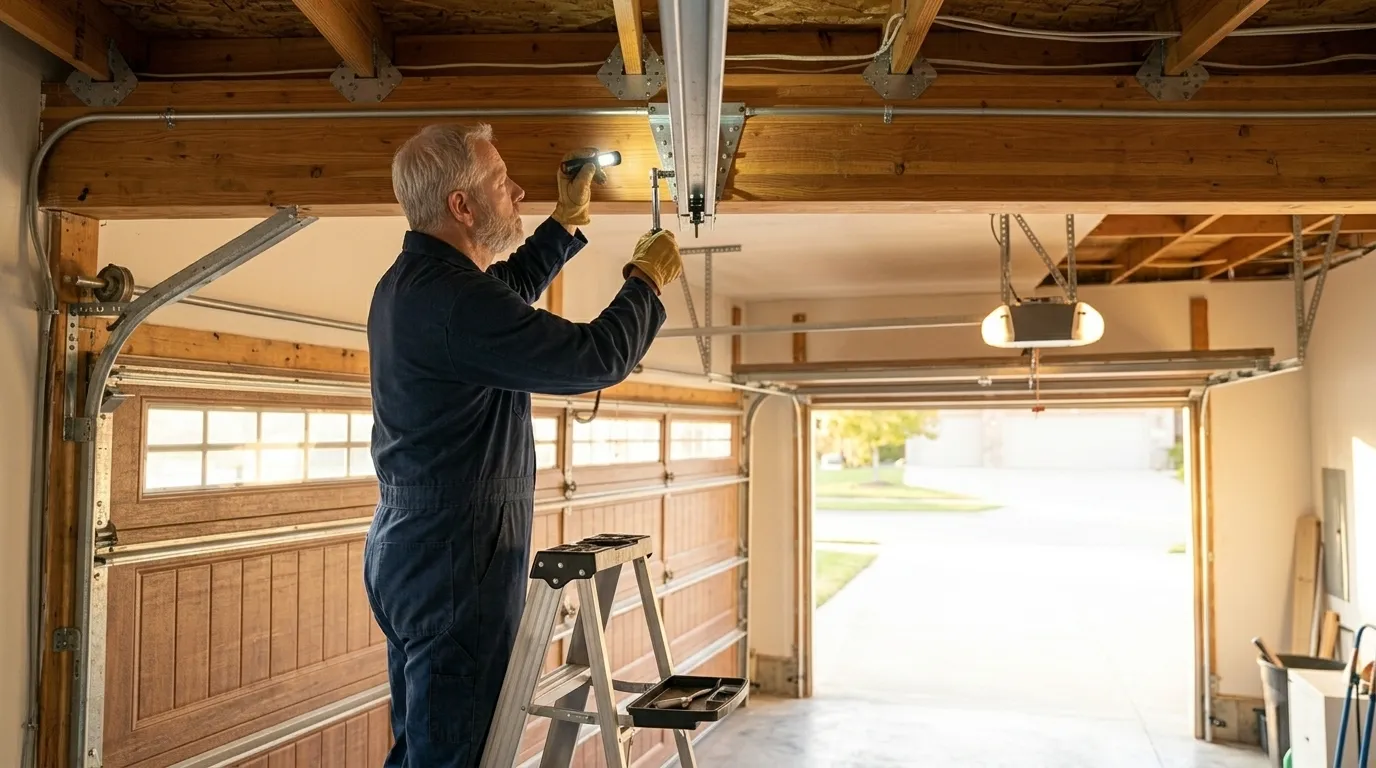
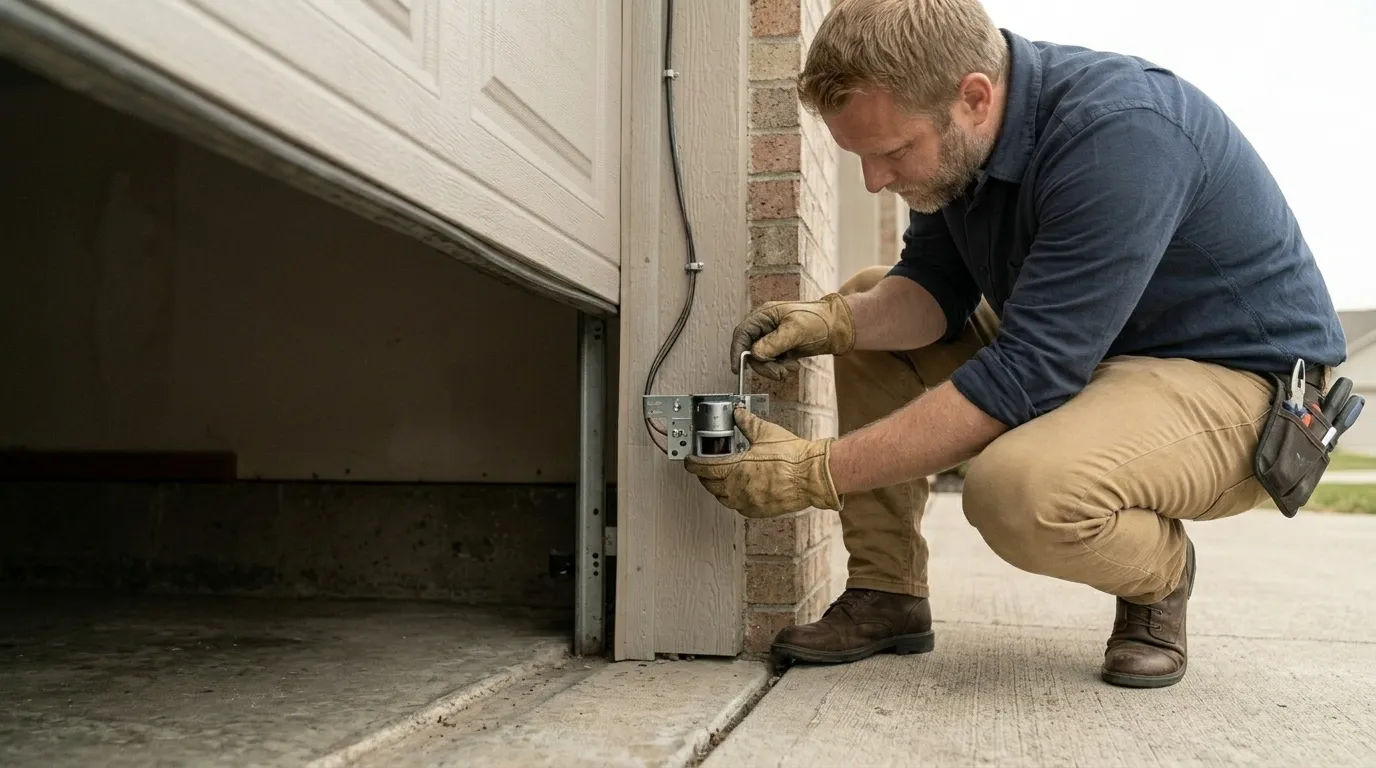
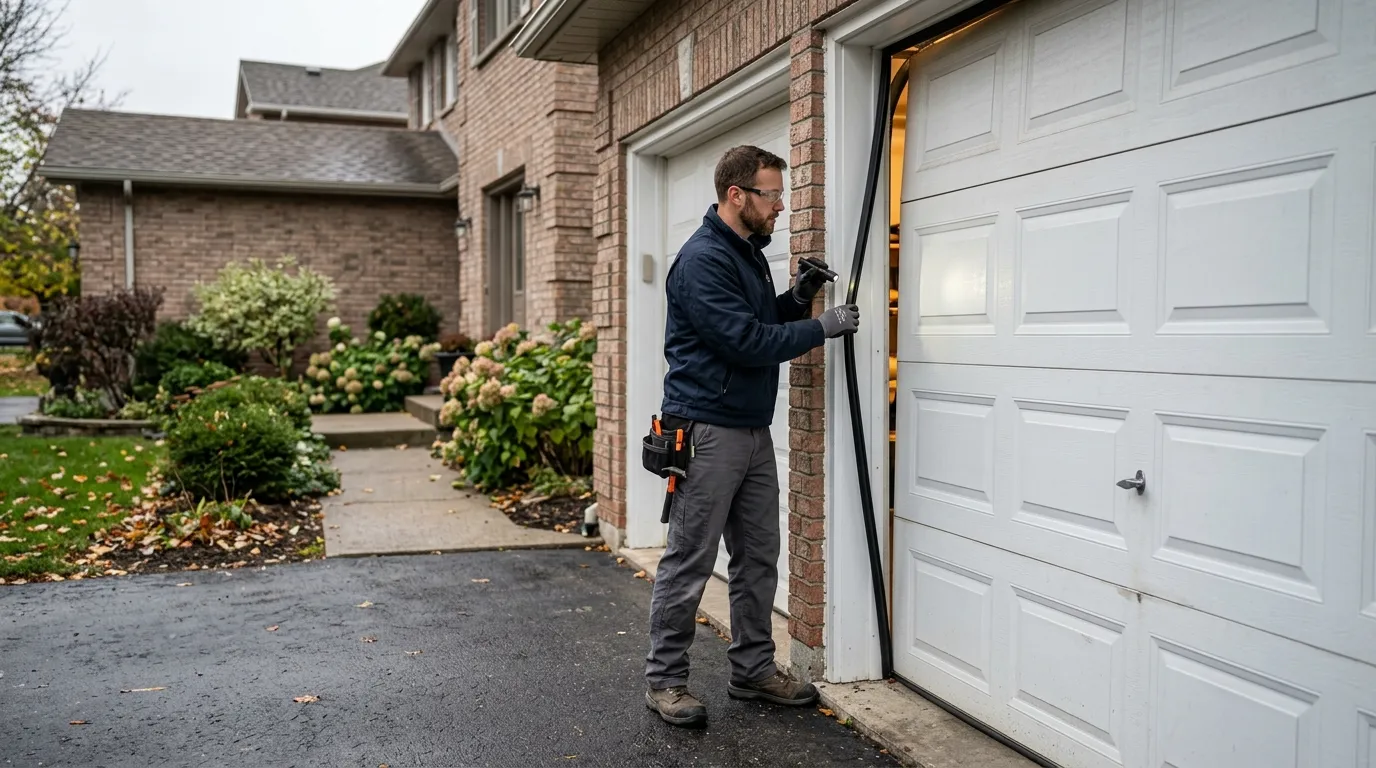
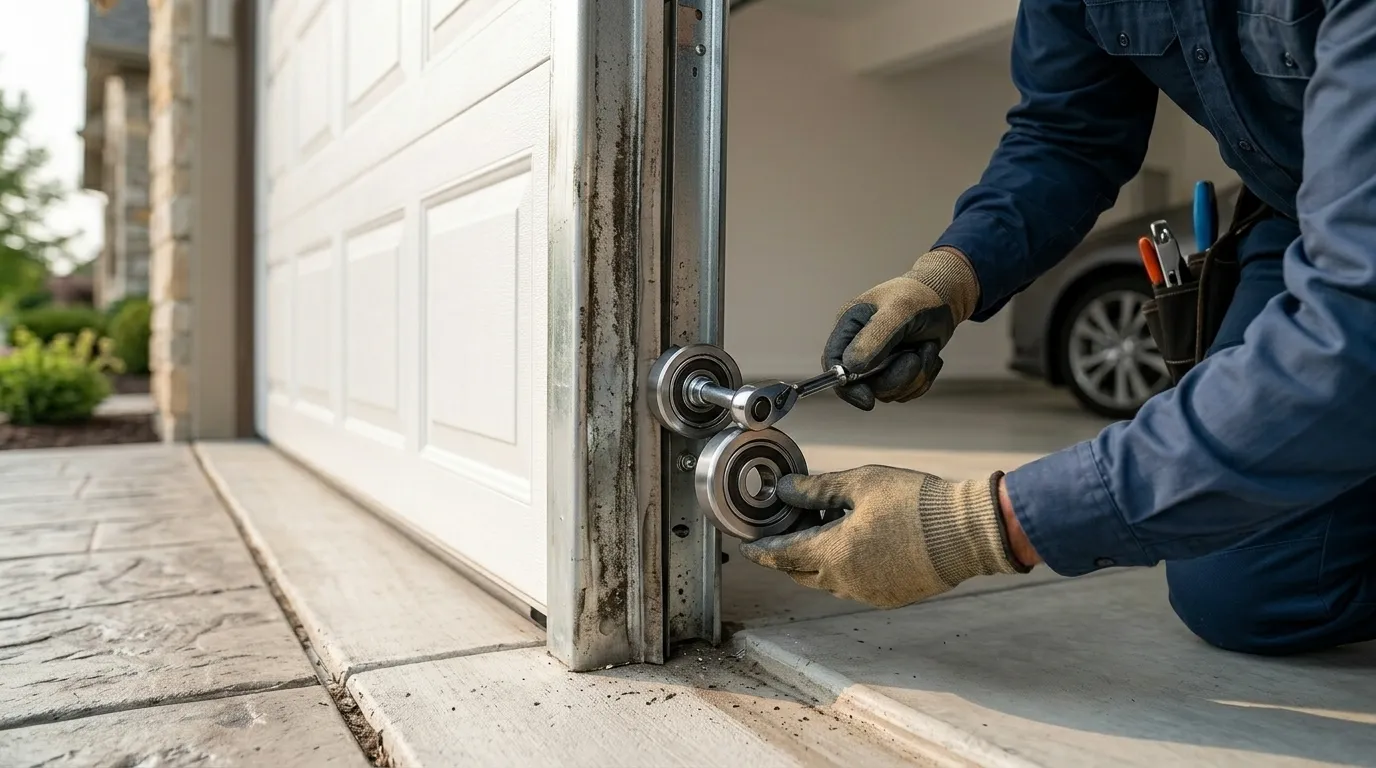
We also check the drums, cables, and bottom brackets while the door is under no tension, since a spring failure on an older door often means the hardware around it is fatigued too, not just the spring. Replacing one part and leaving worn cable is a callback waiting to happen.
At a median household income of $80,830 across the area, most San Marcos homeowners can weigh a full spring and hardware replacement against a smaller patch job without it being a financial stretch either way. For a door already near the end of its service life - original to a house from the 1980s or early 90s - replacing the springs and hardware together usually makes more sense than repeated single-part fixes.
How it works
From “it’s stuck” to “it’s fixed”
01
Tell us what’s wrong
Describe the symptom - won’t open, loud bang, opener runs but the door won’t move.
02
On-site diagnosis
A technician tests the door under power and by hand and finds what actually failed.
03
Clear, up-front plan
You get the fix that’s needed and what drives the cost - before any work starts.
04
Repaired & tested
The repair is done, the door is set true and tested, and the work area left clean.
Serving San Marcos, TX - tell us what your door’s doing and we’ll take it from there.
How old are most garage door springs in San Marcos?
Most San Marcos houses were built between 1984 and 2014, with a lot of that stock from the 1980s and 90s. That means a large share of torsion springs in the area are original to the house - 25 to 40 years of daily cycling, which is well past what steel spring wire is built to handle.
Do you cover areas outside San Marcos proper?
Yes. We take calls from Redwood, Martindale, Kyle, Uhland, Wimberley, Niederwald, Geronimo, Lockhart, Kingsbury, Creedmoor, Mustang Ridge, Driftwood, Manchaca, Canyon Lake, Seguin, and McQueeney, in addition to San Marcos itself.
Why did my spring break in cold weather if San Marcos doesn't get that cold?
San Marcos sits in a mild climate band, but it still sees occasional freezes. Galvanized spring steel gets more brittle in cold swings, and a spring that's already fatigued from years of cycling is more likely to snap during one of those cold nights than in summer heat.
Is it ever better to replace the door instead of the spring?
On a door that's original to a house from the 1980s or early 90s, the springs, cables, and hardware are usually all near end of life together. In that case, replacing the full hardware set at once often costs less over time than fixing one part after another.
Ready to get your garage door sorted?
Tell us what it’s doing and where you are in San Marcos - we’ll take it from there.