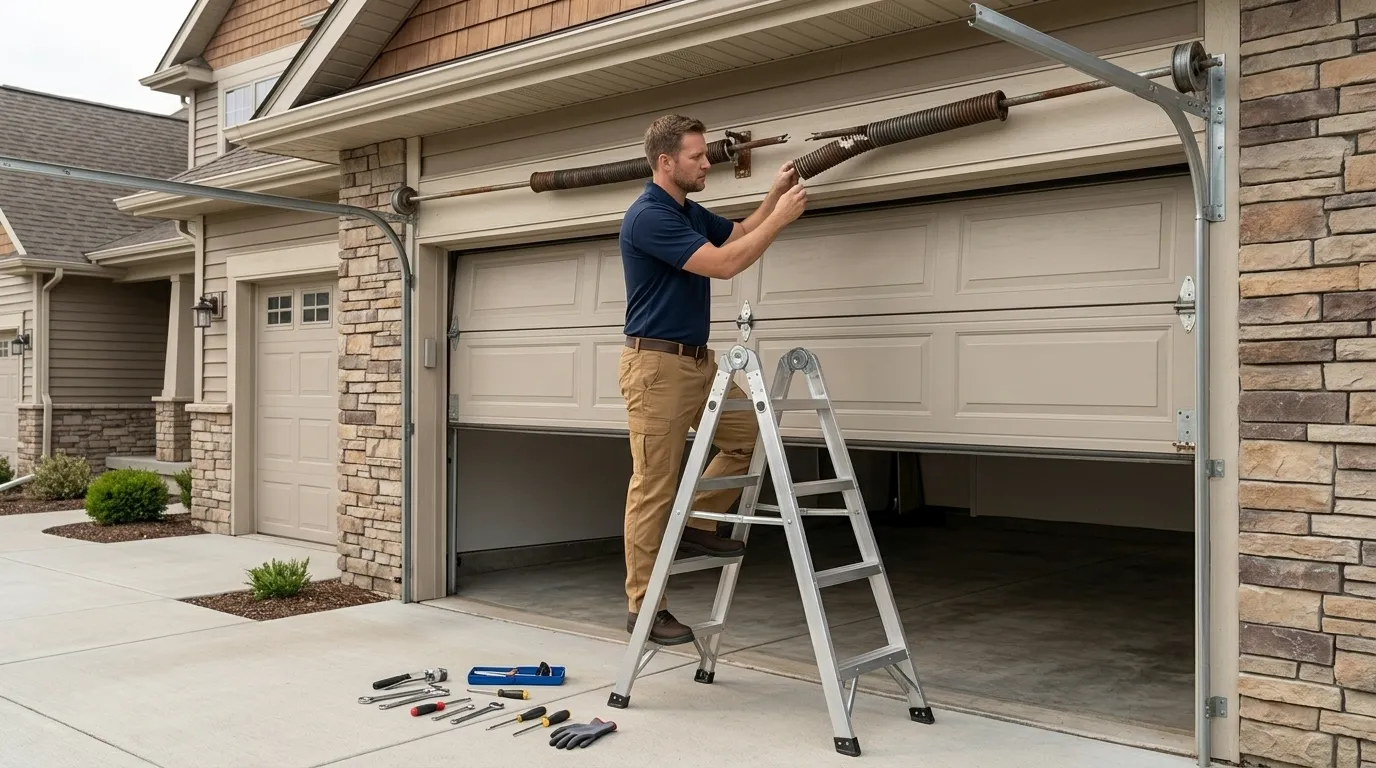
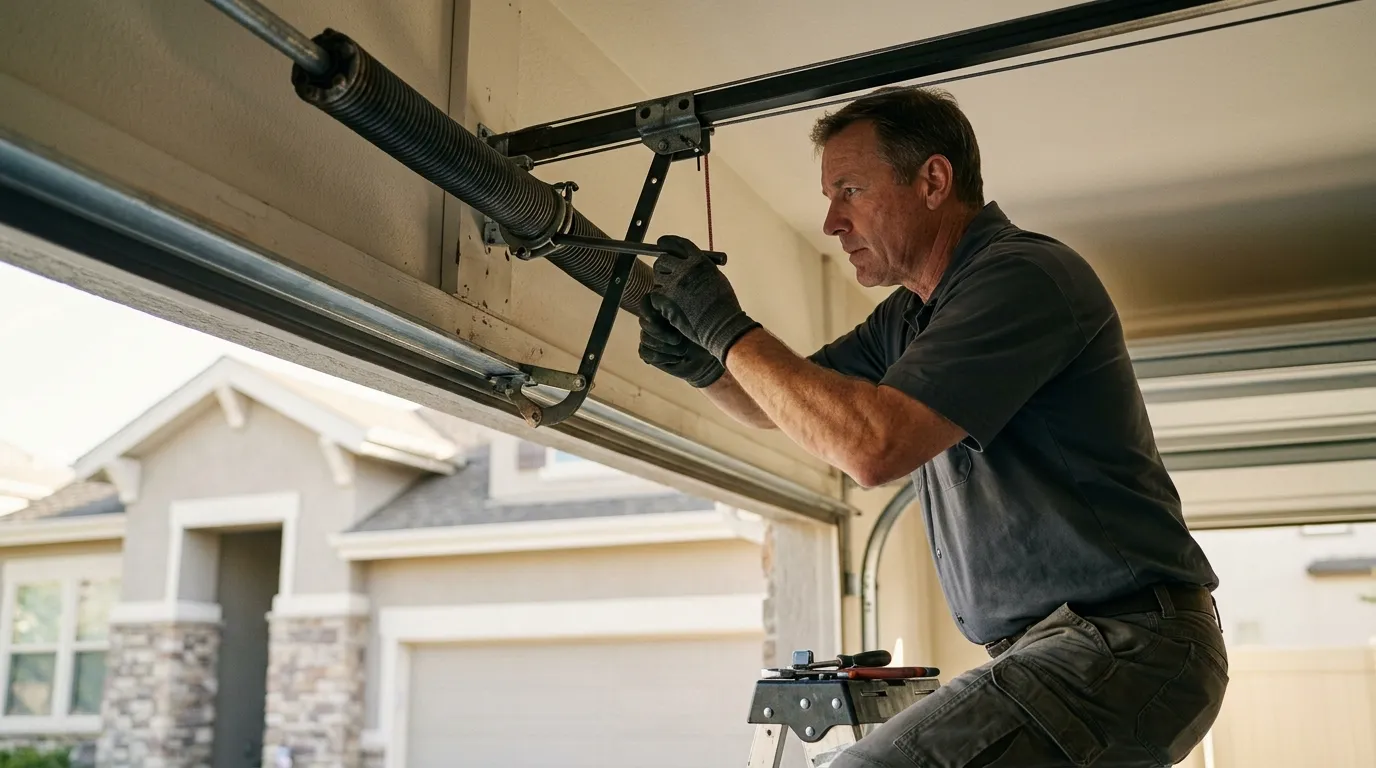
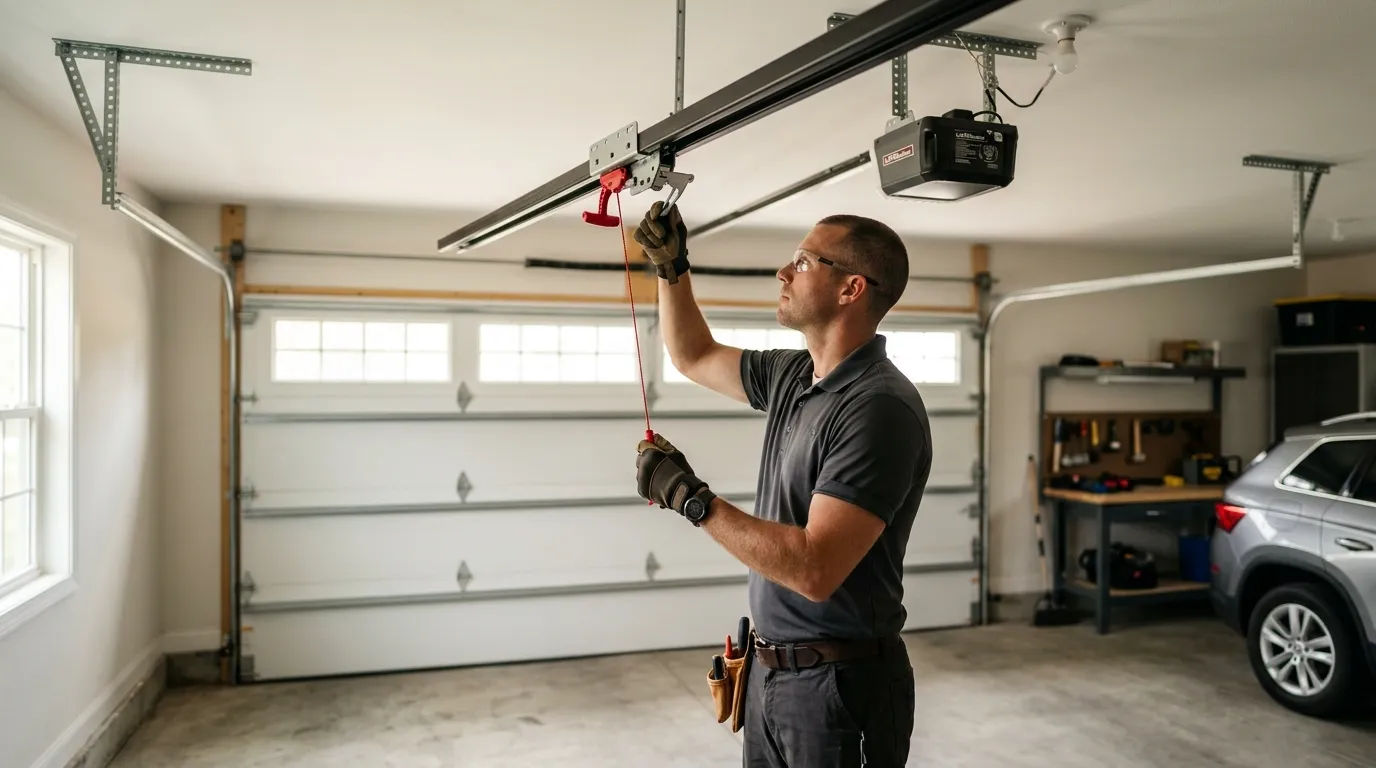
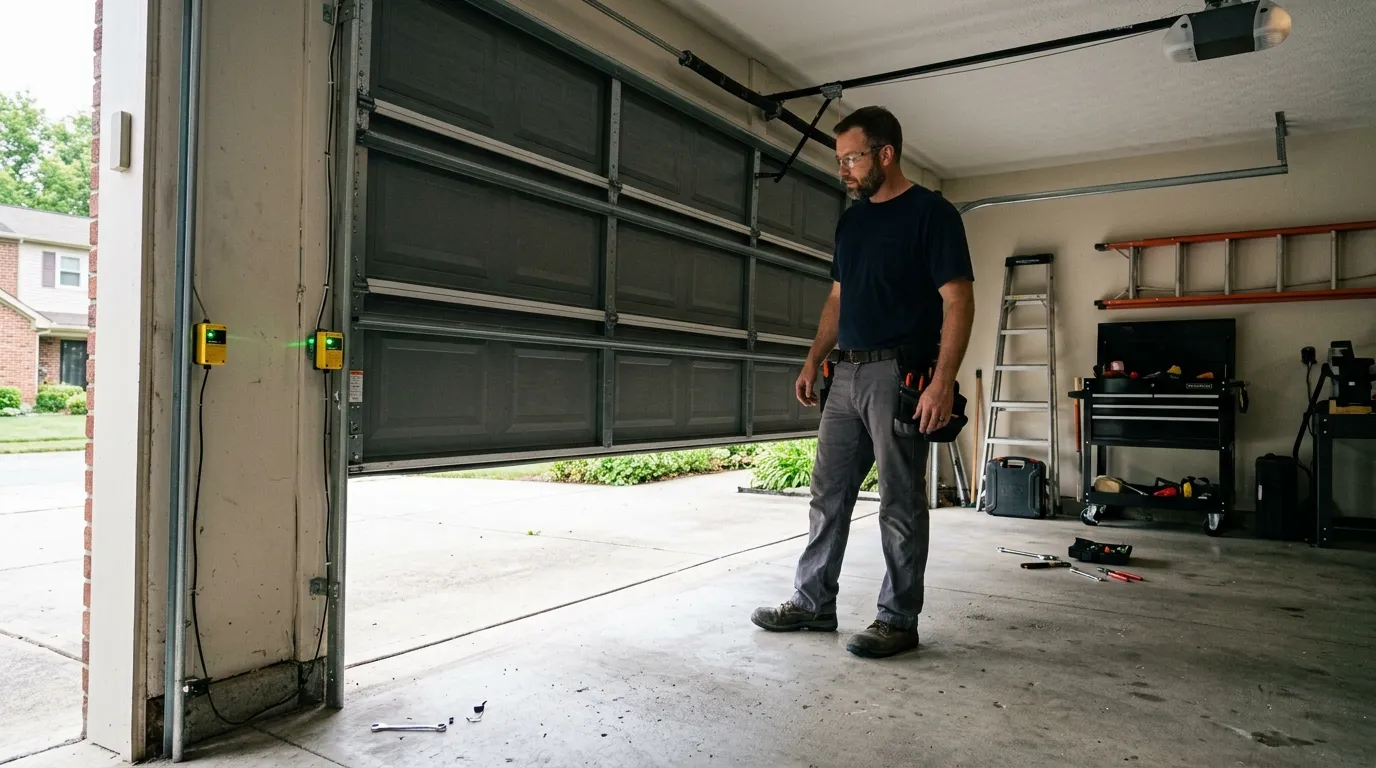
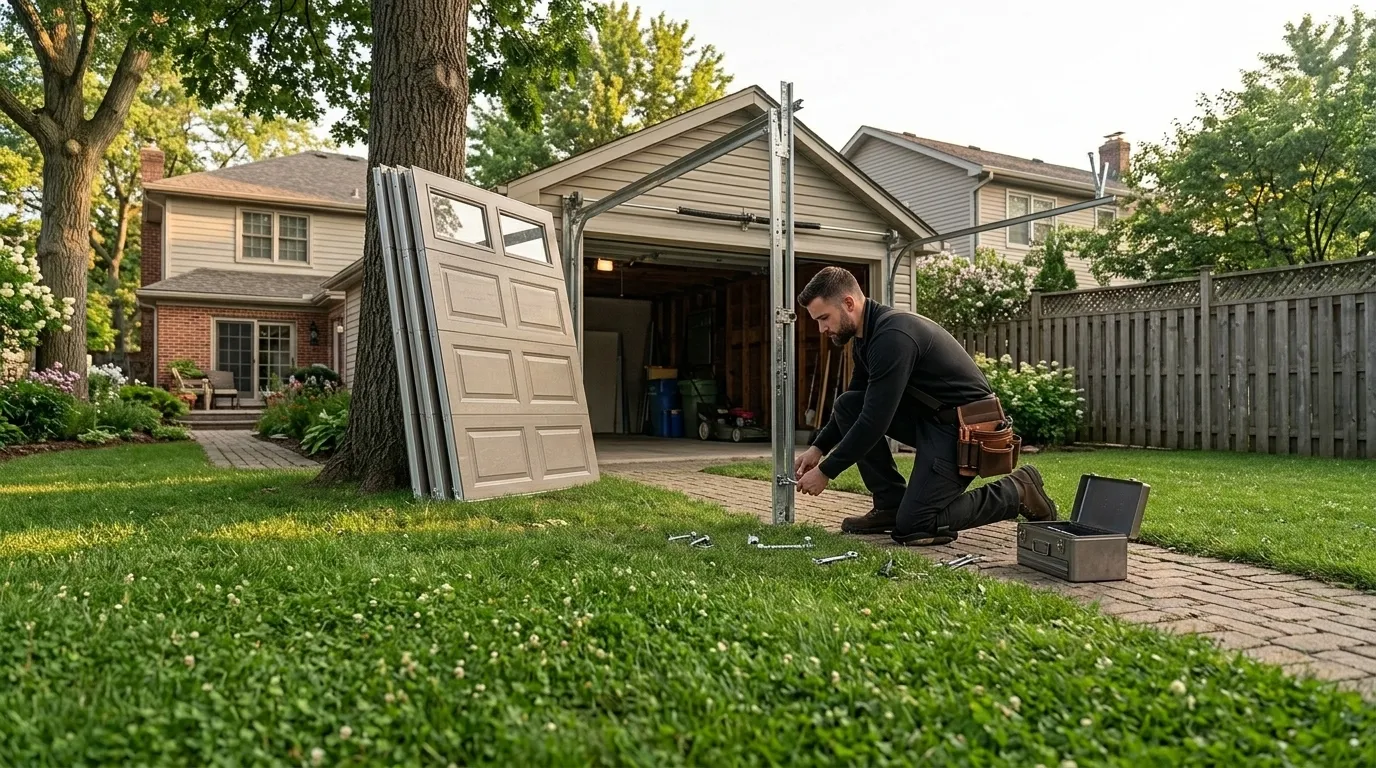
A door that's been quiet for years and suddenly isn't is telling you something wore out, not that it's about to fix itself. San Marcos homes mostly went up between 1984 and 2014, median around 1996, which means a lot of original torsion springs and openers are now 10 to 30 years into hardware that's usually rated for far fewer cycles than that. If you hear a grinding sound on the way up, that's often the opener's gear kit going, not the door itself. A rhythmic thump usually means a flat spot on a roller or a bent track section. A loud bang, then the door sitting heavier than usual, is almost always a broken torsion spring - stop using the opener right there, because the cable is doing a job it wasn't built to do alone. Squealing that fades after a minute is usually just a dry hinge or roller, and that one you can often handle yourself with the right lubricant. The line between DIY and a call is simple: if the noise changed suddenly and the door feels different to lift, get someone out before it strands your car inside or the door drops on something.
What It Costs
We can't give you a number here without knowing what's actually wrong, and we're not going to guess. A dry hinge and a snapped spring on a double door are both "garage door noise" but they're not close in labor or parts. What we can tell you is that houses built in the 1984-2014 window that make up most of this area tend to have a narrower range of spring sizes and opener models than older or newer housing stock elsewhere, which usually means parts are on the truck rather than on order. That's a real advantage here - it's just not a price. If your opener or spring is a less common size or an older discontinued model, that's the one case where we may need to order a part, and we'll tell you that up front rather than let you assume same-day service. The honest limitation: we quote after we see the door, not before, because two doors that sound identical over the phone can have completely different repairs underneath.
The Problem
Most of the noise complaints we see come down to three things: a torsion spring that's lost tension, rollers that have worn down to bare metal on the axle, or an opener gear kit stripping under load. In a service area where most homes are 1980s-90s and 2000s-2010s construction, per F2, a lot of these are original-to-the-house parts hitting the end of a normal service life at roughly the same time, which is why late-night calls tend to cluster around houses of a similar age. A door that groans low and slow at the start of its travel is usually a spring problem - the opener is straining to lift weight the spring should be carrying. A door that clicks or pops partway through its cycle points to a roller or hinge that's binding. Neither of these gets better with more use; they get louder, then they fail at a bad time, usually when someone's already late leaving. The fix for a spring issue is almost never a lubricant - it's replacement, and it's not a safe DIY repair given the tension stored in a torsion spring.
How Local Conditions Play In
San Marcos sits in a mild climate band with occasional freeze days, not the deep-freeze cycling that shortens spring and hinge life further north, and not the constant heat-swell that warps wood doors in hotter regions either. That's mostly good news for hardware - steel springs and tracks here aren't fighting daily extreme temperature swings. But the occasional freeze still matters: a spring or hinge that's already lost some lubrication tends to seize or squeal specifically on those cold mornings, then quiet back down once it warms up, which is why some noise complaints are seasonal rather than constant. Humidity swings between wet and dry stretches can also gum up track alignment on doors that haven't been serviced in a while. None of this means you need special hardware - it means a door that's already marginal will announce itself on the handful of cold mornings each year before it fails the rest of the time. If your noise only shows up when it's cold, that's not nothing; it's an early warning, not a coincidence.
How it works
From “it’s stuck” to “it’s fixed”
01
Tell us what’s wrong
Describe the symptom - won’t open, loud bang, opener runs but the door won’t move.
02
On-site diagnosis
A technician tests the door under power and by hand and finds what actually failed.
03
Clear, up-front plan
You get the fix that’s needed and what drives the cost - before any work starts.
04
Repaired & tested
The repair is done, the door is set true and tested, and the work area left clean.
Serving San Marcos, TX - tell us what your door’s doing and we’ll take it from there.
My door only makes noise on cold mornings, is that serious?
It can be an early sign. San Marcos sees occasional freeze days, and a spring or hinge that's already low on lubrication or slightly worn will seize or squeal specifically in the cold, then seem fine once it warms up. Treat it as a warning rather than a coincidence and get it looked at before it fails on a warmer day too.
Is a grinding noise the door or the opener?
Grinding almost always points to the opener's gear kit rather than the door itself, especially in homes with original 1990s-era openers still in service. The gears are plastic in most residential units and wear down over time. It's a repair, not a full door replacement, in most cases.
Can I just lubricate everything and see if the noise stops?
For squealing hinges or rollers, yes, that's a reasonable first step. For a loud bang followed by a heavy-feeling door, no - that's a broken spring, and lubricant won't fix stored tension in a cable that's now doing a job it wasn't built for. Stop using the opener and call.
Why do so many doors in this area seem to fail around the same age?
Most homes in the service area went up between 1984 and 2014, with a lot of stock from the 1980s and 90s specifically. Torsion springs and opener gear kits have a rated cycle life, and houses built in the same era tend to hit that wear point in roughly the same window.
Ready to get your garage door sorted?
Tell us what it’s doing and where you are in San Marcos - we’ll take it from there.