What It Costs
We don't have a price list to publish here, and we're not going to guess at a number that doesn't hold up when you call. What we can tell you is what drives the decision between repair and replacement on a house from this area's typical build era.
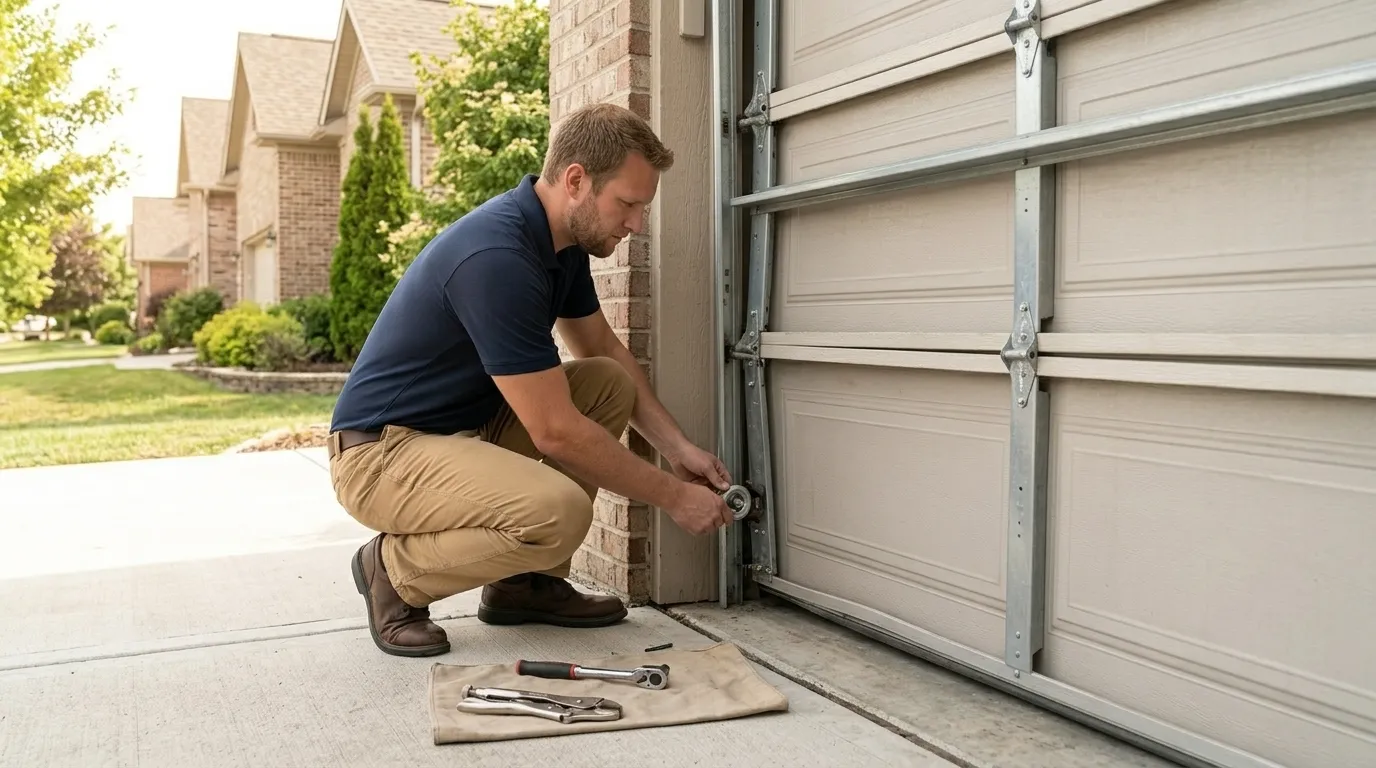
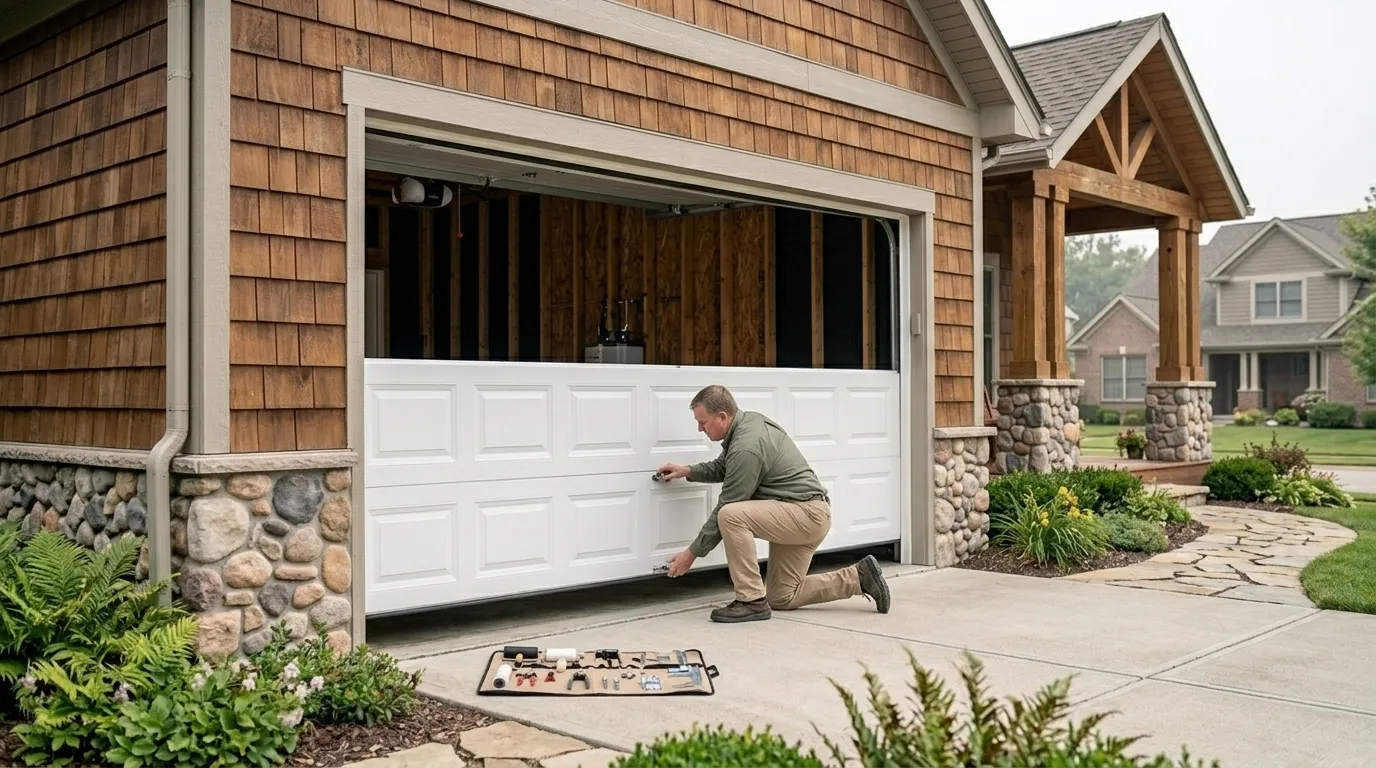
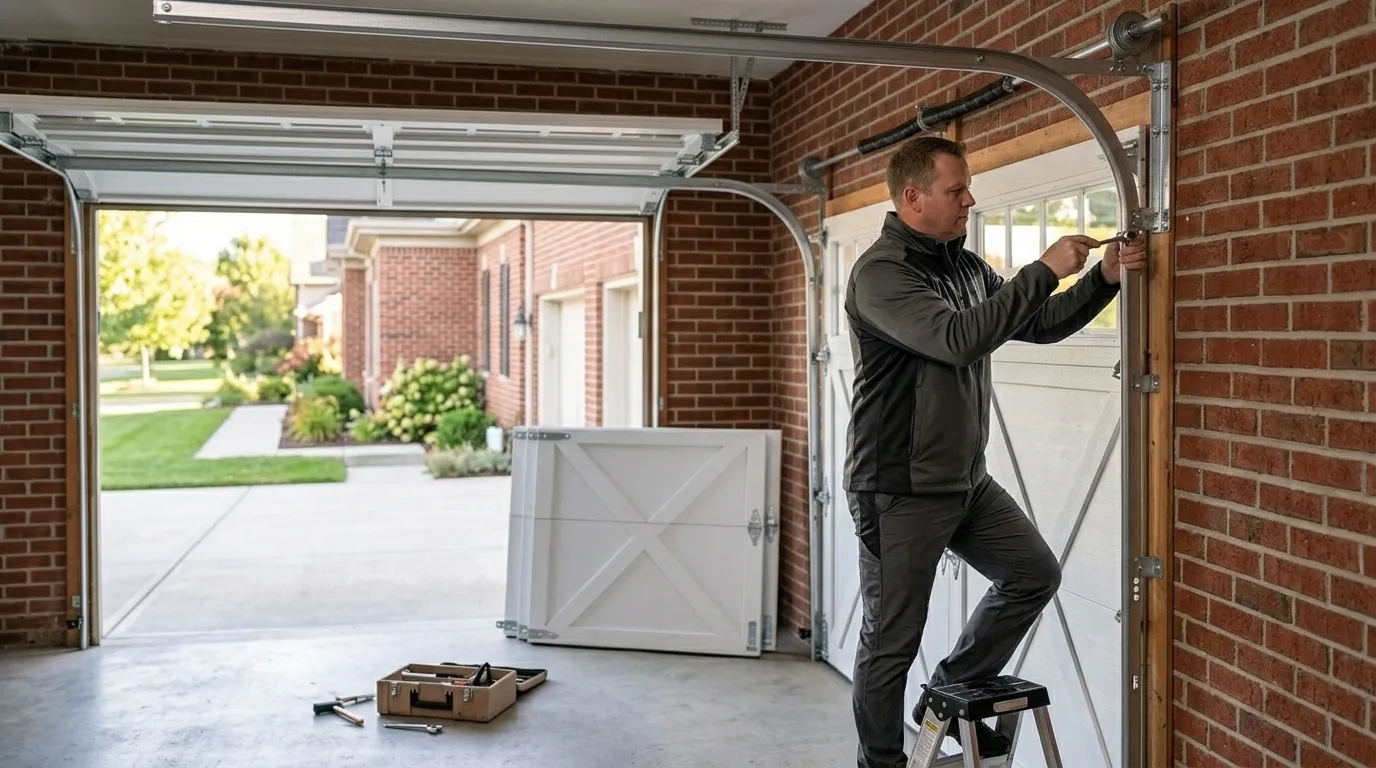
A door built in the 1984-2014 window usually has steel panels and hardware that are still serviceable - springs, rollers, and cables are standard parts, not custom-order. Fixing those is usually the right call. Where it stops making sense is when the door itself has failed: warped panels, a broken-off track bracket pulled from rotted or damaged jamb wood, or an opener that's been discontinued long enough that parts aren't sold anymore.
Our household income figures for this area (F7, median $80,830) tell us most owners here are weighing a real repair bill against a real replacement bill, not treating either as disposable. That's the right instinct. Get a number for the fix before you assume it's cheaper, and get a number for full replacement before you assume the old door is cheaper to keep.
The Problem
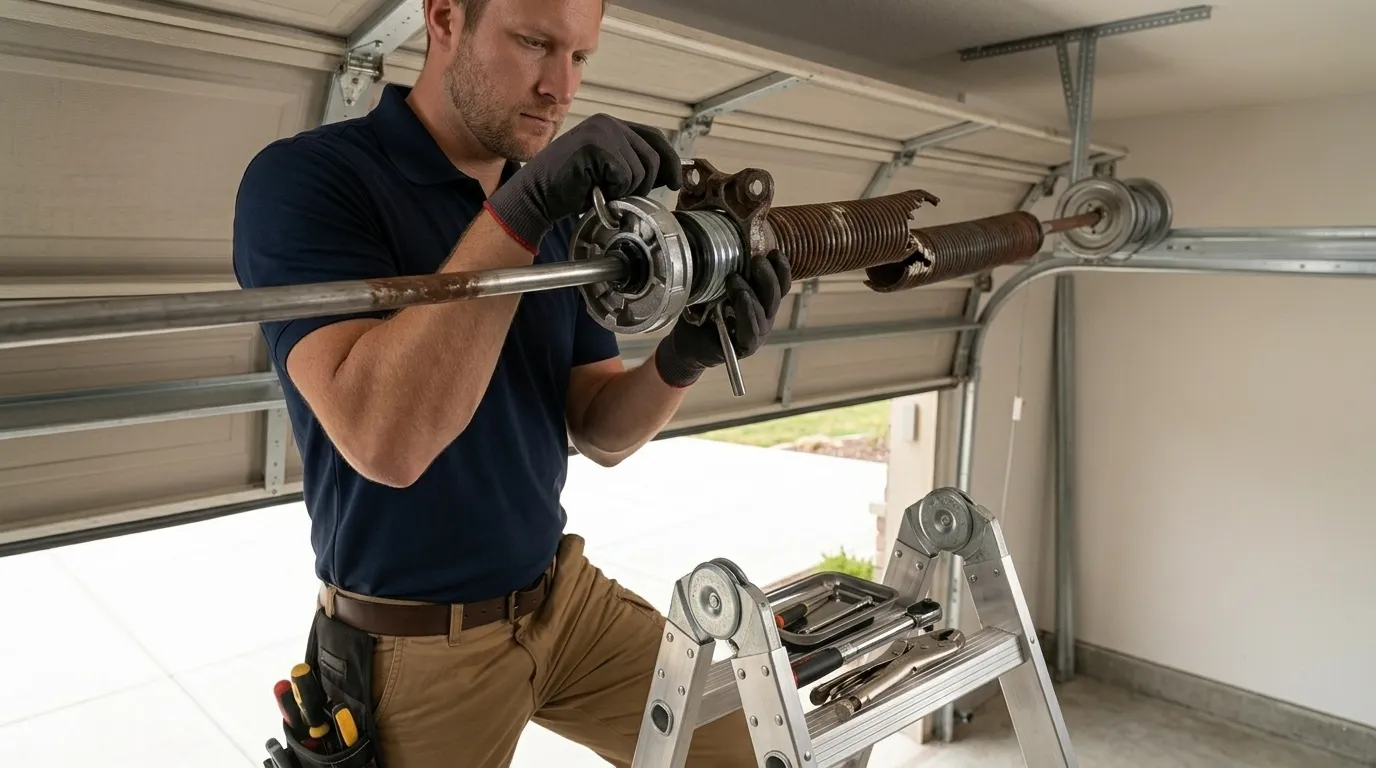
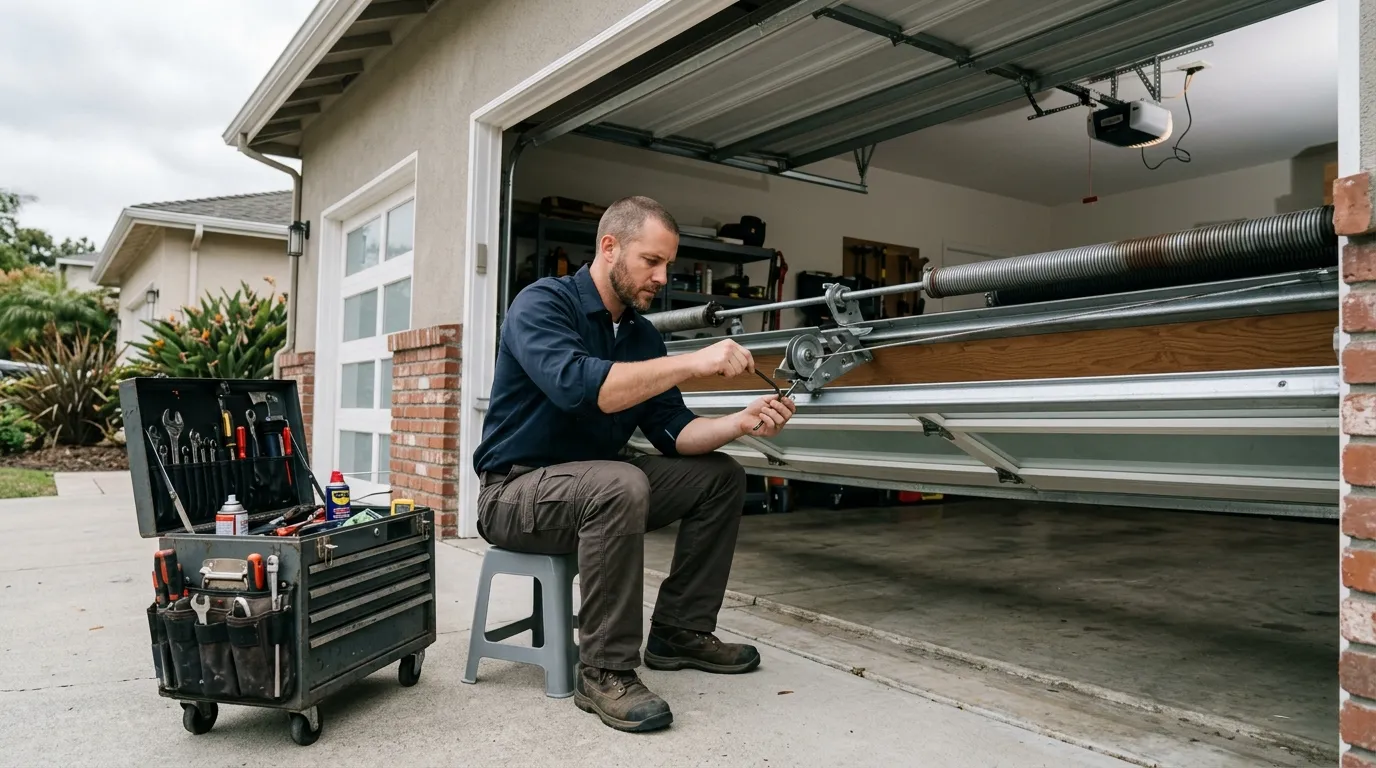
The specific problem with San Marcos-area doors right now is age clustering. With most of the housing stock built in a fairly tight 1984-2014 band, and 16 named areas in this service territory mostly dating to the 1980s and 90s, a huge share of doors are hitting spring failure and opener burnout at roughly the same time. Torsion springs are rated for a number of cycles, not a number of years, and a door installed in, say, 1994 has had three decades of daily cycles to use those up.
The upside of that clustering is that parts availability isn't usually a problem - this isn't a house from the 1950s with a one-off track width nobody stocks. The downside is that a lot of these doors are original to the house, meaning original hardware, original springs, and sometimes an opener that predates safety sensor requirements. If yours has never had the springs replaced, that's the first thing worth checking, regardless of what else looks fine.