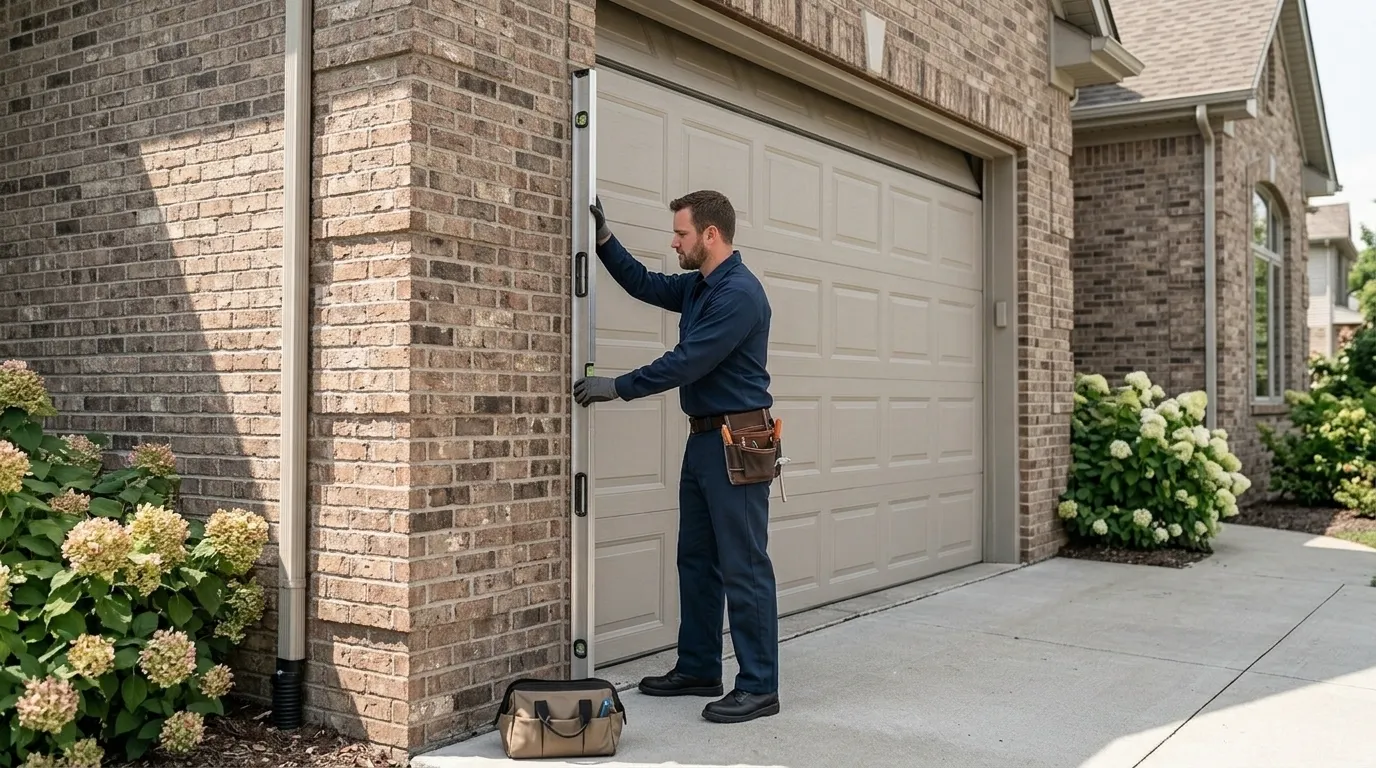
What Actually Happens When We Come Out to Your House
See exactly what a San Marcos Garage Door Pros service call includes, from diagnosis to parts, and why homes built between 1984 and 2014 need specific attention.
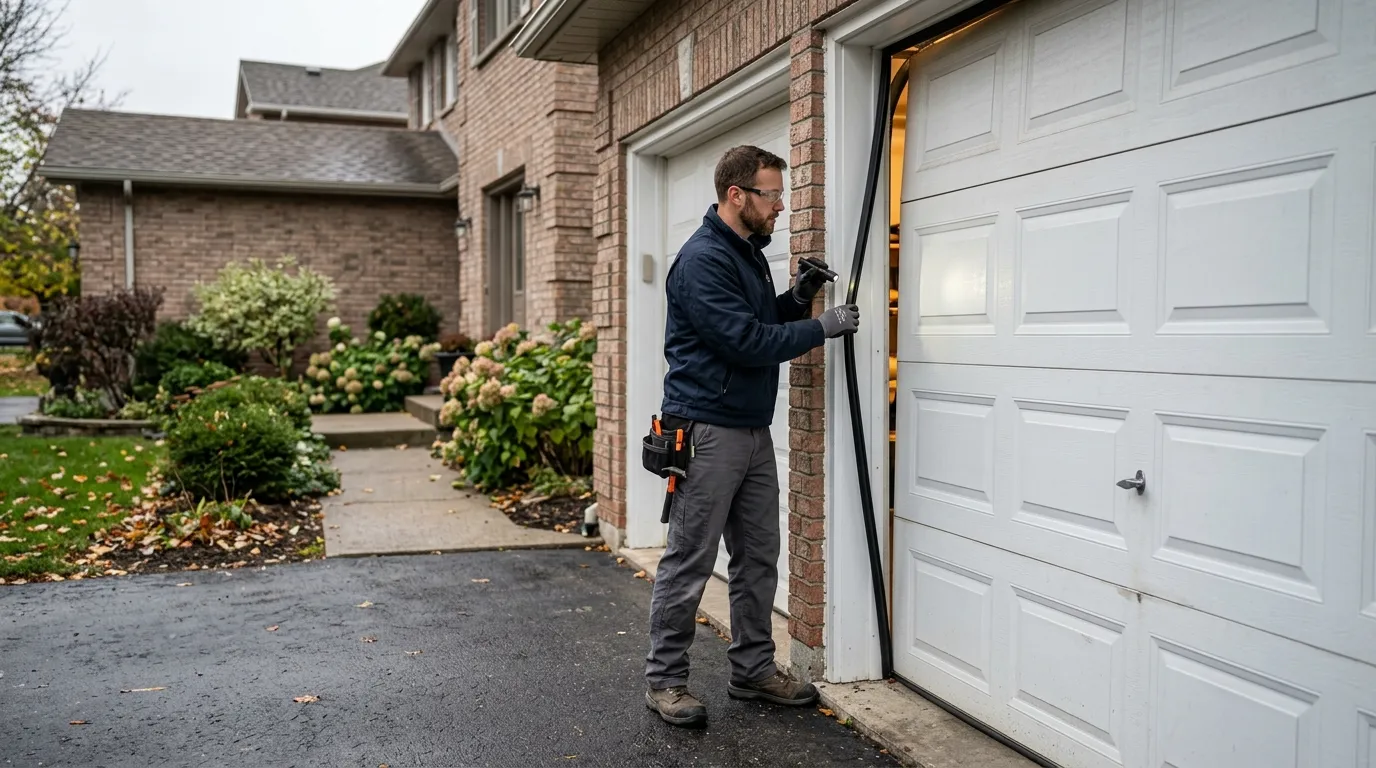
Call when the door won't open, won't close all the way, or makes a bang or a grinding sound partway through the cycle. Call when the opener runs but the door doesn't move - that's almost always a broken spring, not the motor. Call when one side of the door looks lower than the other; that's a cable or a track out of alignment, and running it anyway can bend the track further.
Don't wait on a spring that's already snapped. A double door with one broken torsion spring will still look normal sitting closed, but the opener is now trying to lift the full weight alone, which burns out the gear set fast. With 31,977 owner-occupied houses in this area, a lot of those openers were installed by a builder decades ago and have never been serviced once.
What doesn't need a call: a door that's just noisy on an otherwise smooth cycle, or a remote that stopped working after you changed the garage light bulb near it (that's usually interference, not a broken opener). Lubricating hinges and rollers yourself with the right grease is a five-minute job that saves you a visit.
What It Costs
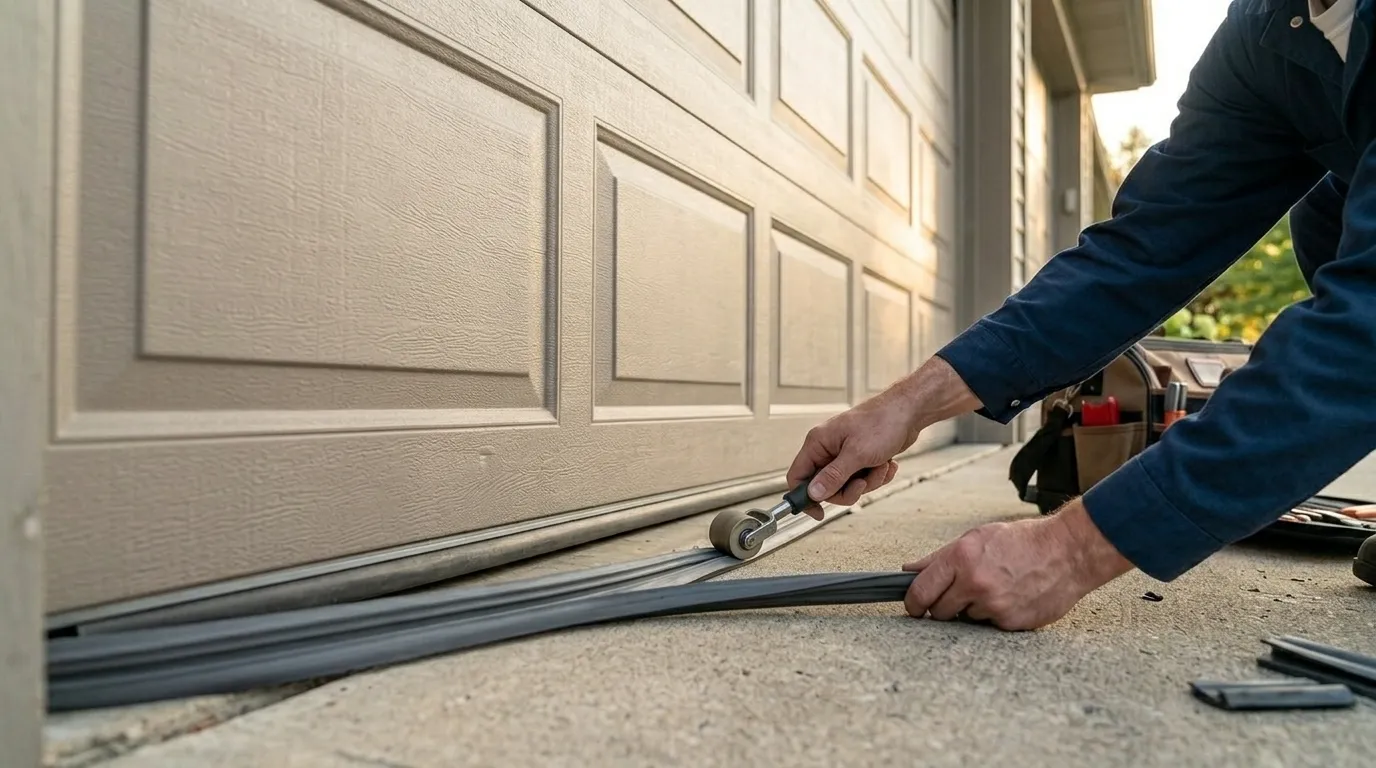
We don't quote a number until someone has looked at the door, because a spring job, a track realignment, and a full opener swap are three different jobs with three different parts lists. What a service call actually covers is a diagnosis first: we check the springs, the cables, the track alignment, the rollers, and the opener's force settings before touching anything, because a door that looks like a spring problem is sometimes a track problem instead.
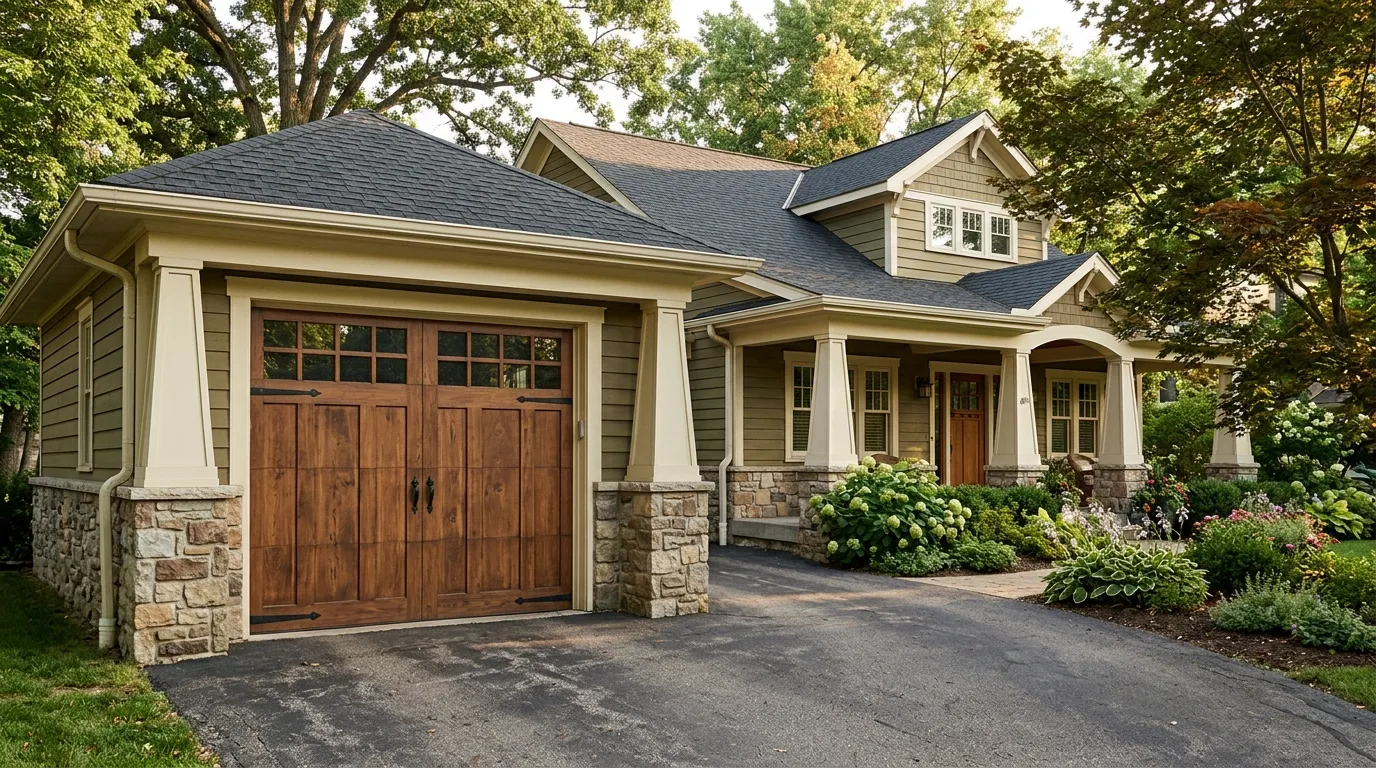
Household income in the area runs a median of $80,830, and most of the work we see reflects that middle-market housing stock - original builder-grade torsion springs and openers, not custom doors. That matters for cost because parts for standard builder-grade hardware are usually in stock; a custom or oversized door from a higher-end build can mean a special order and a longer wait.
One honest limitation: if a door is old enough that the track is bent, the panels are rusted through, and the opener is dead, we'll tell you plainly that replacement is the better spend rather than patching three failing parts one at a time.
The Problem
Housing in this area was mostly built between 1984 and 2014, with the bulk of it dating to the 1980s and 90s. That means a lot of doors on original hardware are now thirty to forty years old - past the design life of a torsion spring, which is typically rated for around 10,000 cycles, or roughly seven to ten years of daily use. Nobody replaced them because nothing failed loudly until it did.
The other pattern from that era: openers with chain drives and half-horsepower motors that were standard builder spec in the 90s, now straining against doors that have picked up rust on the rollers or sag in the bottom panel. These aren't emergencies until they are - a chain drive stripping a gear, a spring finally letting go on a cold morning.
We see this across the wider service area too, out toward Redwood, Martindale, Kyle, and Uhland, where the same 1980s-90s construction wave shows up in the same failure points. It's not a San Marcos-specific defect - it's a San Marcos-specific age problem, and it's predictable if you know what year your house went up.
How Local Conditions Play In
This area sits in a mild climate band that still sees occasional freeze conditions. That combination is rougher on garage door hardware than either extreme alone. Steel springs and cables that sit through humid, warm stretches most of the year and then get hit with a hard freeze a handful of nights a winter don't fail from one or the other - they fail from the cycling between the two, as metal expands and contracts and lubricant thickens then thins again.
We see it most on doors facing the wind, and on openers mounted in garages with no insulation, where the temperature swing inside the garage tracks the swing outside more closely than people expect. A spring that's already near the end of its cycle life is more likely to go on the one or two genuinely cold mornings a year than during a normal 70-degree week.
This isn't hurricane country and it isn't a hard-freeze climate either, so we're not selling storm-rated doors or heated tracks. What actually matters here is keeping hardware lubricated through the humid months and having someone check spring tension before the occasional cold snap, not after it.
How it works
From “it’s stuck” to “it’s fixed”
01
Tell us what’s wrong
Describe the symptom - won’t open, loud bang, opener runs but the door won’t move.
02
On-site diagnosis
A technician tests the door under power and by hand and finds what actually failed.
03
Clear, up-front plan
You get the fix that’s needed and what drives the cost - before any work starts.
04
Repaired & tested
The repair is done, the door is set true and tested, and the work area left clean.
Serving San Marcos, TX - tell us what your door’s doing and we’ll take it from there.
If the opener motor runs - you hear it - but the door doesn't move, or barely creeps, that's almost always a broken or badly unbalanced spring, not the opener. If the opener doesn't make any sound at all, check the power first before assuming it's the motor.
My house was built in the 90s - is that hardware original?
A lot of it is. Housing in this area was mostly built between 1984 and 2014, with a big share from the 1980s and 90s, and original torsion springs and chain-drive openers from that build wave are now well past typical service life.
Do you install storm-rated or insulated doors because of the weather here?
We don't push that as a default here - this area sits in a mild climate with only occasional freeze, not a hard-freeze or storm-heavy zone. What matters more is keeping hardware lubricated through humid stretches and checking spring tension before a cold snap.
Is it ever not worth fixing?
Yes. If the track is bent, panels are rusted through, and the opener has failed, patching each piece separately usually costs more over time than replacing the door. We'll tell you when that's the case instead of running up a repair bill.
Ready to get your garage door sorted?
Tell us what it’s doing and where you are in San Marcos - we’ll take it from there.