What It Costs
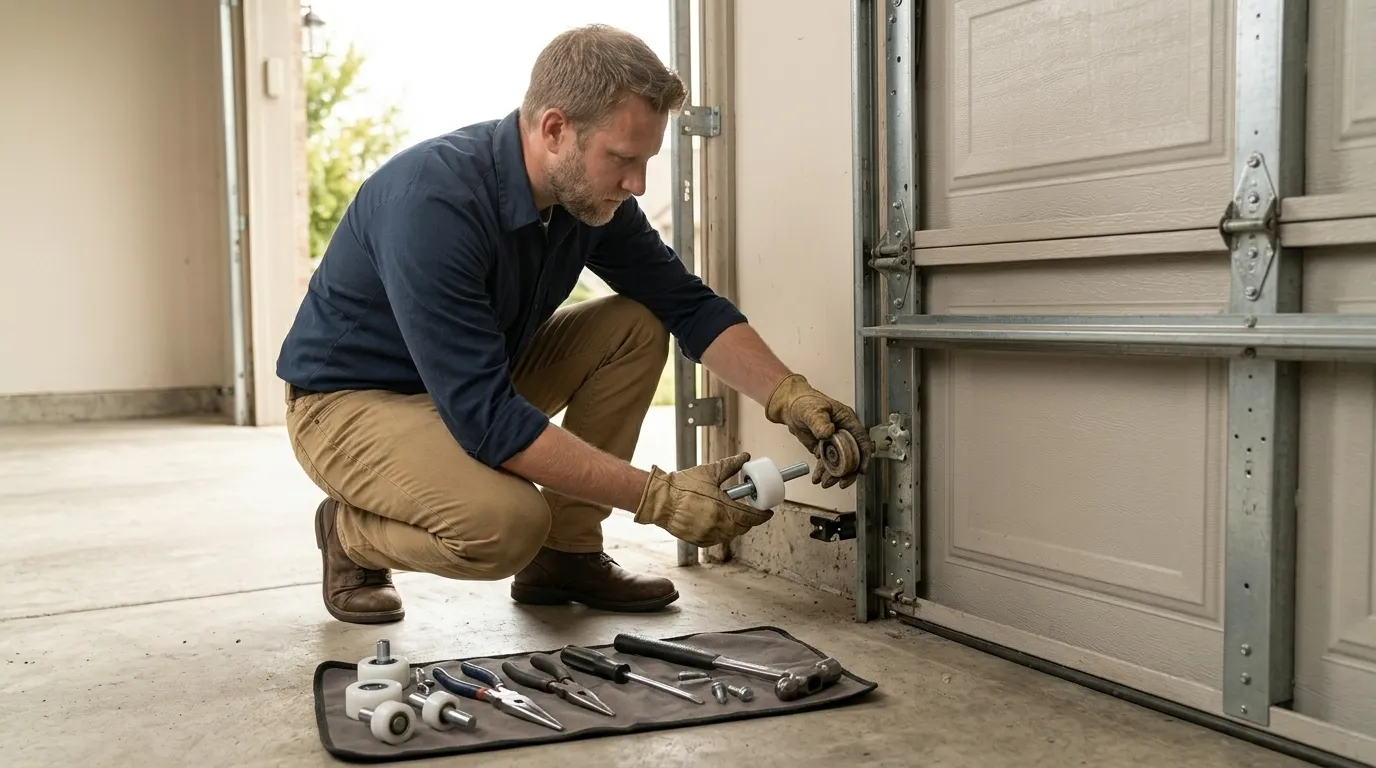
We don't have a set number to quote here without seeing the door, and giving one would be a guess dressed up as a fact. What drives the cost is what actually failed - a single bent track section is a different job than a bracket that's torn loose from the jamb, and both are different from a spring failure that let the door drop unevenly and walk the rollers out of the rail. What we can tell you: with 31,977 owner-occupied houses across this service area and most of that stock dating to the 1980s and 90s, replacement rollers and track realignment are common calls, not rare ones. Original hardware from that era wasn't built to run forever, and by year twenty-five or thirty it's often cheaper to swap the whole roller set than to keep patching one at a time. If a spring is what caused the door to jump track, that's a separate repair and it's not one to put off - a door running on a broken spring puts extra load on the opener and the remaining hardware every time it cycles.
The Problem
A door goes off track for one of a short list of reasons: a roller wears down and binds instead of rolling, a track bracket loosens from the framing and the rail shifts out of alignment, or a cable frays and lets one side of the door drop faster than the other. On the 1980s and 90s stock that makes up most of this area, the common thread is age - steel rollers that have run for thirty years develop flat spots, and the sheet-metal brackets holding the track to the jamb work loose a little more with every open-close cycle. None of that is dramatic on its own. It shows up as a door that's slightly louder than it used to be, or one that hesitates for a second before it catches and moves. By the time it actually jumps the track, that wear has usually been building for months. The fix depends on what let go first - sometimes it's a fifteen-minute roller swap, sometimes the track itself is bent enough that it needs to come off and get reset. We look at the whole run of track, not just the spot where the door came loose, because a track that's bent in one place is often stressed somewhere else too.