How It Shows Up
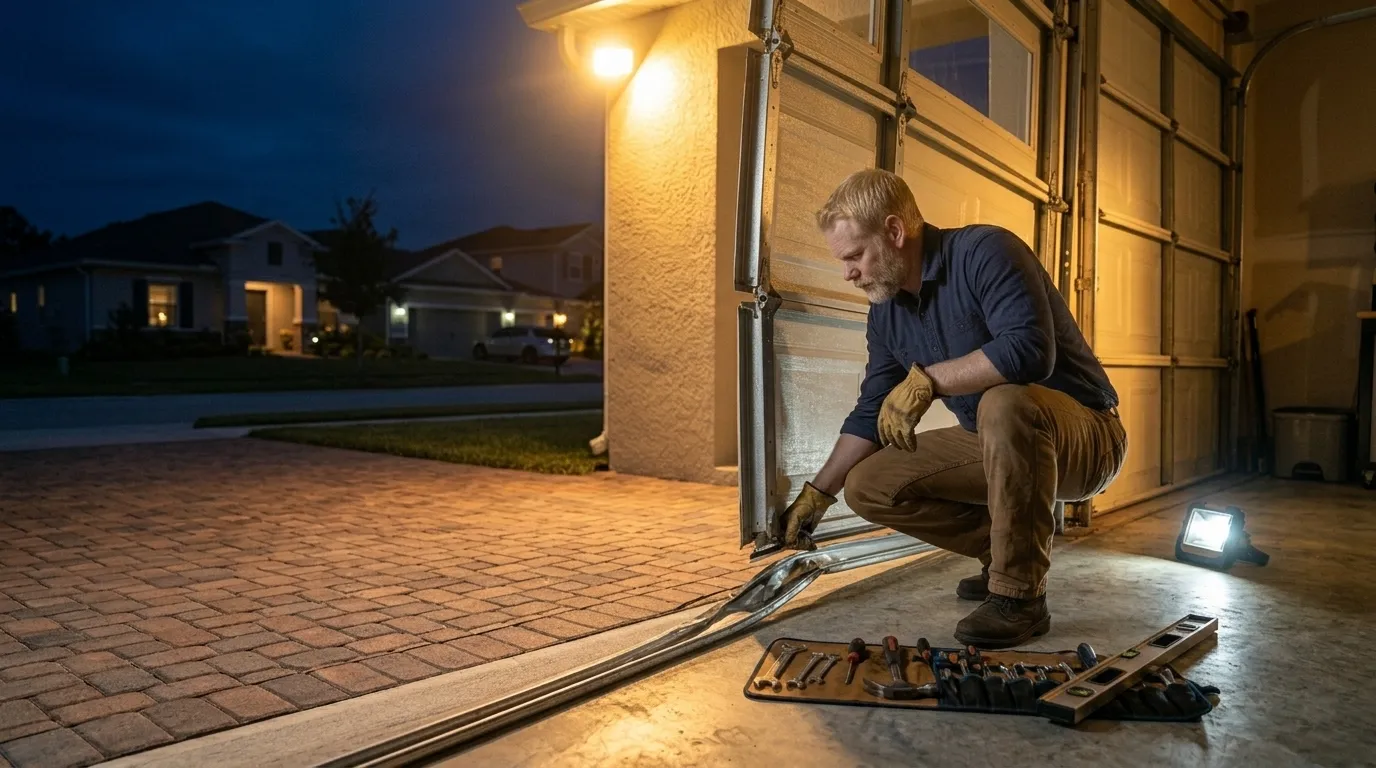
On a torsion spring, the classic sign is a door that feels twice as heavy the moment you try to lift it by hand, or an opener that strains, clicks, and reverses partway up. Extension springs - the ones stretched along the horizontal tracks above the door on older layouts - tend to go with a loud crack, and you'll often find one half of the coil hanging loose. Either way, once a spring lets go, the opener is doing a job it was never built to do alone, and running it repeatedly in that state is how you turn a spring job into a spring-and-opener job. Seguin's housing stock centers on 1984, a decade earlier than the service area's overall median of 1996, so the original hardware here has had more years to fatigue than what we see on newer streets closer to San Marcos. If your door is original to the house, the spring almost certainly is too, and it's been carrying that weight for four decades of daily cycles.
What the Repair Takes
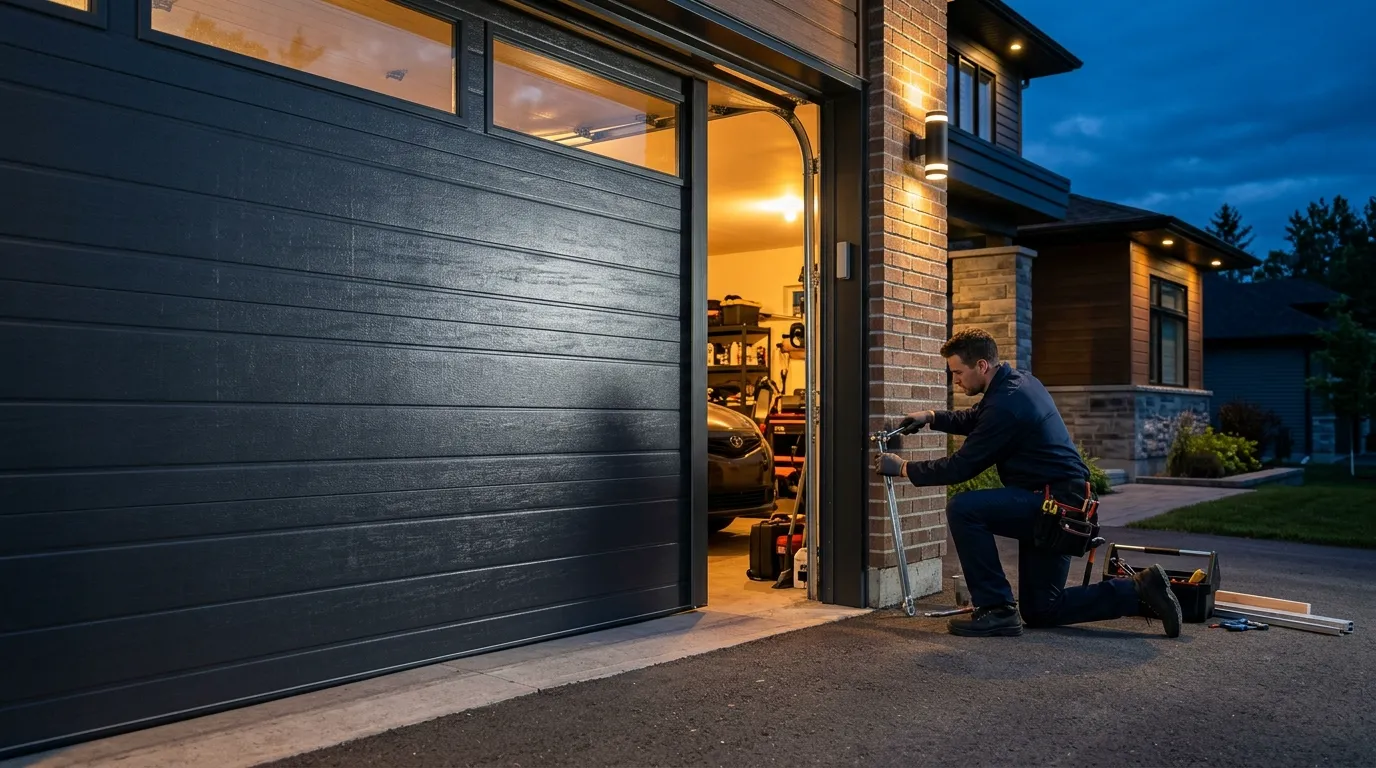
A straightforward torsion spring swap is a bench-and-ladder job - unwind the old spring under control, measure the wire gauge and wind length against the door weight, and set the new spring to the right number of turns. Where it gets longer is when the original hardware hasn't been touched since the house was built: the center bearing plate, the cable drums, and sometimes the shaft itself are original too, and forty years of use means we're often replacing more than just the spring to do the job right. The mild-with-occasional-freeze climate through this part of the service area doesn't rust hardware out the way a wetter region would, but it does put enough cold snaps through the metal each winter to add fatigue on top of age. We check both springs on a double door even if only one broke, because the other one is the same age and rarely far behind.
What It Costs
We don't have a fixed number to quote here, because spring cost depends on the door's weight, whether it takes one spring or two, and whether the drums, bearings, or cables need replacing alongside it. What we can say is that a door original to a 1984-era Seguin house is more likely to need the full set - spring, drums, and bearing plate together - than a door installed in the last decade, simply because none of that hardware has been swapped out yet. With 11,595 households in Seguin and a median income of $61,896, most of these homes were built to a builder-grade spec rather than custom, which usually means standard door sizes and standard spring gauges - parts we stock, not special-order items that push the price or the wait time up.
What Causes It Around Here
Across the broader service area, most garage doors date to the 1980s and 90s, and that pattern holds in Seguin, where the local median build year runs closer to 1984 than to the service area's 1996 midpoint - meaning the average door here is older than average for the region, not younger. A spring is rated for a set number of open-close cycles, and a forty-year-old spring has simply used up more of that count than one installed during a remodel ten years ago. At 20 miles out, Seguin sits at the same rough distance as Martindale and a bit closer than Kyle, and the housing pattern out here tracks with the other older-build towns on that list rather than with the newer subdivisions nearer San Marcos itself. The mild-with-occasional-freeze climate here still puts enough cold snaps through a 40-year-old spring to finish it off, even without the harsher freeze-thaw cycling colder regions deal with.