Garage door maintenance built around San Marcos's 1984-2014 housing stock and mild climate - spring checks, roller and track service, and honest calls on what's worth fixing.
Most of the doors we service sit on houses built between 1984 and 2014, with a median build year of 1996. That means a big share of the doors in this area are now twenty to forty years old, and a lot of them are running on the same torsion springs, rollers, and hinges that went in with the house. Nobody swaps that hardware unless something breaks or a service call catches it first.
Across the sixteen communities we cover - from Redwood five miles out to McQueeney twenty miles out - the housing stock runs mostly 1980s and 90s builds, which is a pretty narrow window as far as garage door generations go. That's useful, because it means the failure points repeat house to house: same-era openers reaching the end of their gear life, same-era spring wire fatiguing at roughly the same clock, same cheap rollers that were standard-issue back then.
A maintenance visit isn't about waiting for something to fail. It's about catching a door while it's in that stretch where a spring is starting to sag or a track is starting to walk out of alignment, before it turns into a call where the door won't move at all. On a house from this era, that's usually a matter of when, not if.
What Causes It Around Here
San Marcos sits in a mild climate band with only occasional freezes, which sounds easy on hardware and mostly is - but mild doesn't mean stable. The swings between warm afternoons and the occasional cold snap put steel through expansion and contraction cycles that dry out lubrication and stiffen springs faster than a homeowner expects from a place that never sees real winter.
Combine that with hardware that's often original to a house built in the 1984-2014 window, and you get a specific pattern: springs that were never a problem for fifteen years suddenly losing tension in the space of a year, rollers that went quiet-worn instead of failing outright, and track bolts that loosened slowly enough nobody noticed until the door started walking sideways on its way down.
None of this is dramatic. It's not storm damage or a car backing into a panel. It's just slow wear on hardware that was installed once and never looked at again, in a climate that's gentle enough to let a small problem go unnoticed for a long time before it becomes a door that won't open.
How It Shows Up
The first sign is almost always noise - a grind or a bang on the way up that wasn't there a year ago. That's usually a roller losing its bearing or a hinge working loose, not the spring itself.
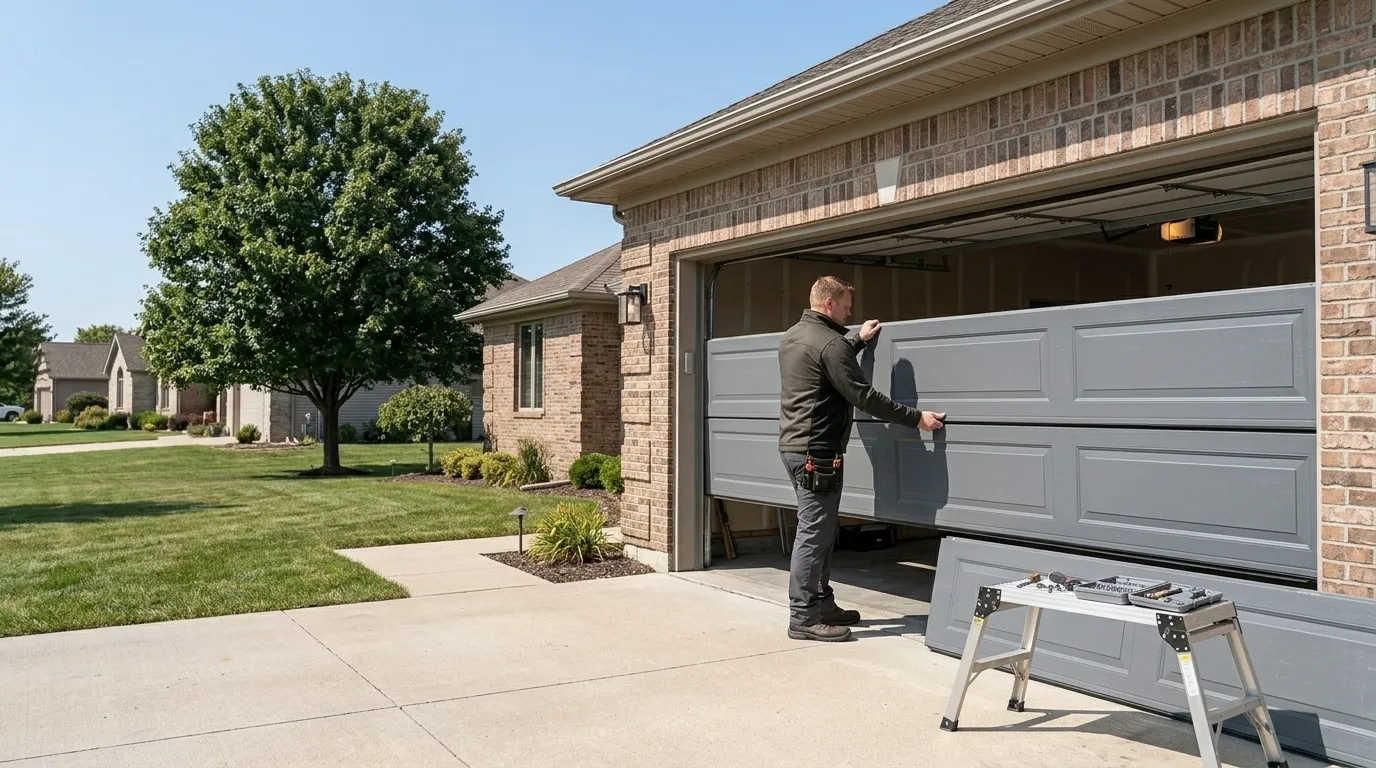
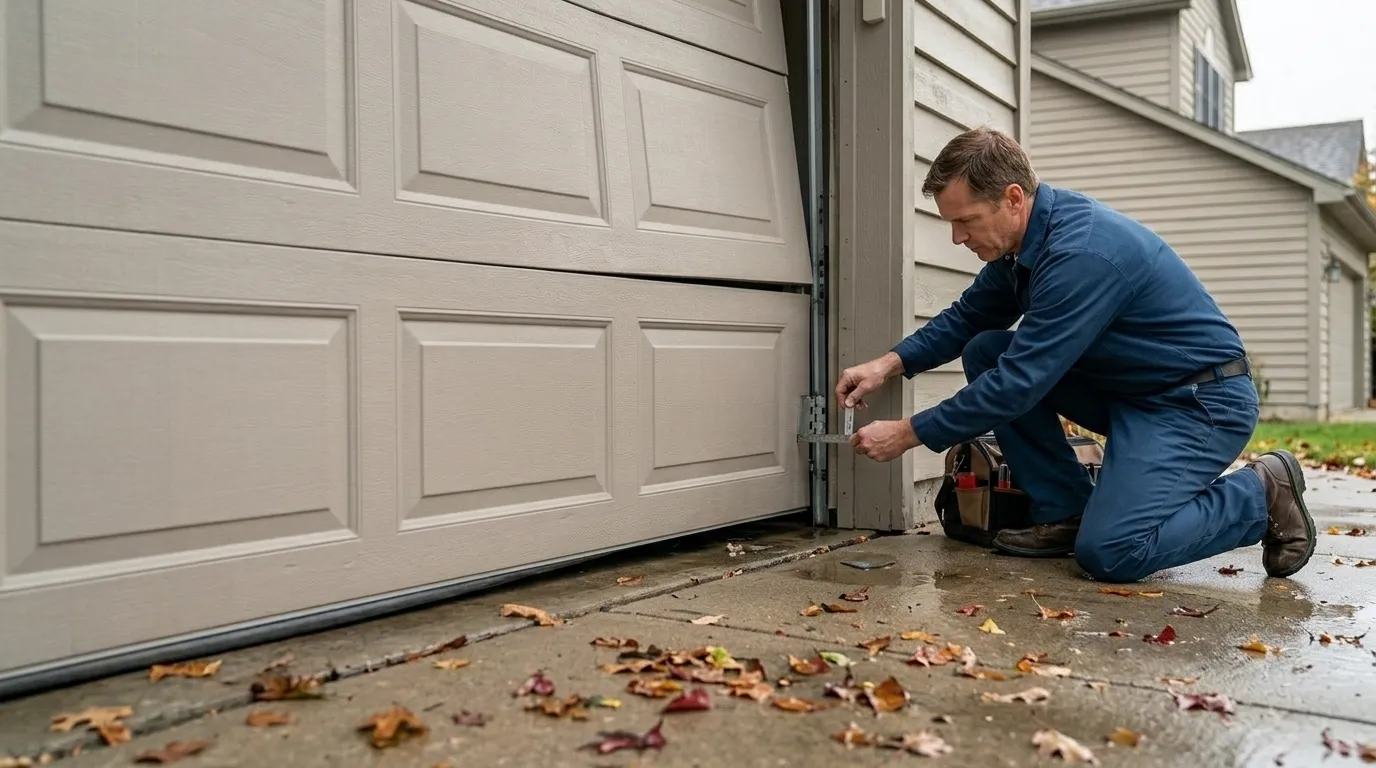
Next is a door that closes crooked, or one side that hits the floor before the other. On original hardware from the 1980s-90s stock common through this area, that's often a cable stretching unevenly or a track that's shifted a fraction out of plumb - small enough that most people ignore it until the door starts binding.
Then there's the opener straining: it takes longer to lift, or it reverses partway up for no clear reason. That's frequently a spring that's lost enough tension that the opener is doing work it wasn't built to do, which shortens the life of the motor along with the door.
The one we hear about last, because it's the one that finally forces a call, is a door that won't move at all. By then the spring has usually already gone. Everything before that point was the door telling you, quietly, that it was heading there.
What the Repair Takes
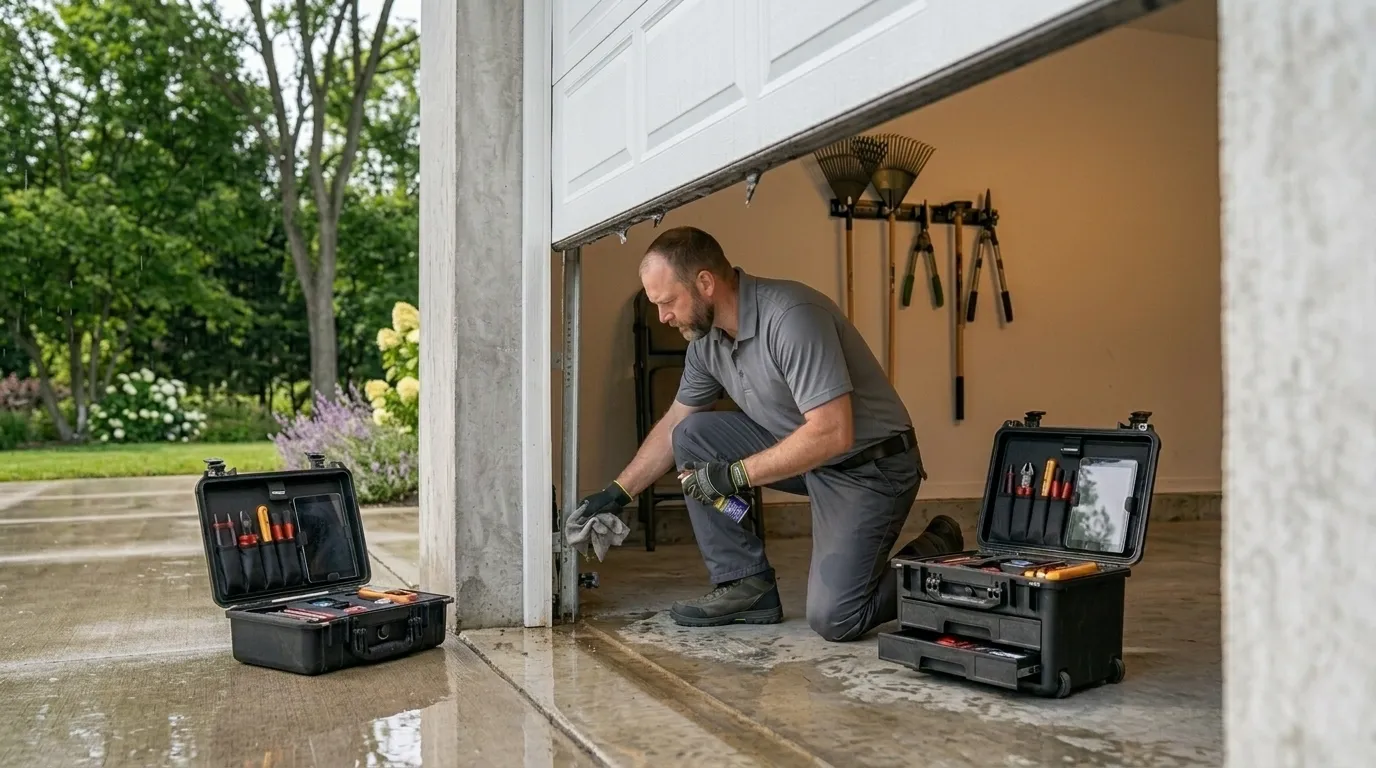
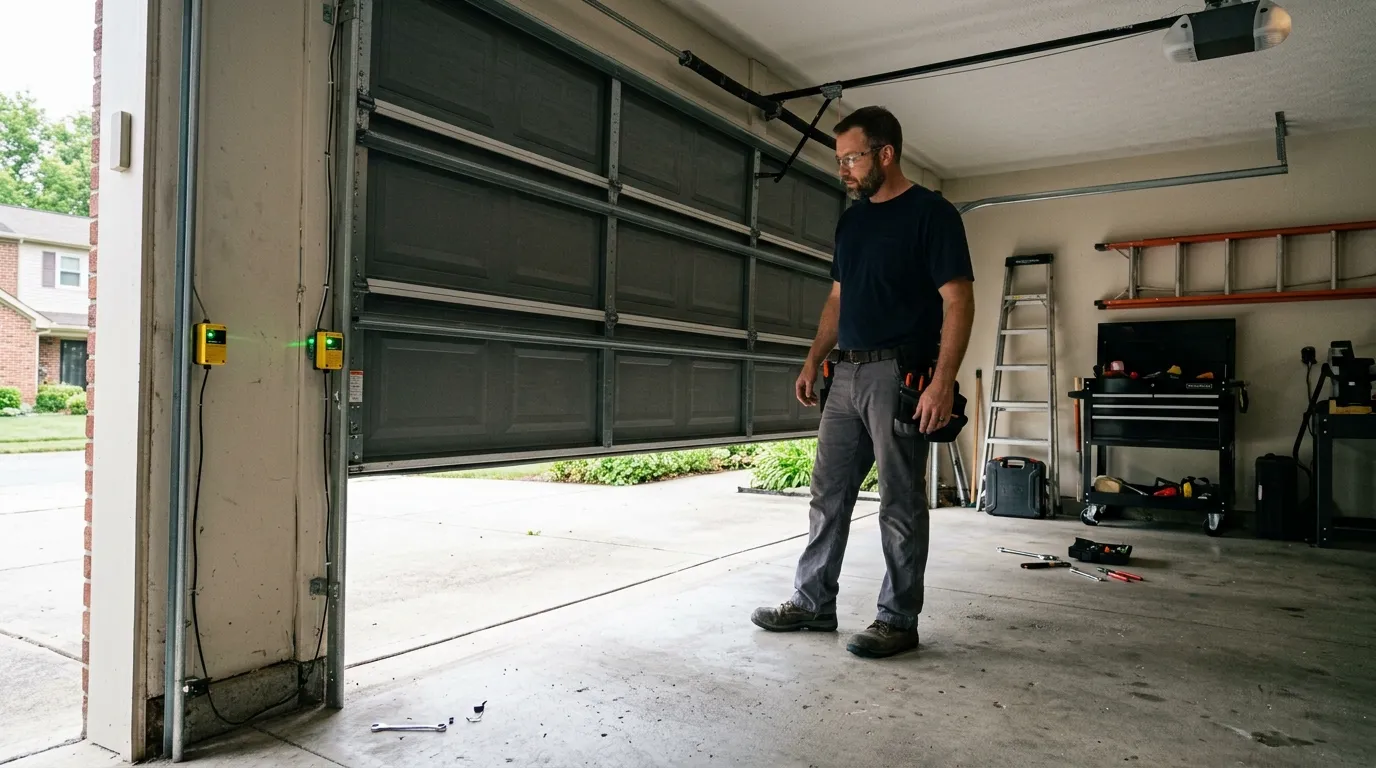
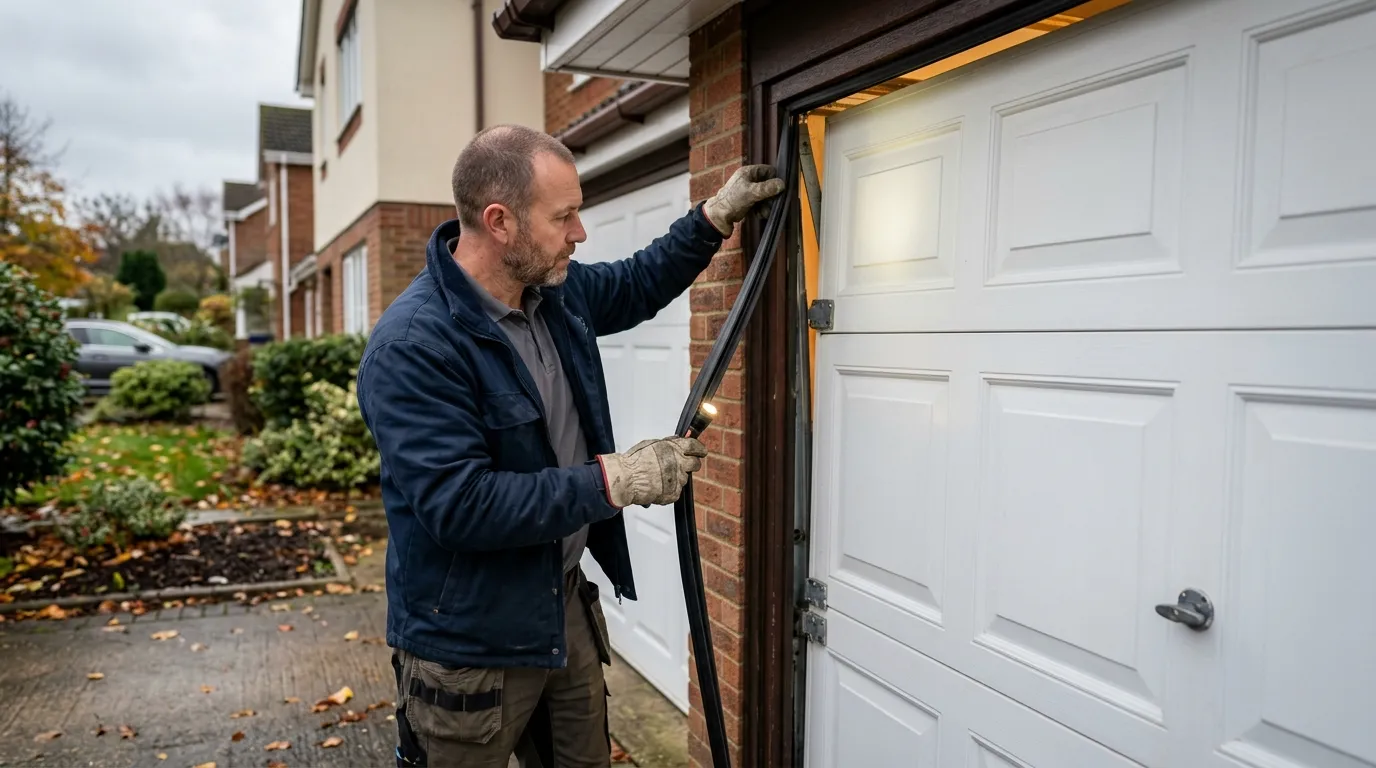
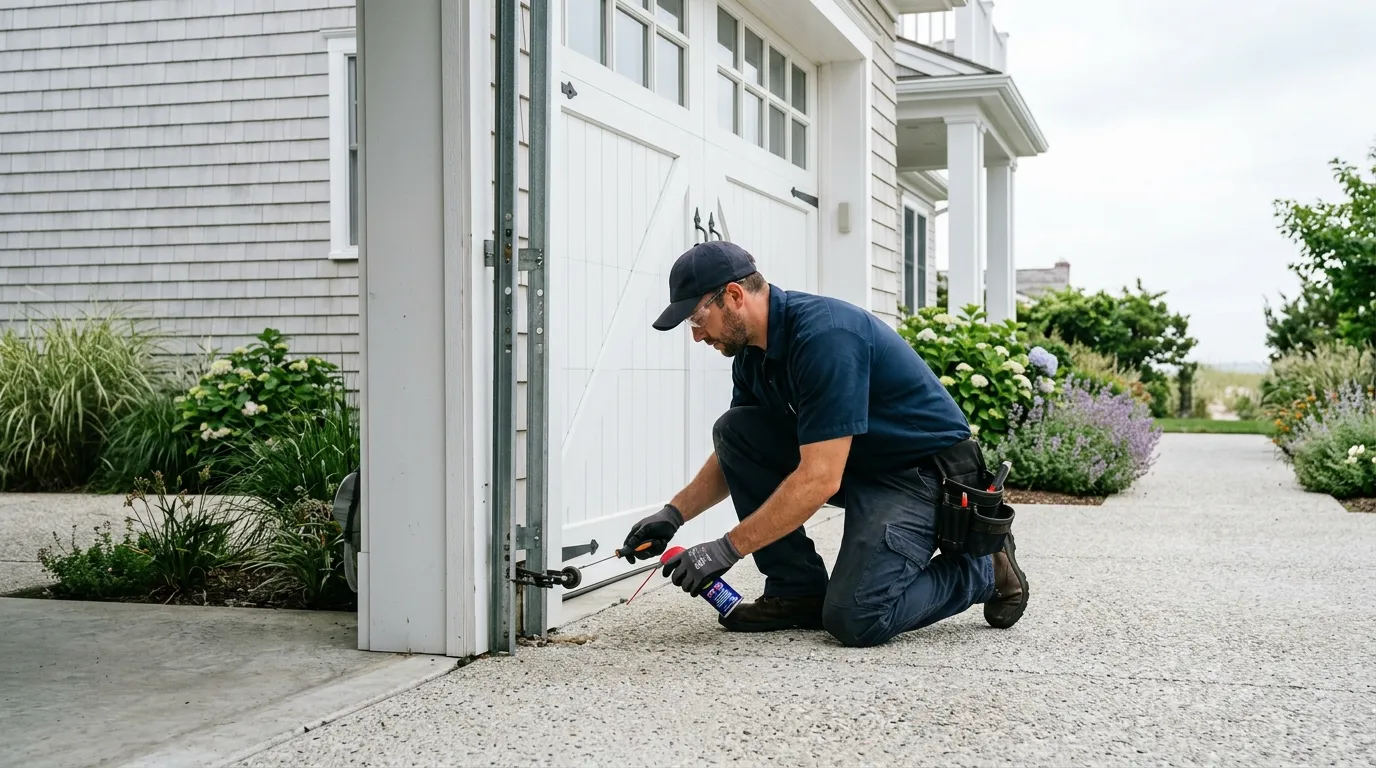
A maintenance visit covers the parts that wear the same way across this housing stock: spring tension and balance, roller and hinge condition, track alignment, cable wear, and the opener's force and limit settings. On a door from the 1984-2014 era, that's almost always where the wear shows up first.
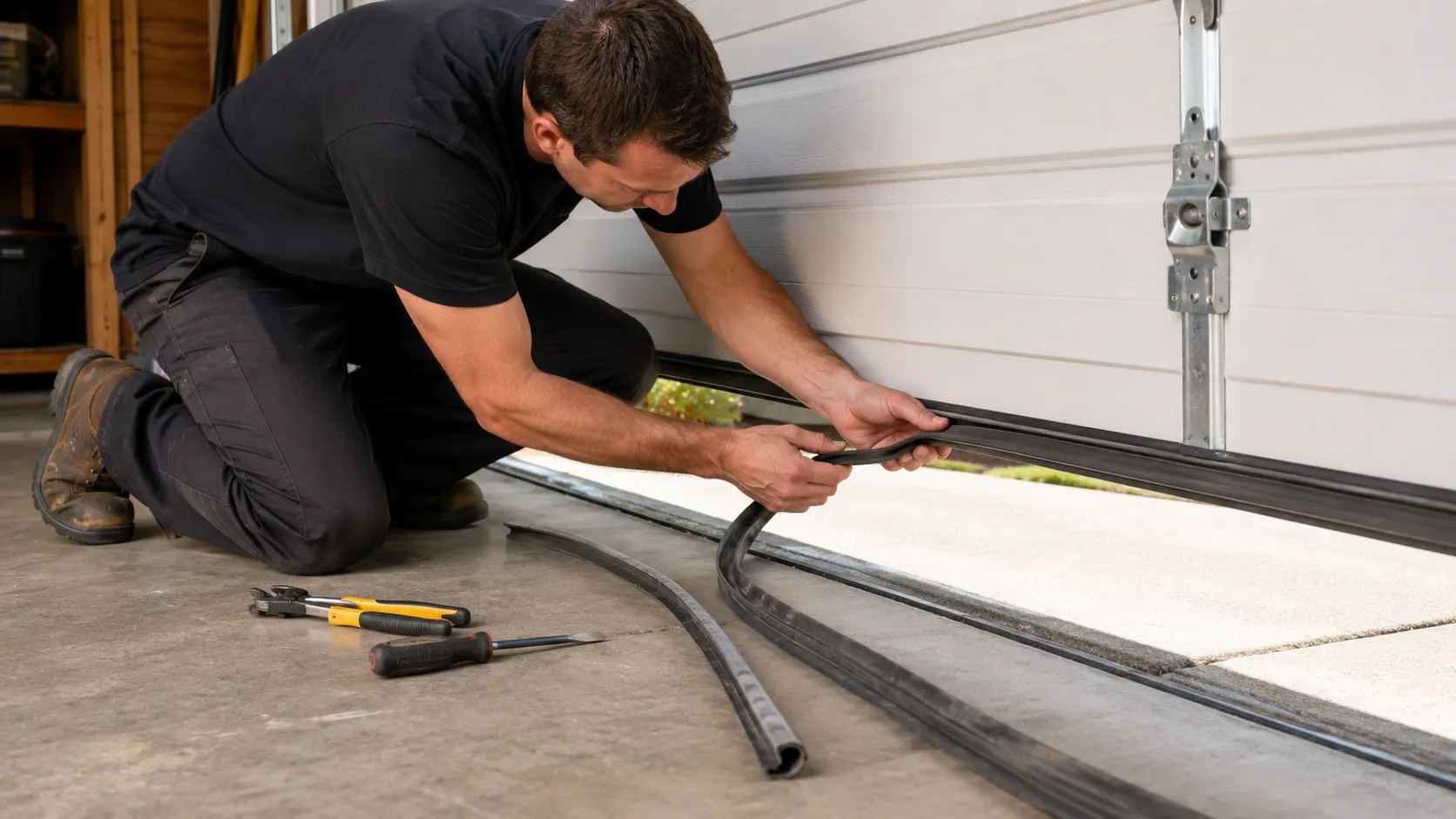
We'll tell you straight if a part's worn enough that lubricating it is a waste of time - a roller that's shot needs replacing, not oiling. And we'll tell you if the door itself, not just the hardware, is past the point where more maintenance makes sense. One honest limit: some parts on older doors, especially less common panel and track combinations, aren't something we can source same-day. If that's the case, we'll say so up front instead of guessing at a timeline.
Most of what a maintenance visit fixes is prevention, not emergency repair - catching a spring or a track before it costs you a door that won't open at all. Across a service area with roughly 32,000 owner-occupied houses, that's the difference between a routine visit and a Saturday morning stuck outside your own garage.
How it works
From “it’s stuck” to “it’s fixed”
01
Tell us what’s wrong
Describe the symptom - won’t open, loud bang, opener runs but the door won’t move.
02
On-site diagnosis
A technician tests the door under power and by hand and finds what actually failed.
03
Clear, up-front plan
You get the fix that’s needed and what drives the cost - before any work starts.
04
Repaired & tested
The repair is done, the door is set true and tested, and the work area left clean.
Serving San Marcos, TX - tell us what your door’s doing and we’ll take it from there.
How often should a garage door in San Marcos get maintenance?
There's no single number that fits every door, but houses in this area were mostly built between 1984 and 2014, so a lot of hardware is now well past its original service life. If it's been years since anyone touched the springs, rollers, or track alignment, that's the sign to get it checked, not a calendar date.
Does San Marcos's climate cause garage door problems?
The area sits in a mild band with only occasional freezes, which is easier on doors than a harsh winter climate but not maintenance-free. The swing between warm days and the occasional cold spell dries out lubrication and stiffens springs over time, especially on hardware that's original to the house.
Can maintenance catch a spring before it breaks?
Often, yes. A spring rarely fails without warning - it usually loses tension gradually, which shows up as a door that's slower to open or an opener that strains. A maintenance check that measures spring balance can catch that before the spring snaps outright.
Is it worth maintaining an older door instead of replacing it?
Depends on the door. If the panels and track are sound and it's just hardware wear, maintenance is usually the cheaper call. If the door itself is failing structurally, we'll tell you that instead of running up a maintenance bill on something that needs replacing.
Ready to get your garage door sorted?
Tell us what it’s doing and where you are in San Marcos - we’ll take it from there.