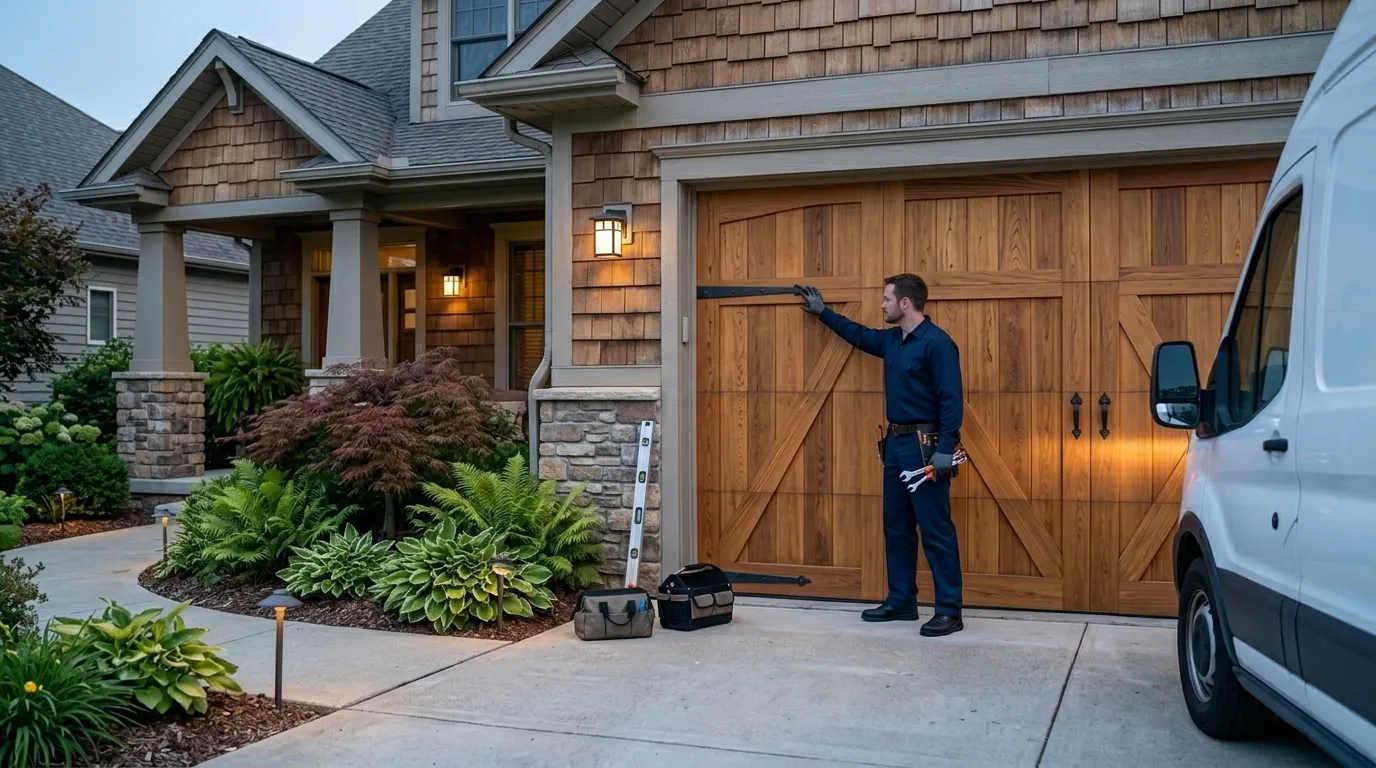
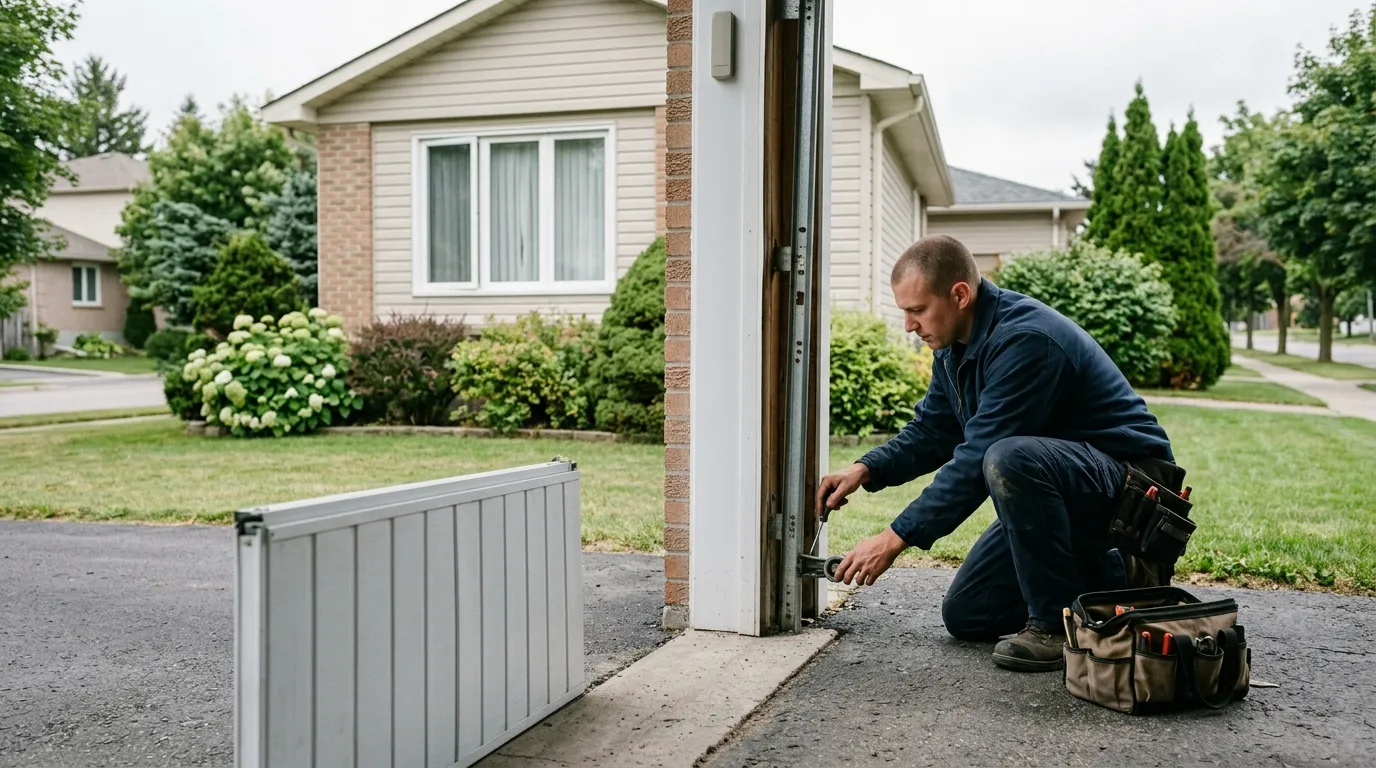
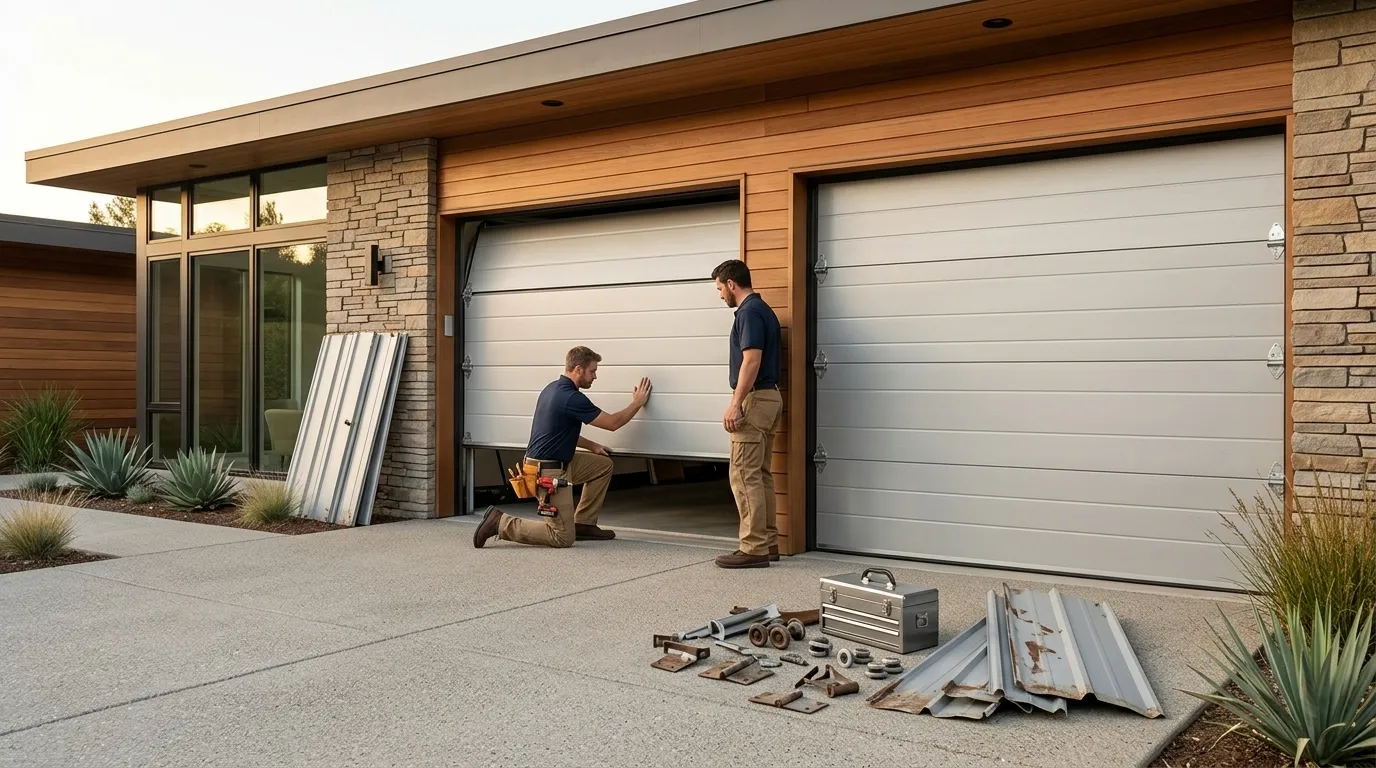
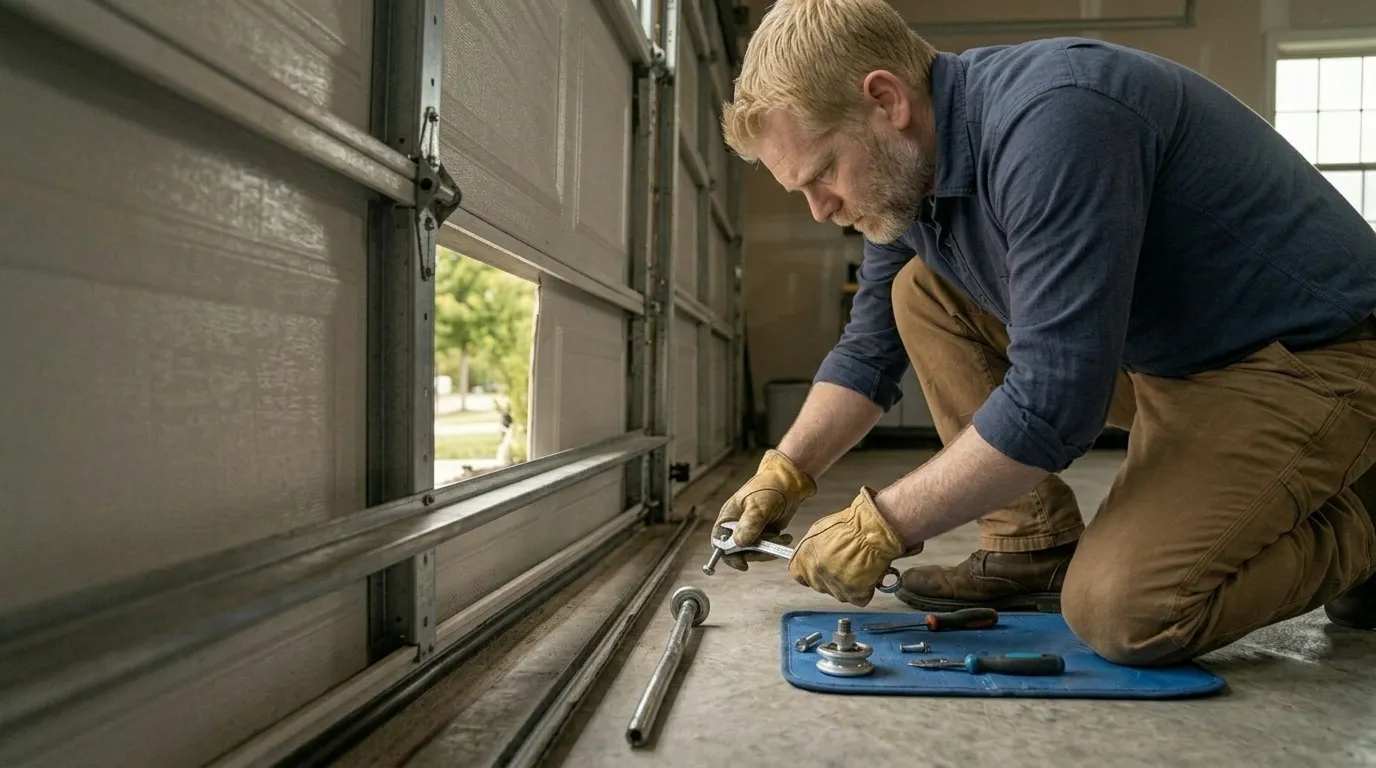
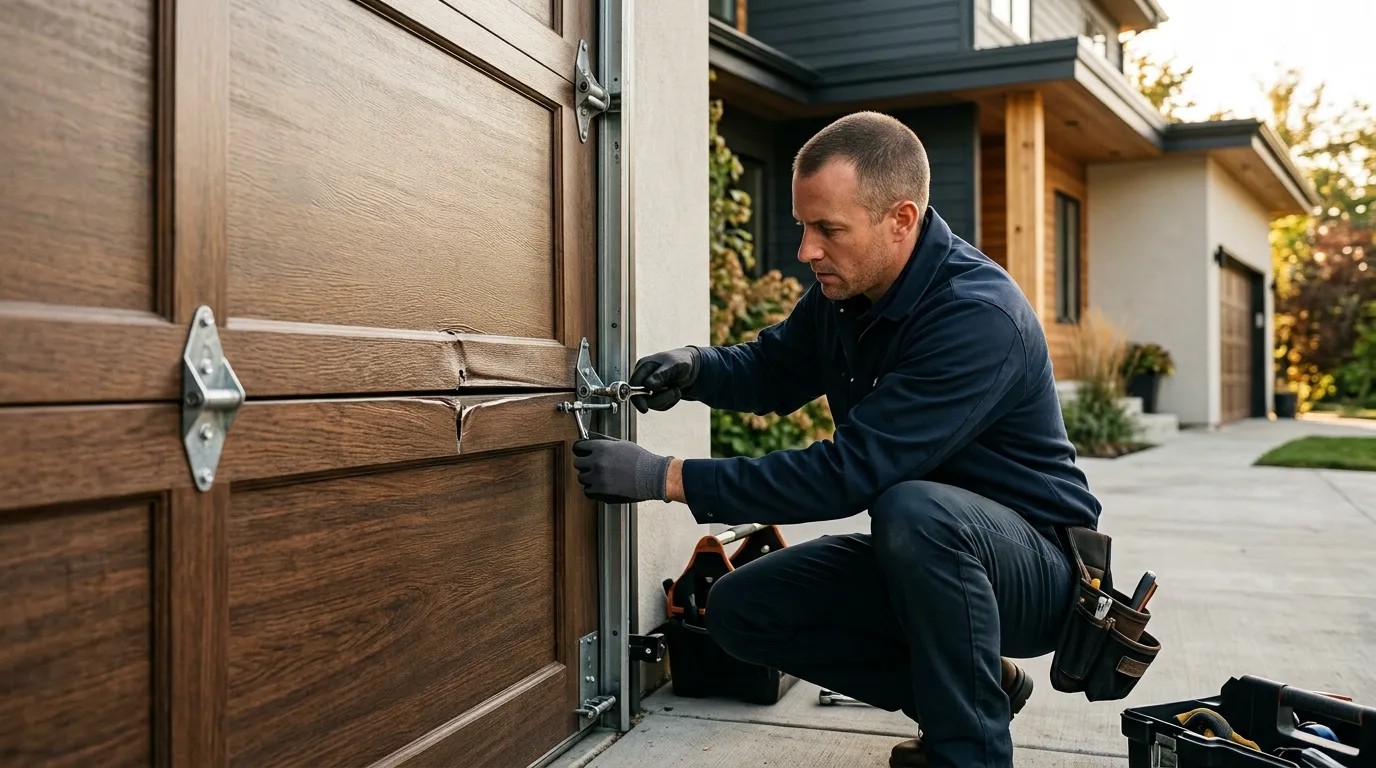
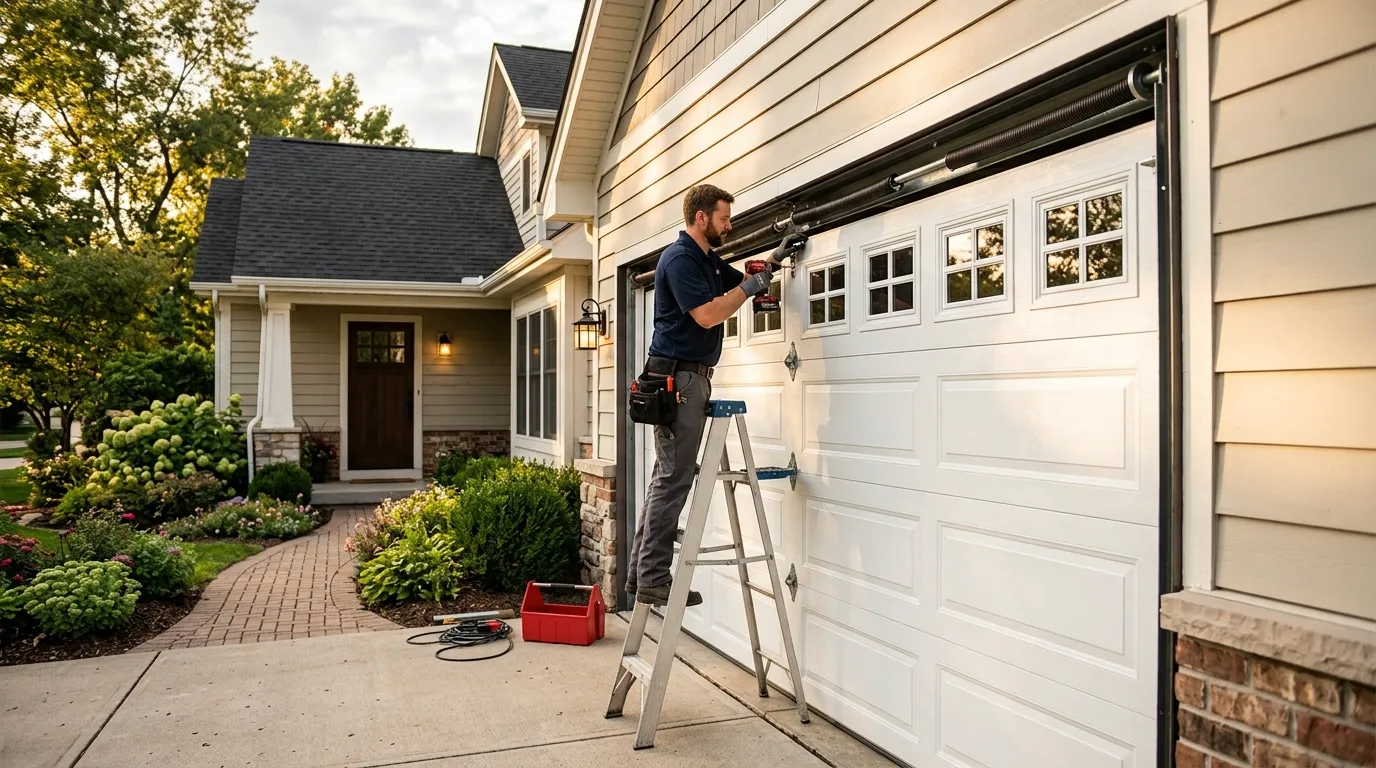
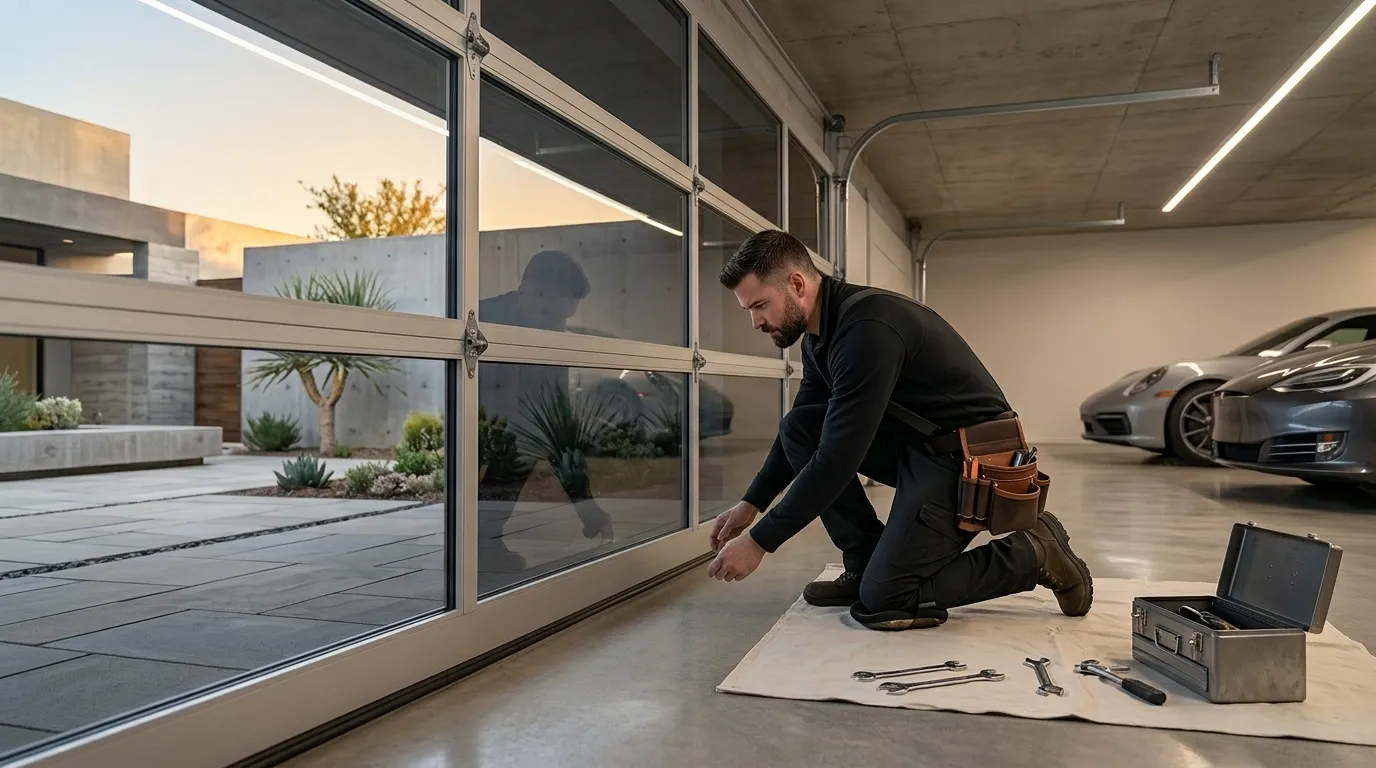
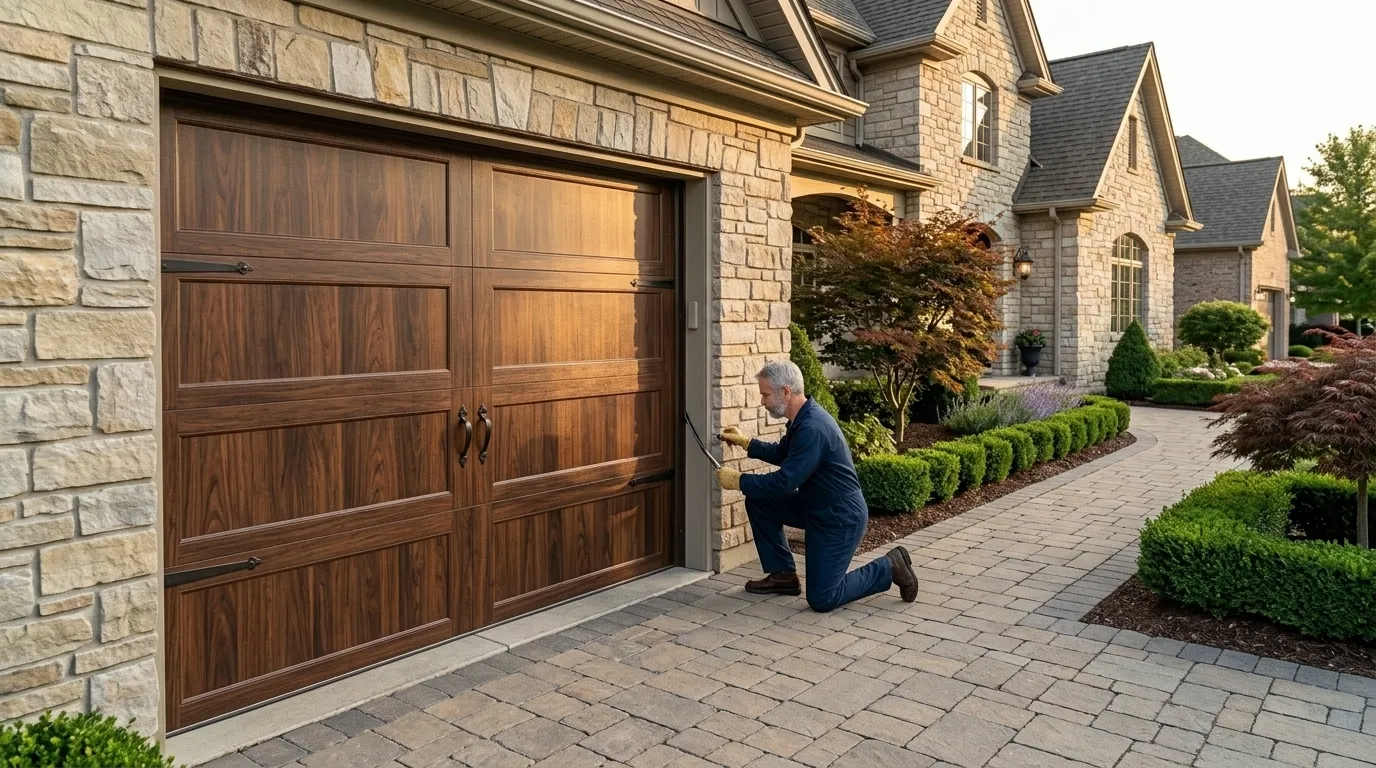
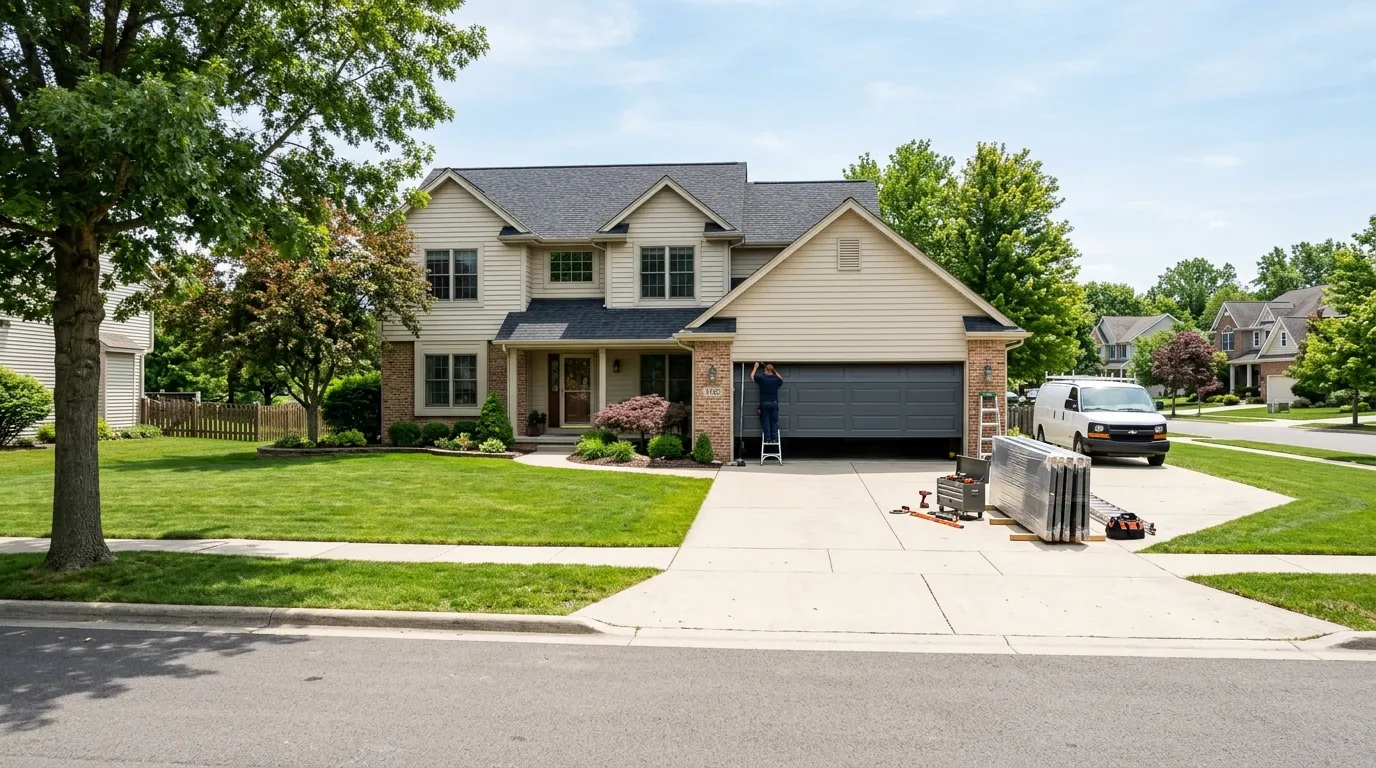
Commercial garage door repair and service across San Marcos, TX covering rollup doors, torsion springs, and openers on buildings built during the area's 1984-2014 growth years.
A commercial call is a different animal than a house call. You're usually dealing with a bigger door, heavier springs, and an opener rated for cycles a residential unit was never built to handle. Before a truck rolls, we want to know the door type - sectional steel, rollup, or a high-cycle commercial operator - because the diagnosis and the fix both hinge on that.
Most of what we see on commercial bays in and around San Marcos traces back to the same building boom that produced the area's housing stock: construction from 1984 through 2014. That means a lot of doors and openers from the same handful of commercial product lines, installed by the same handful of contractors, wearing out in roughly the same order. A torsion spring on a 14-foot warehouse door doesn't fail the same way a residential spring does, and it isn't something you loosen with a ladder and a wrench - the tension involved can put someone in the hospital.
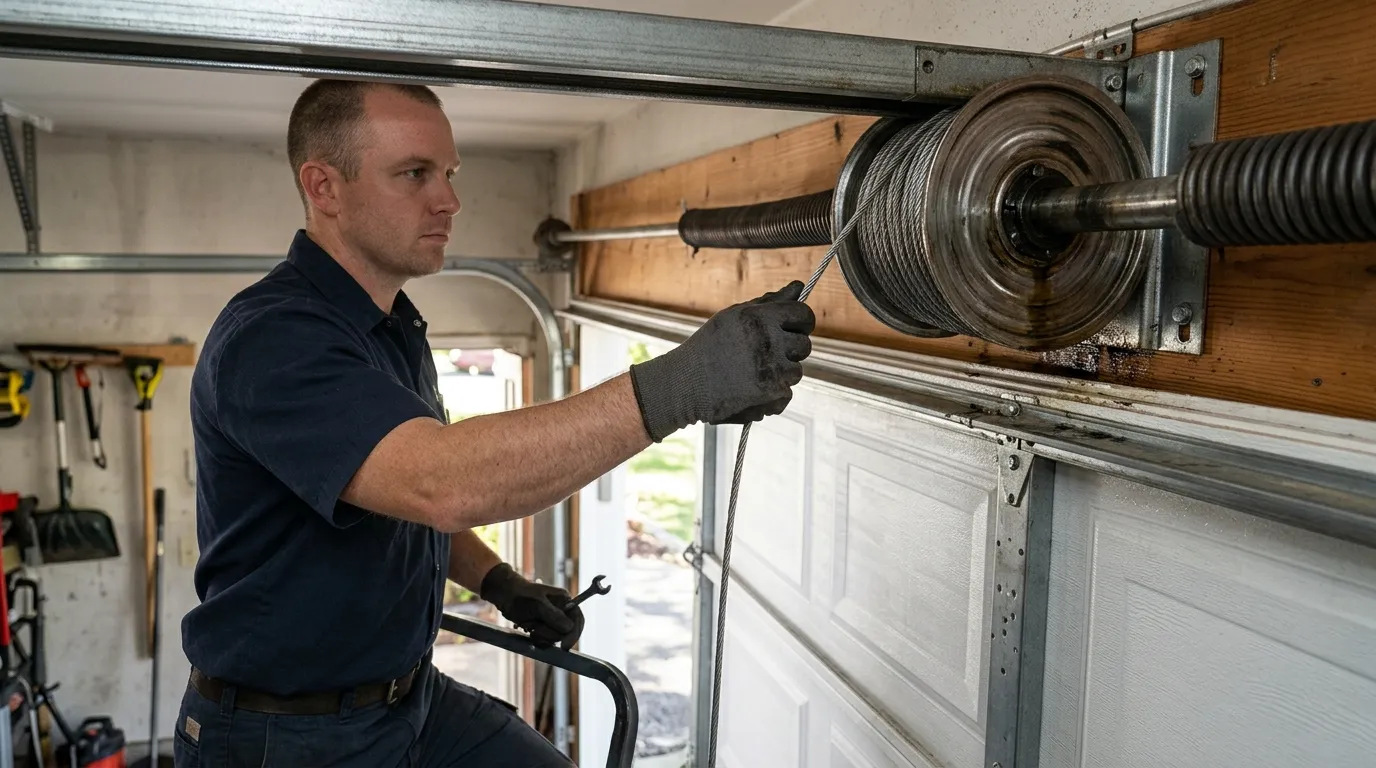
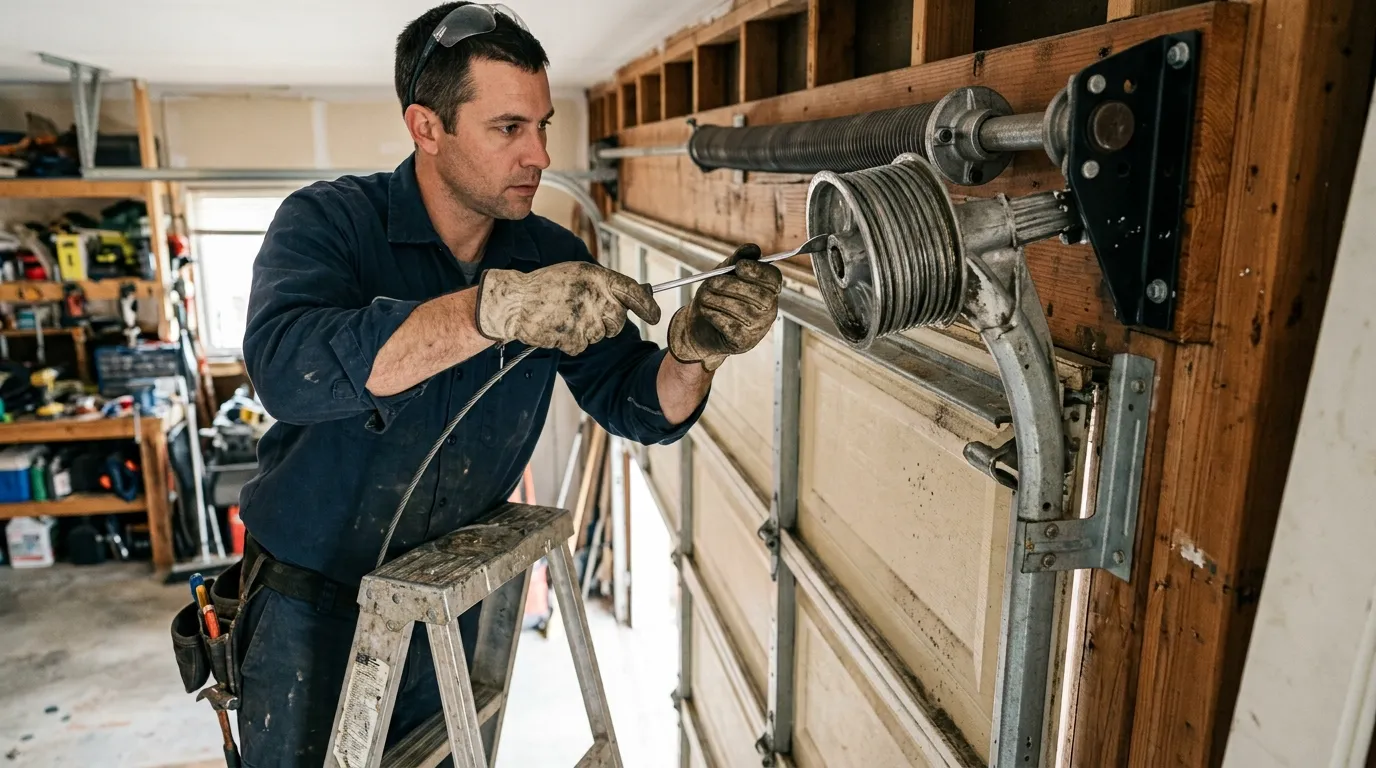
We don't guess on-site. We look at the shaft, the drums, the cable routing, and the opener logic board before we quote anything, because a bay door that's been limping along on a mismatched part is a different job than one that just needs a spring swap.
What Causes It Around Here
Two things drive most commercial door failures across this stretch of Central Texas: the age of the buildings and the climate band they sit in. F1 and F2 put most of the area's construction, residential and the light-industrial and retail strips that went up alongside it, in the 1984-2014 window. That's a 30-year span, which means a lot of original hardware is now past its rated cycle count - springs, rollers, and cable that were sized for a building that's a decade or two younger than it is today.
The climate does the rest. This area sits in a mild band with occasional freeze events rather than sustained hard winters. That sounds easy on hardware, and mostly it is, but it's also exactly the kind of swing that stresses steel and lubricant without ever giving them a season to fully cool or fully dry out. A spring that never gets a hard winter also never gets a real rest period - it just keeps cycling through heat, the occasional freeze, and back to heat. Combine that with a commercial door that opens dozens of times a day instead of two, and the wear adds up faster than the calendar suggests.
We don't see much rust-through failure here. What we see is fatigue: metal that's cycled itself loose, not metal that's cycled itself rotten.
How It Shows Up
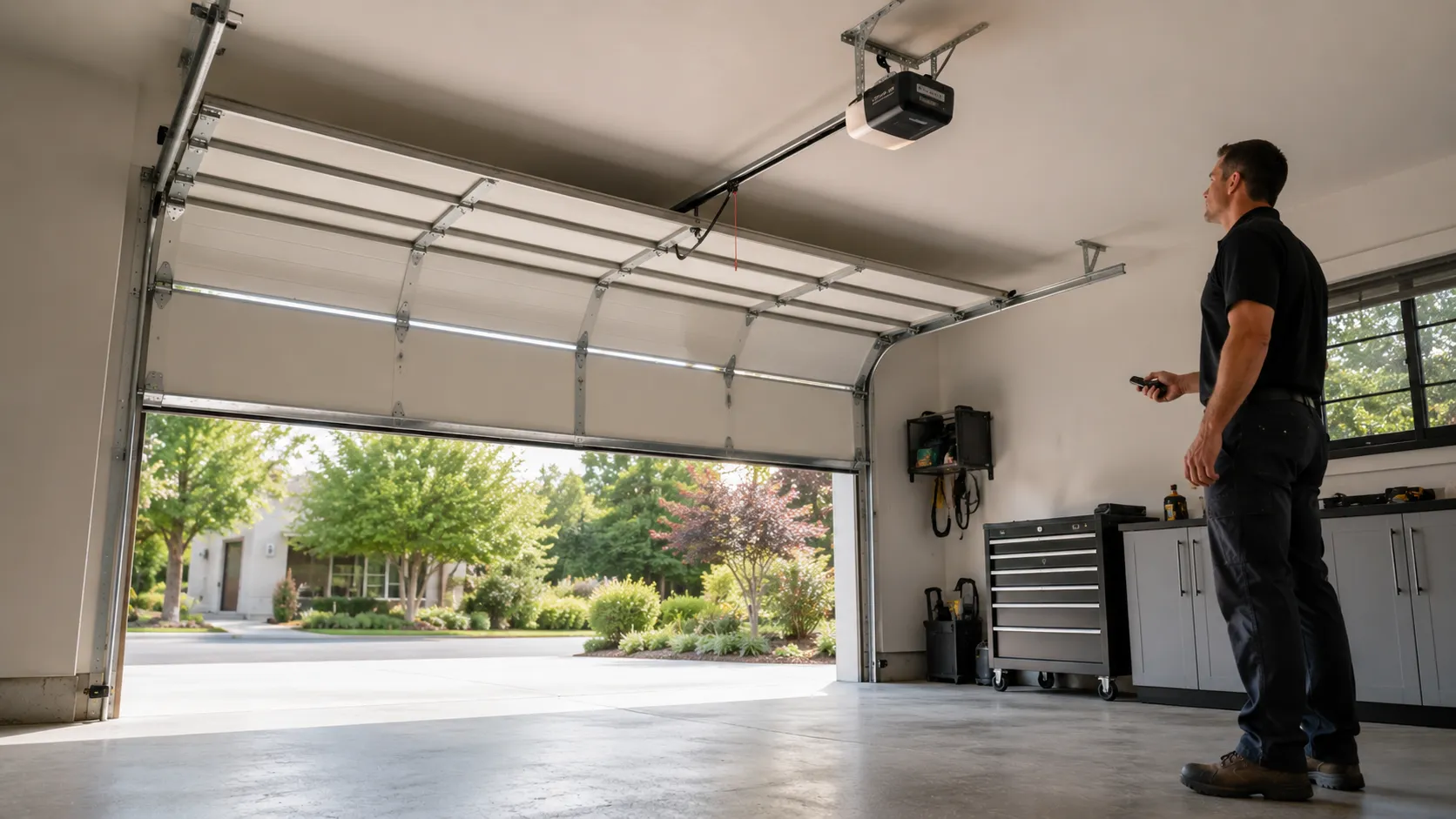
On a commercial door, the warning signs usually show up as a change in sound or a change in effort, not a door that simply stops. A rollup door that used to run quiet starts grinding on the way up. A sectional door that opened evenly for years starts dropping on one side, a sign a cable or one of the torsion springs on a two-spring setup has gone. An opener that used to fire on the first button press starts needing two or three tries, or reverses partway through the cycle for no reason anyone in the building can explain.
Staff usually notice it before anyone calls it in - the door that's louder than it used to be, the one bay that takes longer to close at the end of the day, the door that a driver has learned to give an extra push. By the time it won't move at all, it's usually been telling someone something for a couple of weeks.
We'd rather get the call at the grinding-noise stage than the stuck-open stage. A door that's frozen shut on a loading bay is a lost afternoon of business; a door that's making noise is still a scheduled repair.
What the Repair Takes
Commercial spring and cable jobs take specialized parts - the springs on a 12 or 14-foot door aren't something we carry in every size on every truck, and a match to an opener's logic board sometimes has to come from the manufacturer rather than off a shelf. We'll tell you straight if a part has to be ordered rather than promise a same-day fix we can't back up.
Most jobs on doors from this area's 1984-2014 building stock come down to one of three things: spring replacement, cable and drum work, or an opener that's aged out of reliable service and is cheaper to replace than to keep patching. We won't sell you a new opener when a $40 part solves it, and we won't tell you a torsion spring job is a ten-minute fix, because on a commercial door it isn't - it's a job that needs the door taken out of service, the right size spring on hand, and someone who's done the math on the wind load before touching the winding bar.
One honest limit: if a door has been running on a mismatched replacement part from a prior repair, sometimes the safest fix is a full torsion system replacement rather than another patch. We'll say so before we quote it, not after.
How it works
From “it’s stuck” to “it’s fixed”
01
Tell us what’s wrong
Describe the symptom - won’t open, loud bang, opener runs but the door won’t move.
02
On-site diagnosis
A technician tests the door under power and by hand and finds what actually failed.
03
Clear, up-front plan
You get the fix that’s needed and what drives the cost - before any work starts.
04
Repaired & tested
The repair is done, the door is set true and tested, and the work area left clean.
Serving San Marcos, TX - tell us what your door’s doing and we’ll take it from there.
How often should a commercial garage door get serviced in San Marcos?
It depends on cycle count more than calendar time - a bay door opening 30-plus times a day wears differently than one opening twice. Given the age of most commercial buildings in this area, built between 1984 and 2014, we generally recommend a spring and hardware check on any door that hasn't been looked at in the last couple of years.
Why do commercial doors here fail more from fatigue than rust?
The climate band here is mild with only occasional freezes, not sustained hard winters, so rust-through failure is uncommon. What wears out instead is metal fatigue from repeated heat-to-freeze cycling combined with high daily use, which shows up as spring and cable wear rather than corrosion.
Do you cover businesses outside San Marcos itself?
Yes, from San Marcos we run commercial calls out to nearby communities including Redwood, Martindale, Kyle, and Wimberley, among others in the service area.
Can a mismatched replacement part cause bigger problems later?
It can. If a prior repair used a spring or cable sized for a different door, the whole torsion system can end up stressed unevenly, and another patch job on top of it isn't always the safer or cheaper option. Sometimes a full system replacement is the honest answer.
Ready to get your garage door sorted?
Tell us what it’s doing and where you are in San Marcos - we’ll take it from there.