How It Shows Up
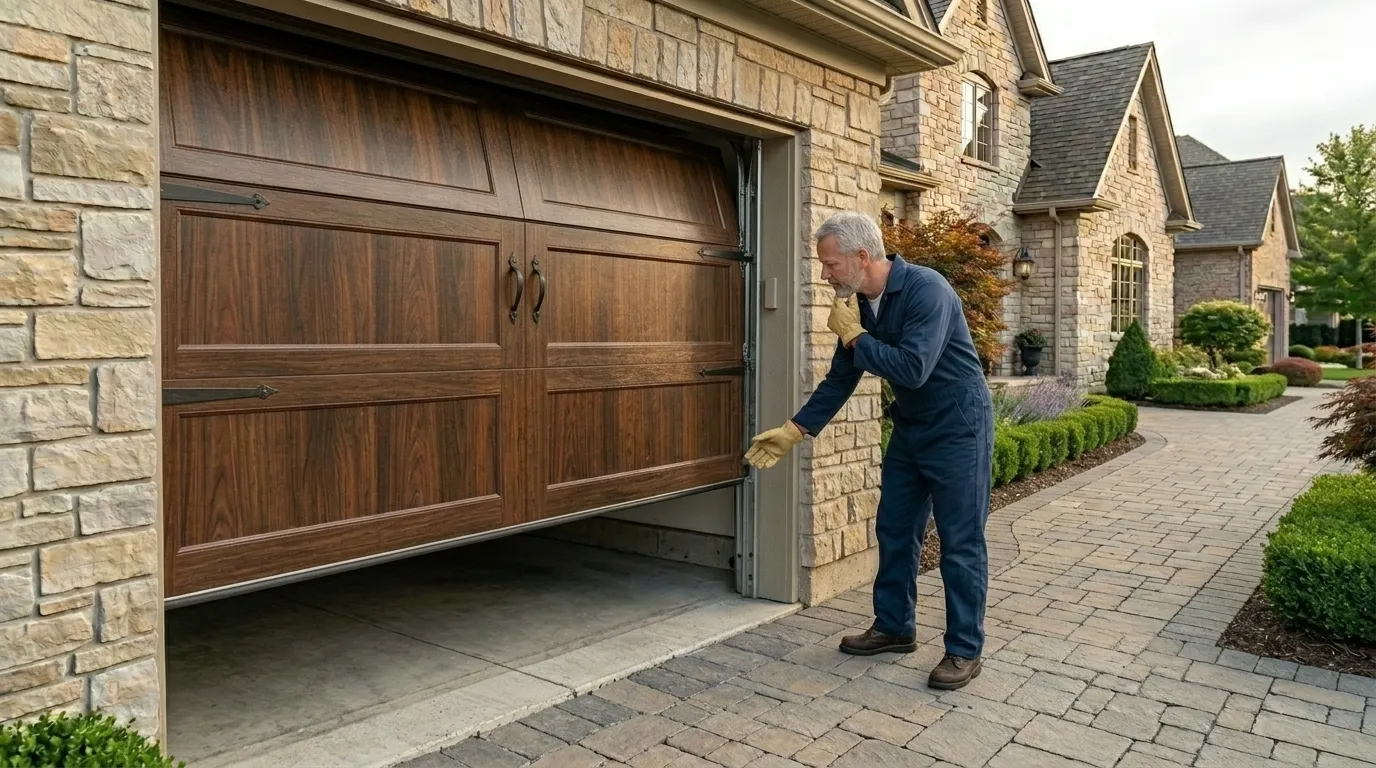
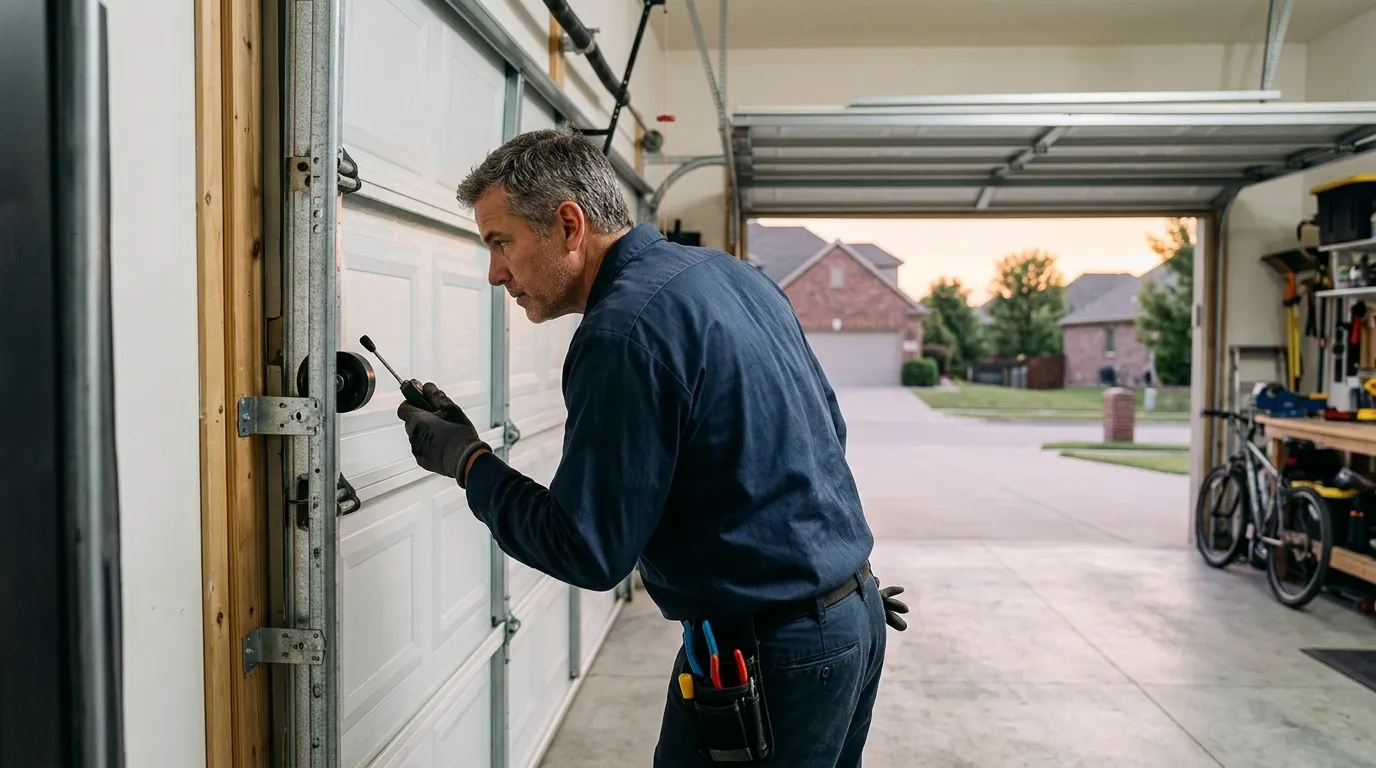
A garage door with a broken cable usually gives a warning first: one side of the door hangs lower than the other, or the door jerks and cocks sideways as it travels. Sometimes you hear a sharp bang before that - the cable letting go under tension. On the mid-1980s to 1990s builds that make up most of Seguin's housing stock, the cables have usually been on the drum for decades longer than any cable is rated for, so fraying near the bottom bracket or at the drum end is common. If the door won't budge and one cable is visibly slack or unspooled, stop opening it by hand or by opener. A door hanging on one cable can drop the rest of the way without warning.
What the Repair Takes
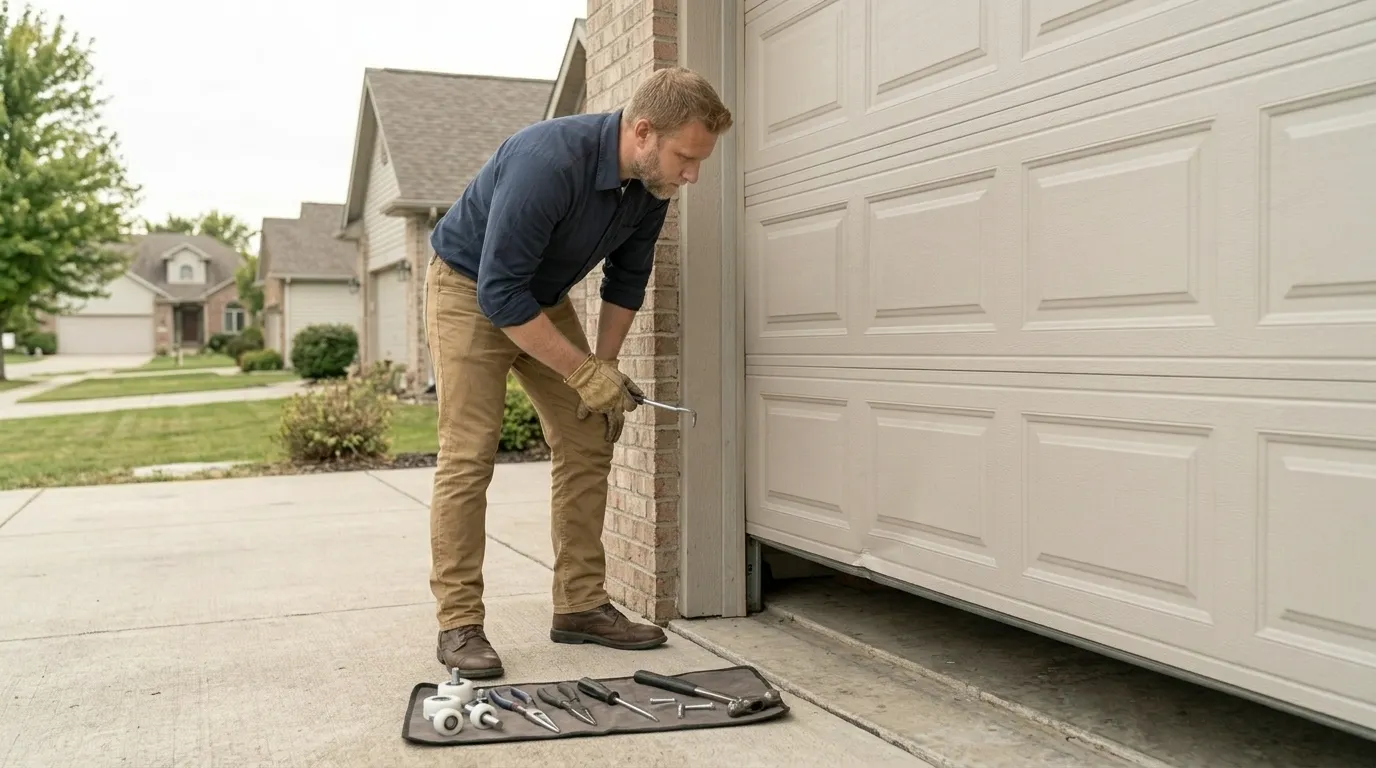
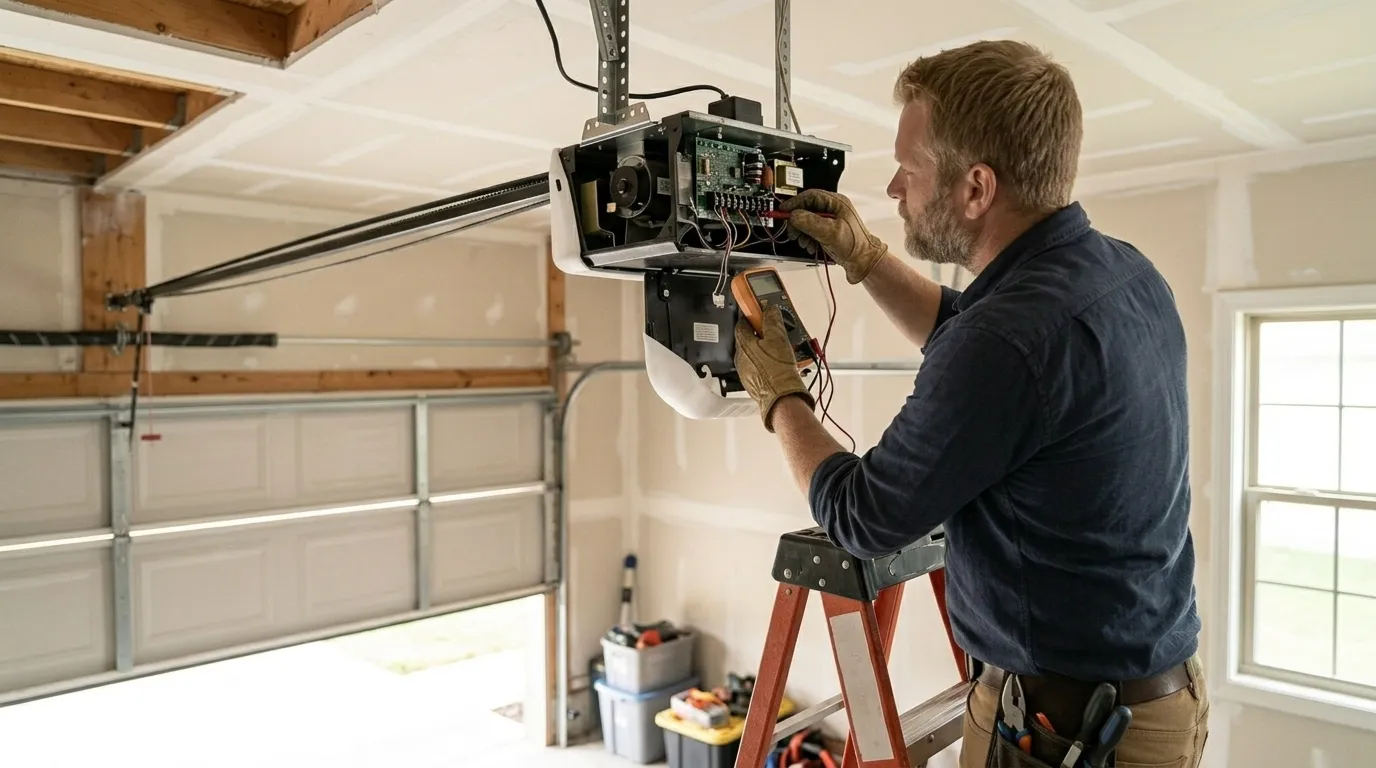
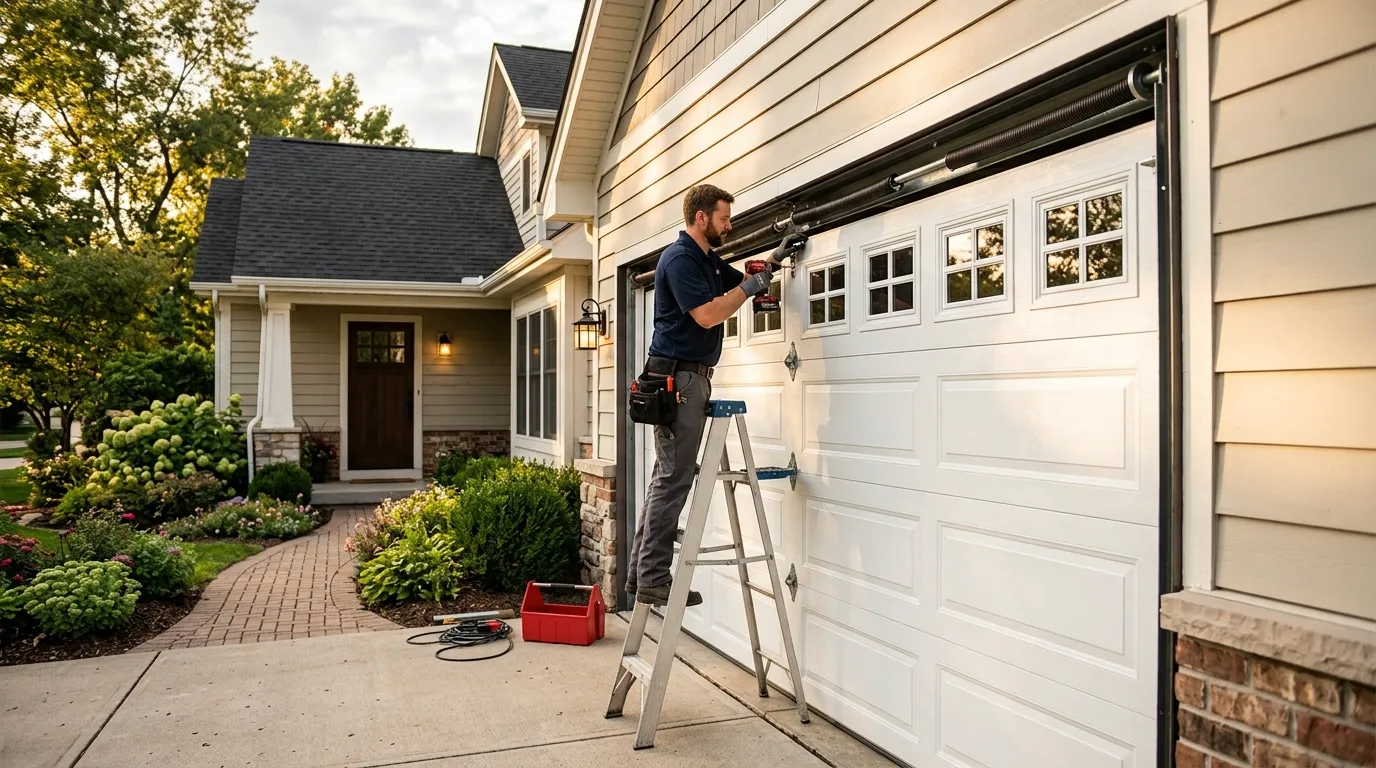
Cable replacement on a standard single door is a controlled job once we're on site: release spring tension safely, pull both cables (we replace in pairs even if only one broke, since the other is the same age and under the same load), reset the drums, and run the door through a full cycle to check travel and balance. On the doors typical of Seguin's 1980s build era, drums and cable anchoring hardware are usually straightforward, though homes on the older end of that range occasionally have replacement track or hardware that doesn't quite match current stock, which adds time. We carry standard cable gauges and drums on the truck; anything nonstandard means a short parts delay.
What It Costs
We don't have a Seguin-specific price list to quote here, and posting a number that isn't tied to your door's size, spring count, and hardware would be a guess dressed up as a fact. What we can say: Seguin's median household income sits at $61,896, noticeably below the wider San Marcos service area, and that's part of why we quote the job itself rather than pad in a travel surcharge for the drive out. Get an exact number by booking a visit - the tech prices it once they've seen the door, not before.
What Causes It Around Here
Seguin's housing stock centers on a median build year of 1984, older than much of the rest of the San Marcos service area, and older cable and drum hardware is the direct result. Cables have a service life measured in cycles, not years, but a 1984-built door that's never had the cable swapped is well past due regardless of how many times a day it's used. The service area sits in a mild climate band with occasional freeze, so we're not dealing with the wide swings that snap cables from cold contraction - here it's closer to plain fatigue and corrosion at the anchor point after three-plus decades outdoors. Garages that face west and take direct afternoon sun also see faster wear on cable coating, which speeds up fraying.