
How It Shows Up
Most of the commercial stock on this side of the county - Seguin included, per the region's 16 named areas - went up in the 1980s and 90s, and Seguin's own median build year lands at 1984, a decade older than San Marcos's residential median of 1996. That means a lot of steel sectional doors running on torsion springs and hardware sized for a design load that's now three-plus decades old.
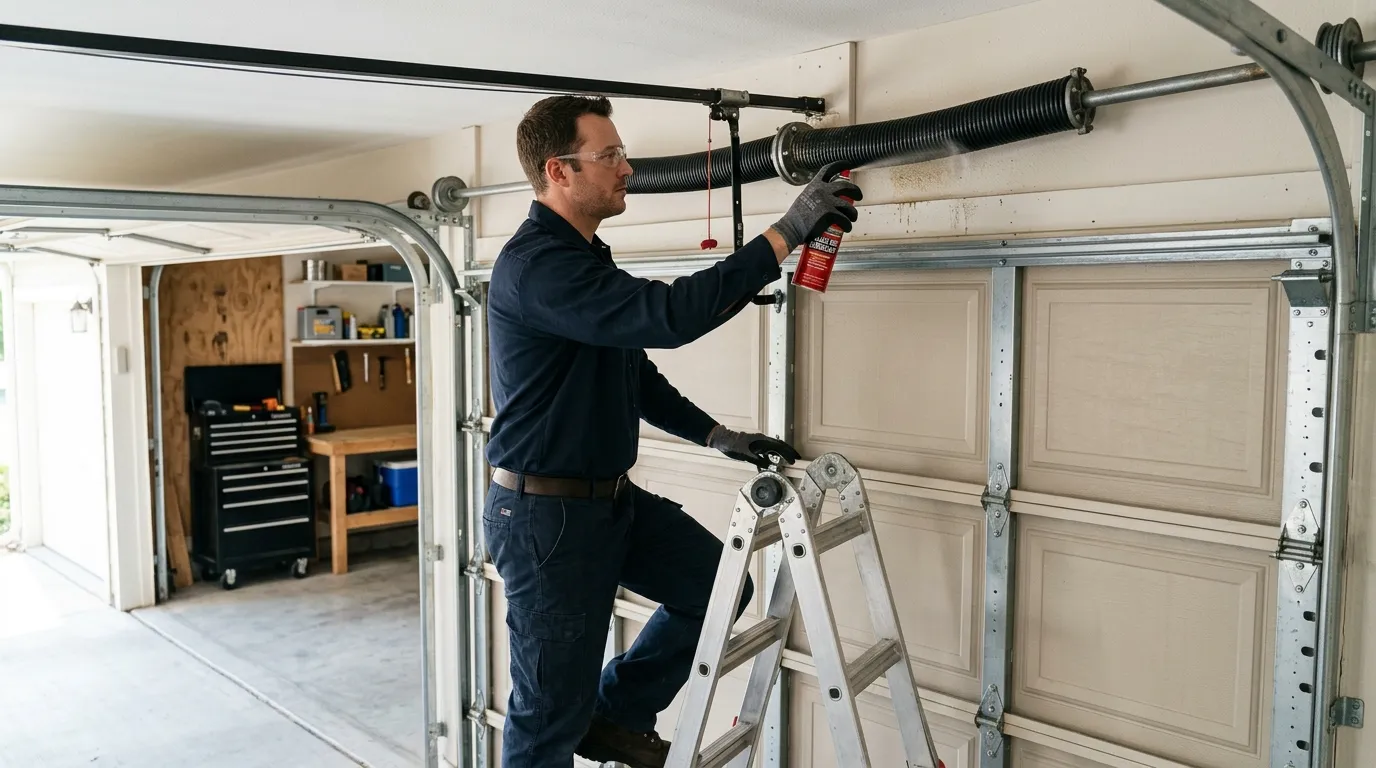
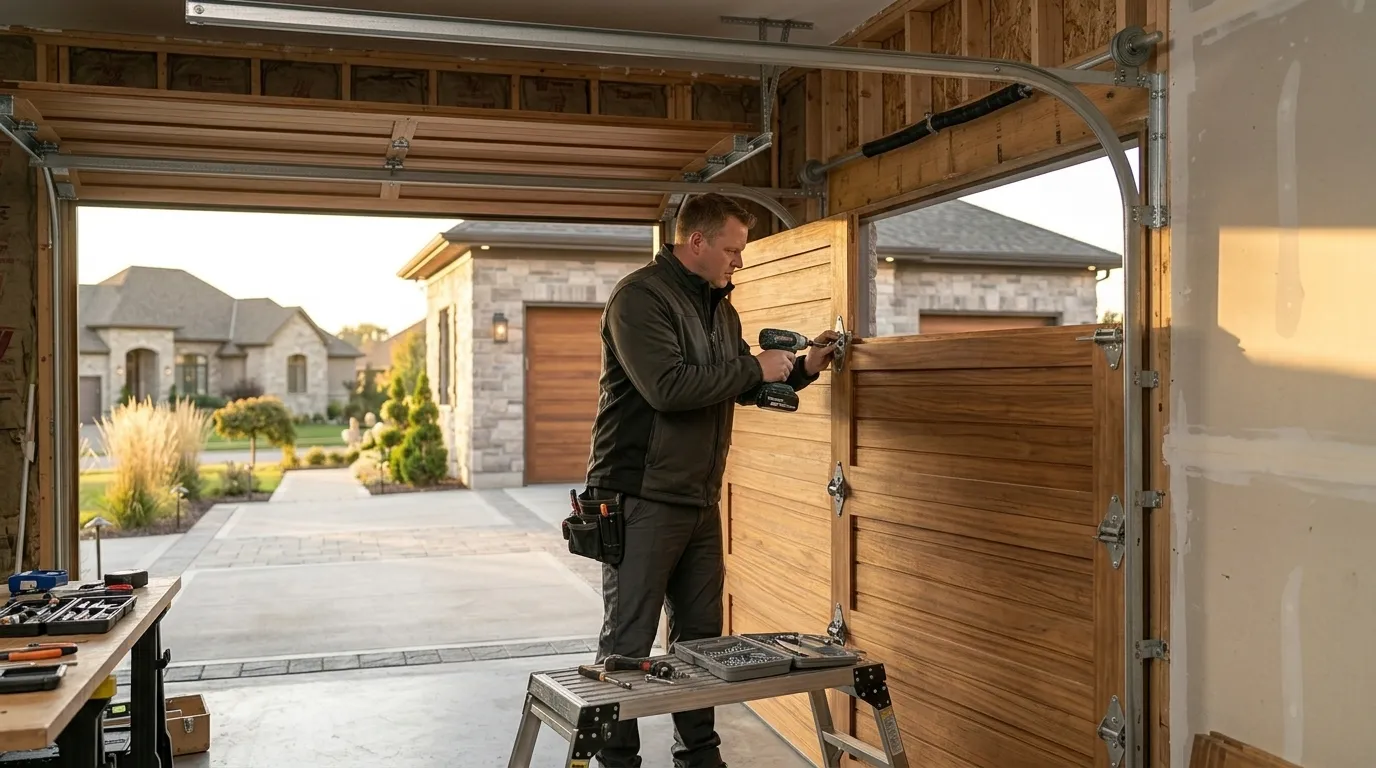
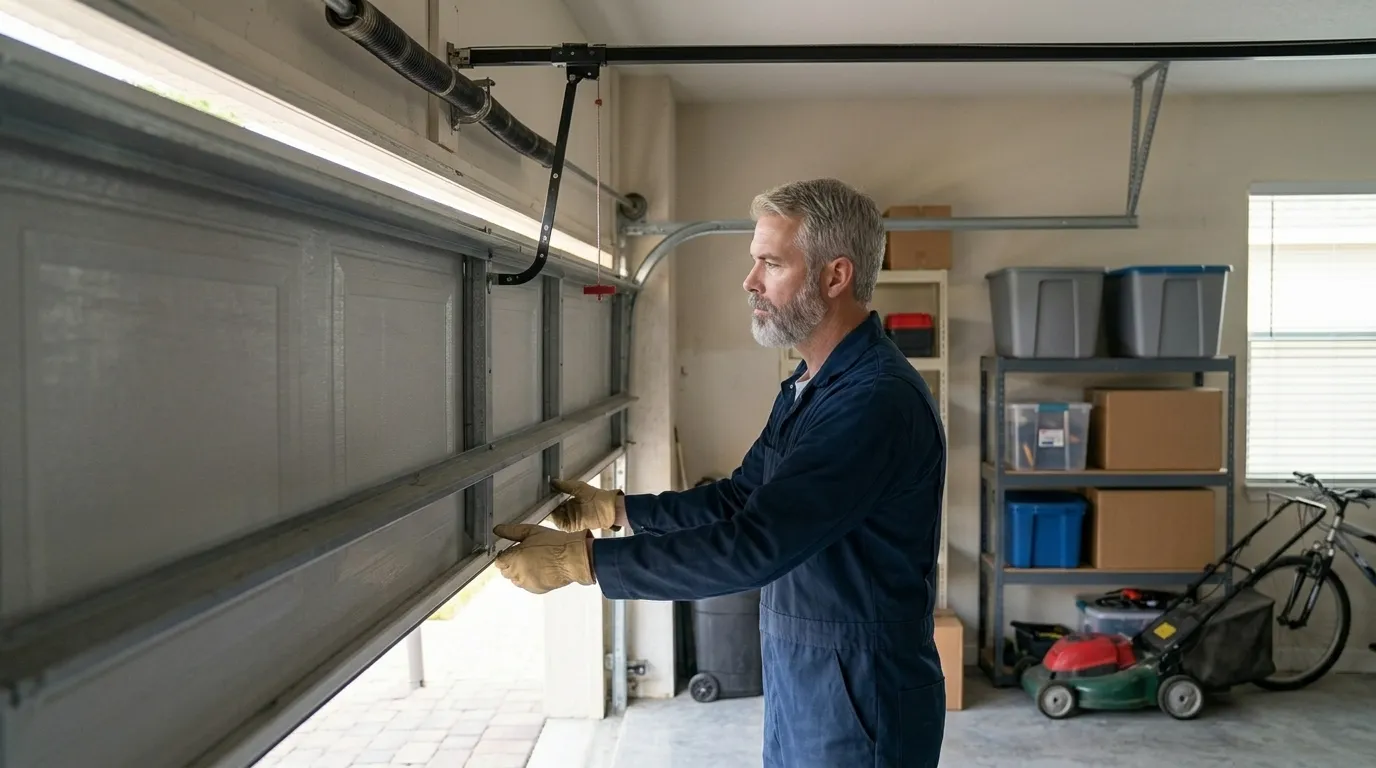
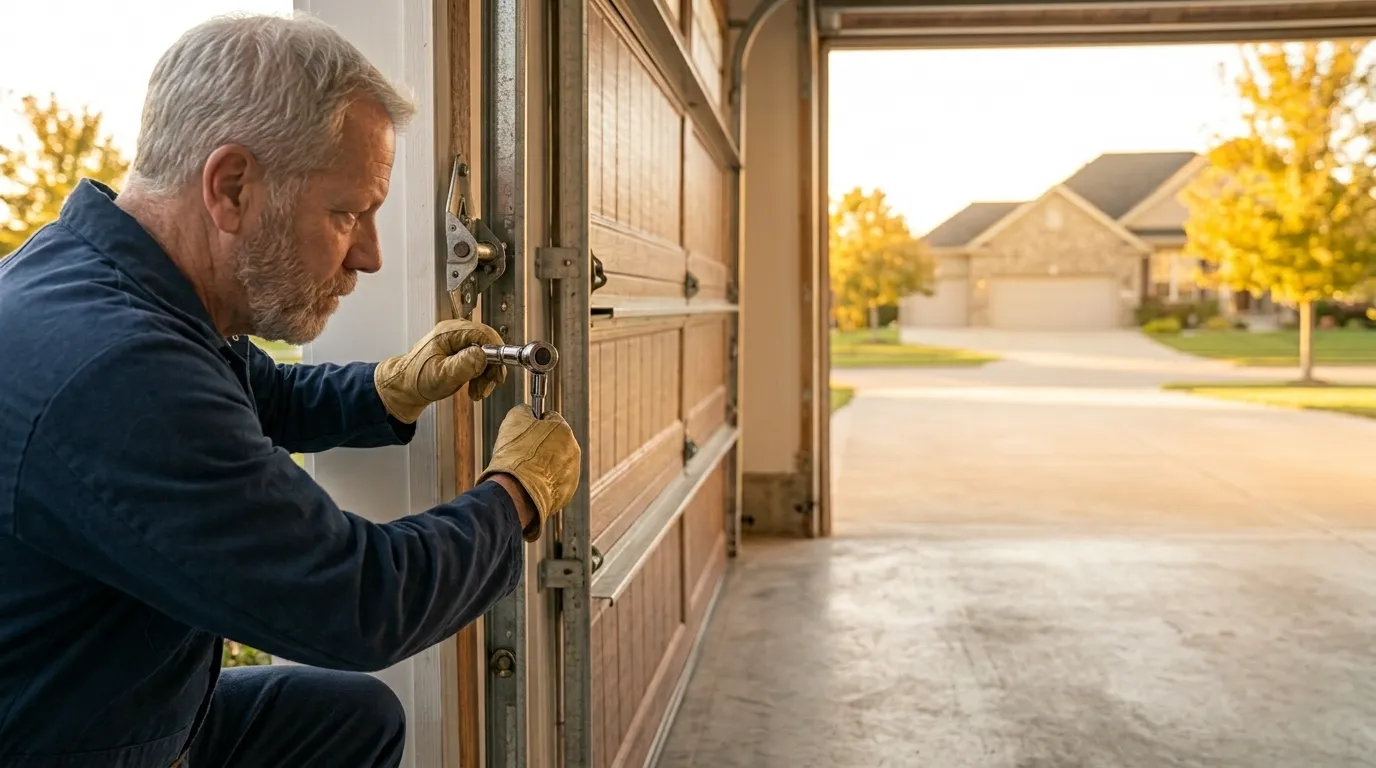
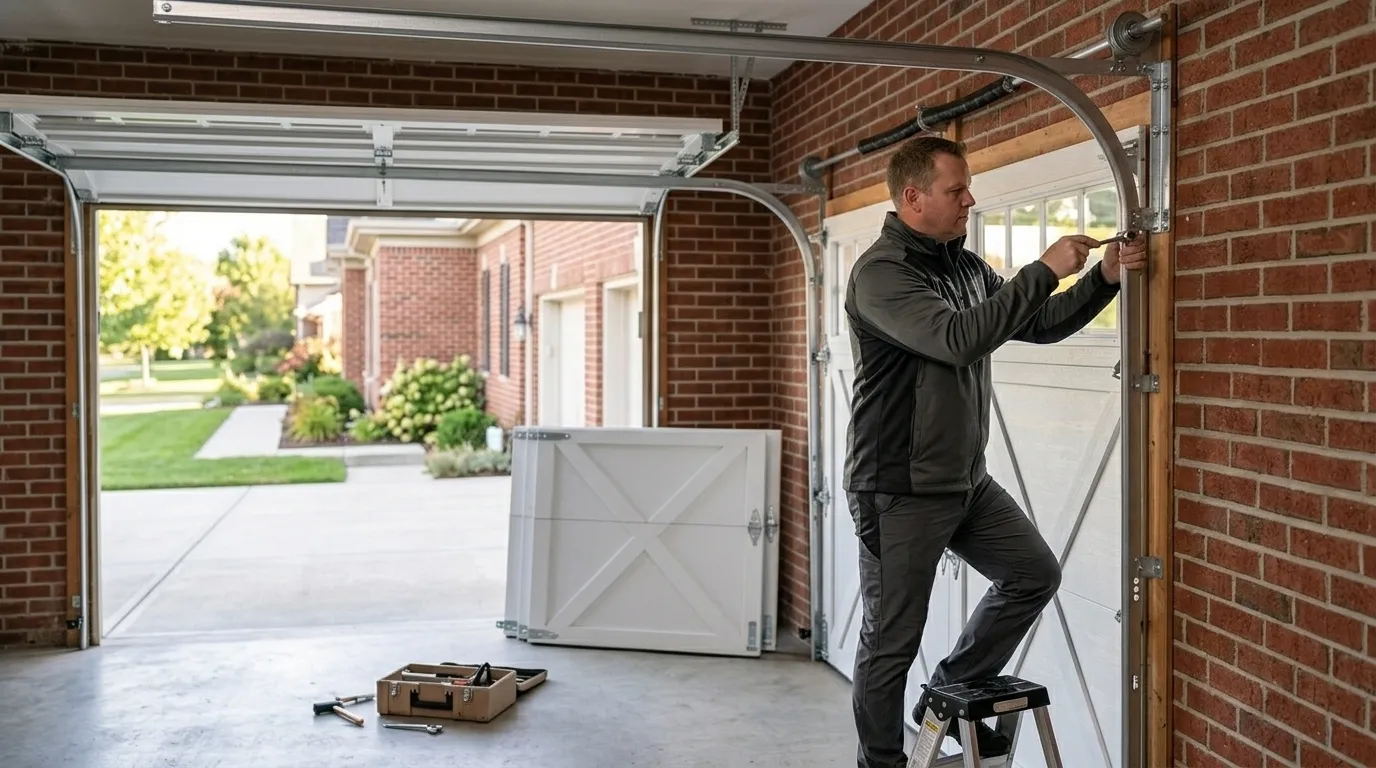
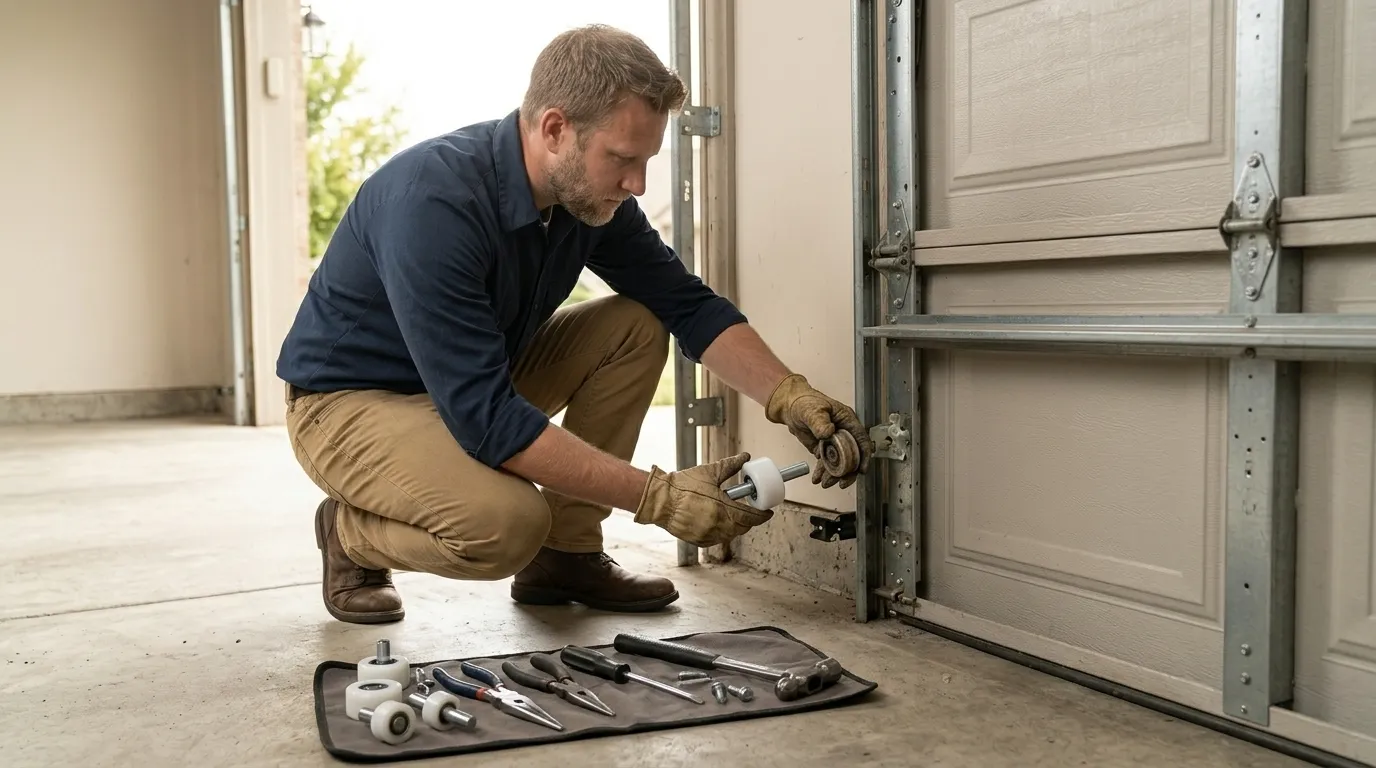
On a warehouse or shop bay, the failure you'll see first is usually a cable frayed at the drum, or a bottom bracket worn oval from the same lift point taking the load year after year. The mild, occasional-freeze climate band here doesn't crack panels the way a hard-freeze state would, but it lets steel corrode slowly at the rollers and hinges when a door sits near a wash bay or loading dock that stays damp longer than it should.
What the Repair Takes
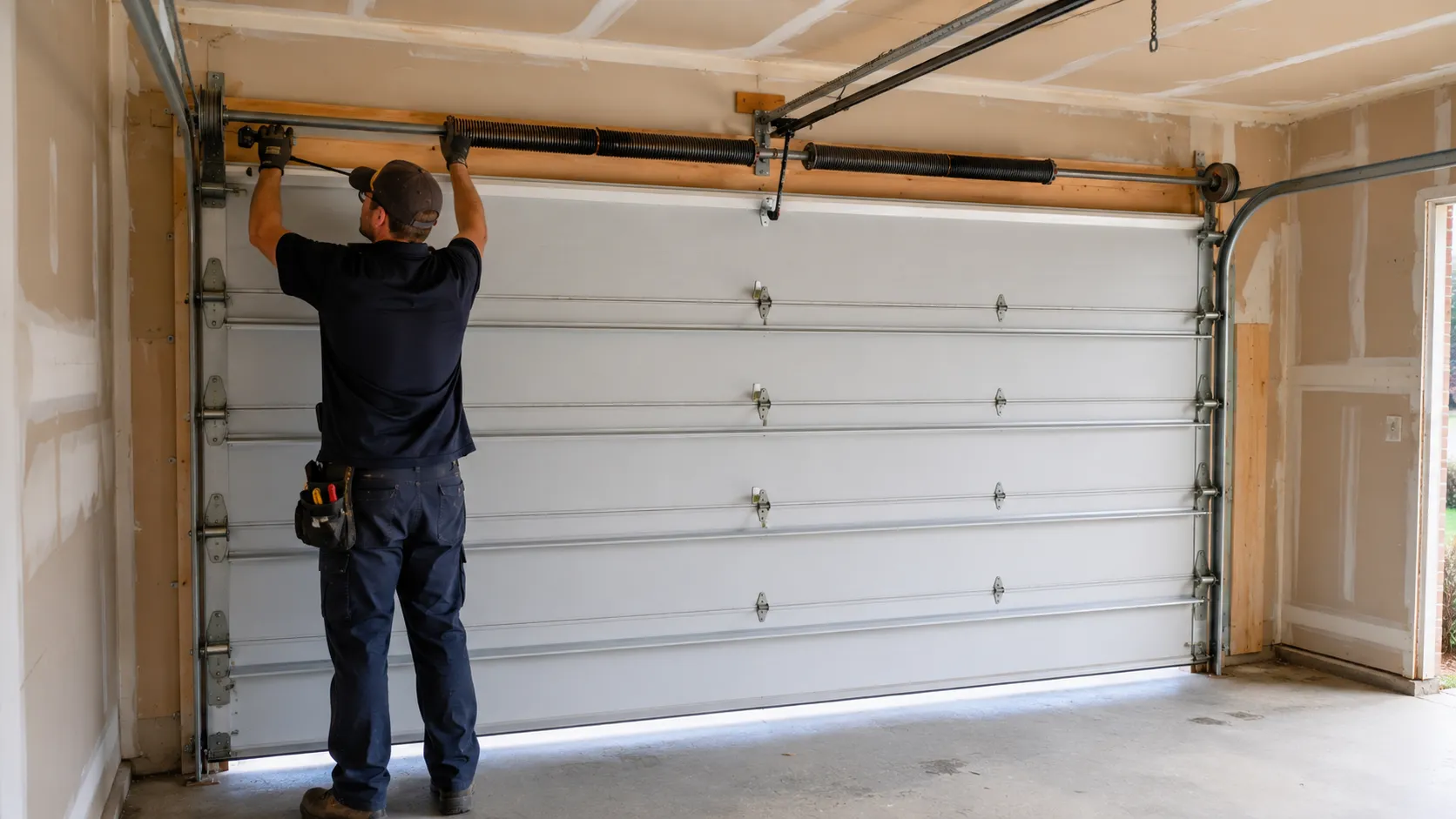
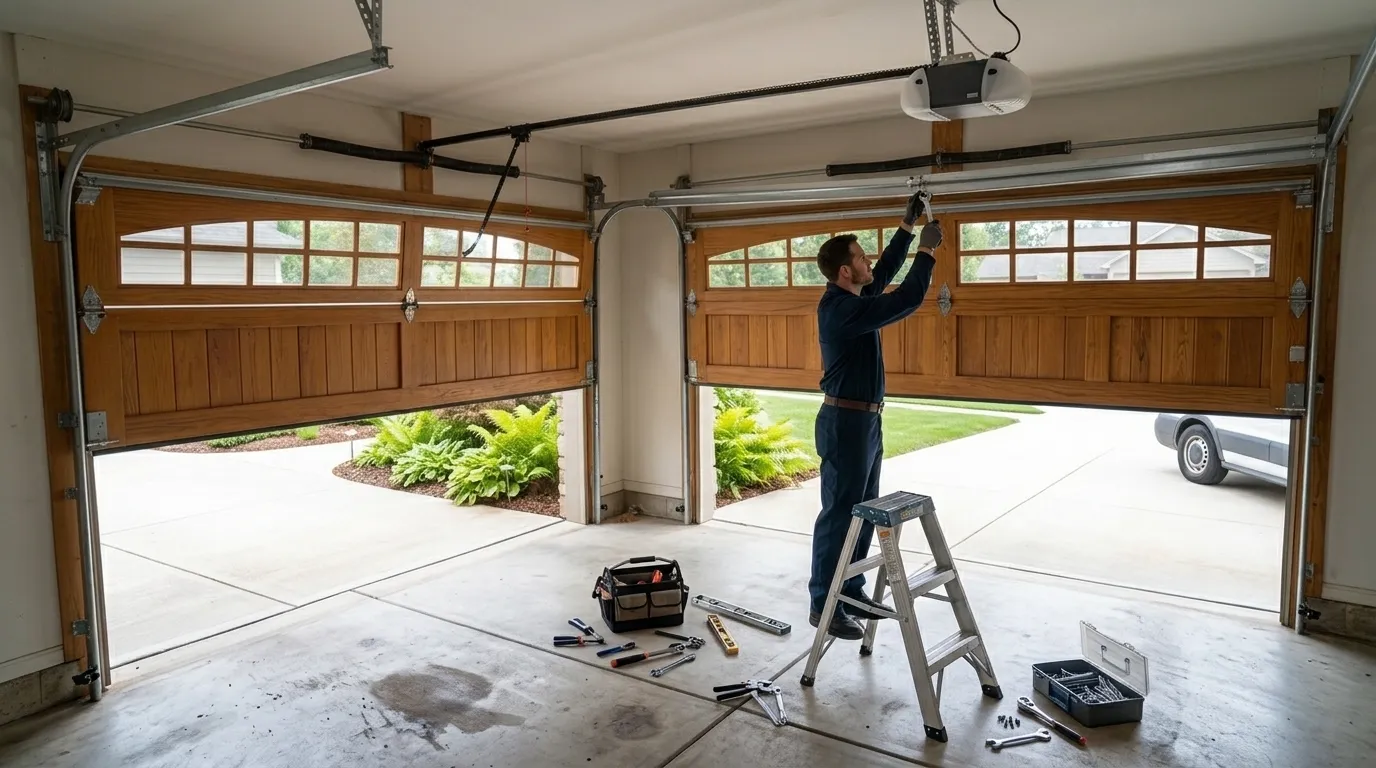
A commercial torsion spring job on a 10x10 or 12x14 bay door runs longer than a residential one - bigger springs, heavier sections, sometimes a jackshaft operator instead of a wall-mount unit. Parts for doors built in the 1984-2014 window are generally still available, but if your building's door predates that window - which happens more often in Seguin given the 1980s build wave - we may need to special-order a bracket or an odd-sized spring.
That's the honest limitation on this job: we don't carry every legacy commercial part on the truck, and a same-day fix on the oldest doors sometimes turns into a same-week fix once the part has to come from a supplier instead of the van.
What It Costs
We don't post commercial pricing here - job cost depends on door size, spring count, and whether the opener is a jackshaft or chain hoist, and that's a phone conversation, not a page.
What we can say: Seguin's median household income of $61,896 sits well under the $80,830 median across the wider service area, and with 54,708 households and 31,977 owner-occupied houses spread across that area, the repair-versus-replace call tends to land on repair more often on this end of the territory than it does in higher-income pockets. A cracked panel on an otherwise sound door from the 1980s or 90s build wave is usually worth fixing. A door that's lost multiple sections, or has a bent track on top of a blown spring, usually isn't - at that point you're paying repair money toward a door you're going to replace anyway.
What Causes It Around Here
The two things that show up again and again on Seguin calls trace back to the building stock and the climate. A lot of doors here still run the original torsion spring and drum setup from the 1980s build wave, and after thirty-plus years of daily cycles, that spring is closer to the end of its rated life than most shop managers realize.
Pair that with the mild, occasional-freeze climate band - no hard winter forcing early hardware swaps - and doors here run on original gear longer than they would somewhere with a harsher climate. The result is a cluster of commercial doors failing on the same worn part at roughly the same age, rather than trickling in one at a time over the decades.