The DIY Question
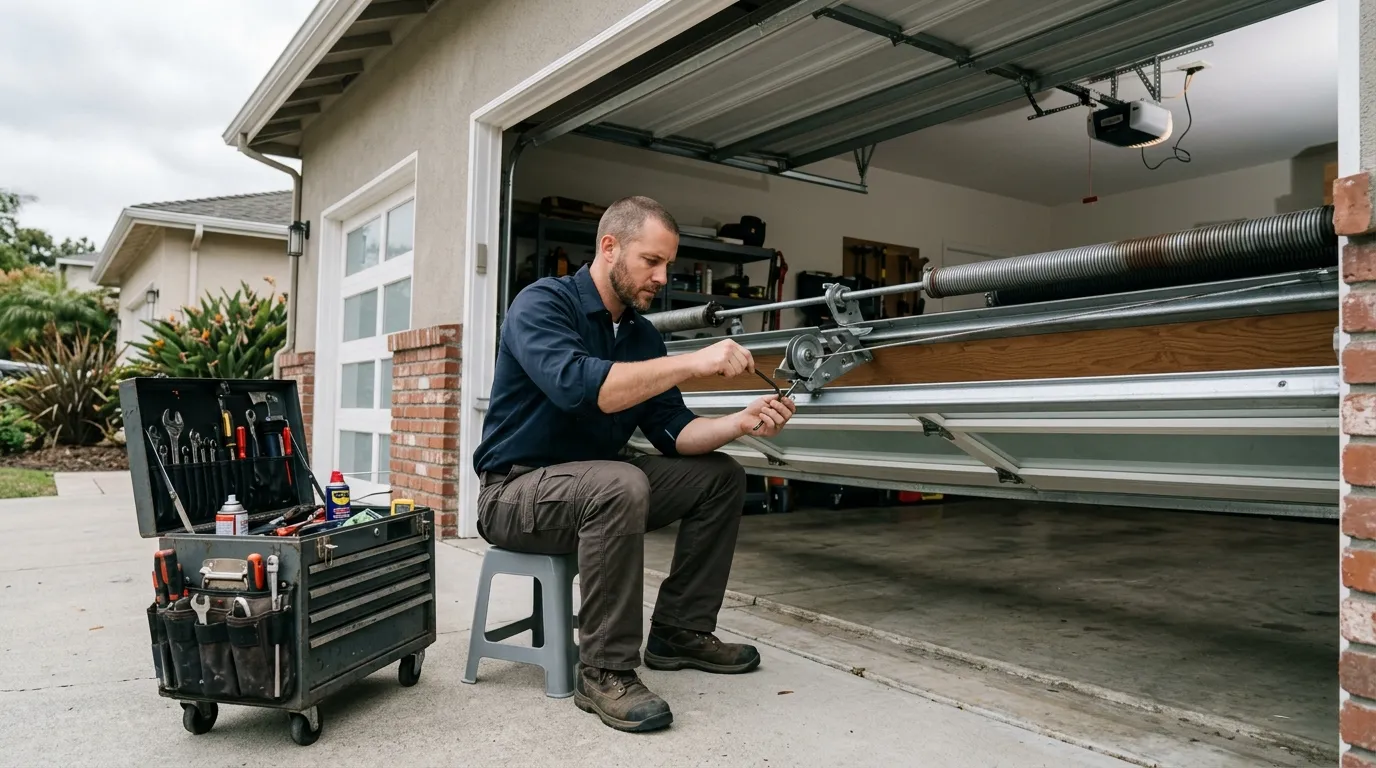
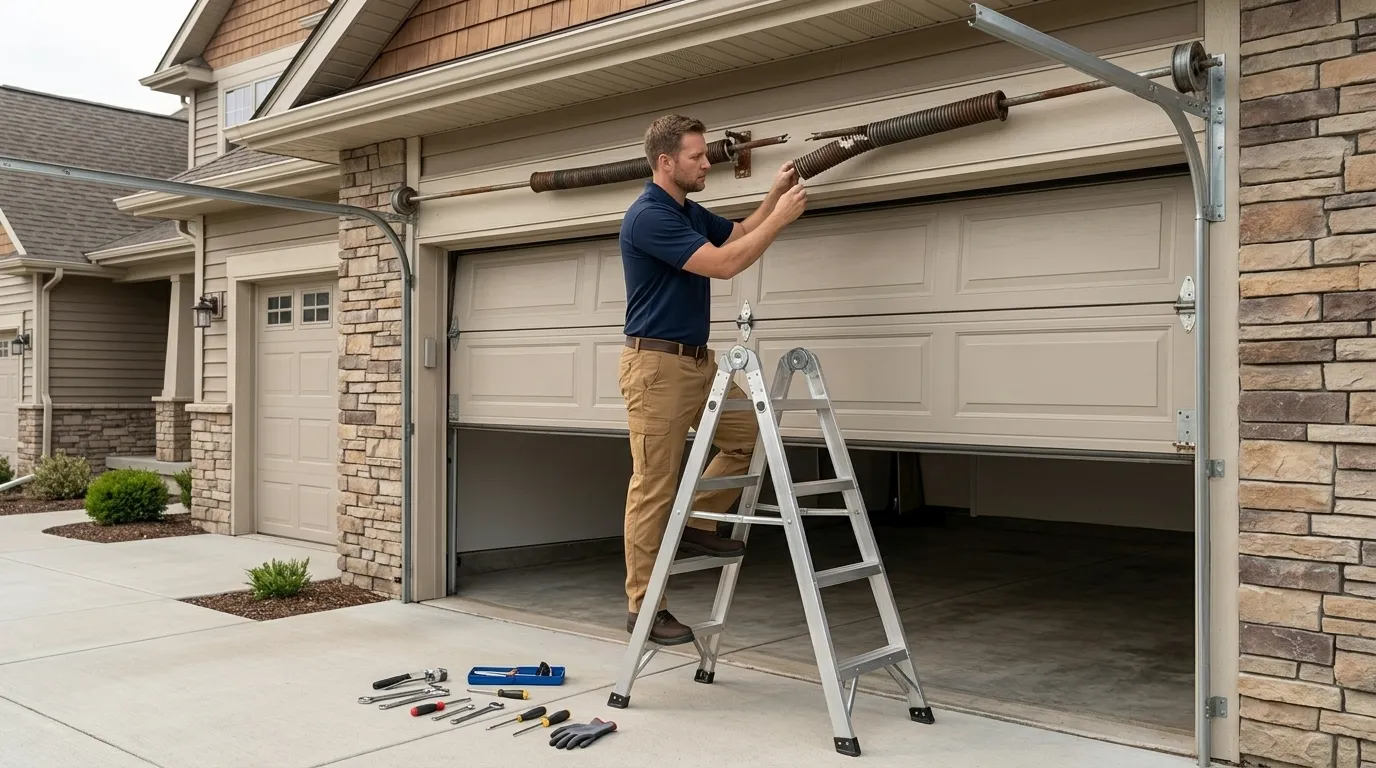
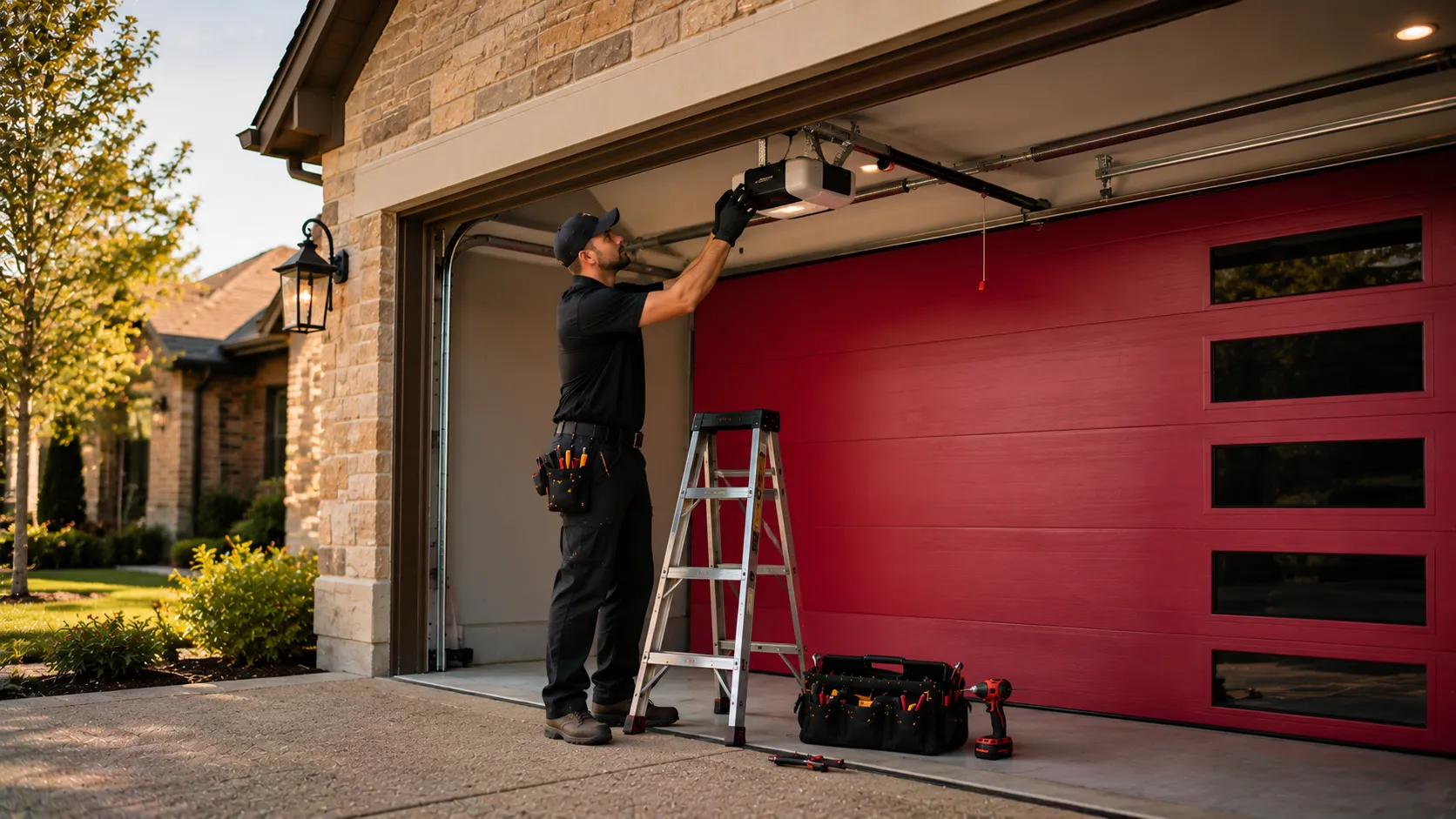
Lockhart's median household income, $67,252, runs well under the $80,830 seen across the broader service area. That's not a detail for its own sake - it changes the math on repair versus replace. A homeowner here is more often better served fixing what's on the door than swapping the whole unit, and a torsion spring, a bent track, or a worn roller is usually a repair job, not a replacement one. Where DIY gets people hurt is the spring itself. A wound torsion spring under tension can put someone in the hospital, and it's the single job on a garage door we'd tell you not to touch yourself regardless of how handy you are. Openers, sensors, and loose hardware are fair game for a confident homeowner with the manual in hand. Springs, cables, and anything holding the door up against gravity are not. If you're not sure which category your problem falls into, that uncertainty itself is a reason to call rather than guess - a door that drops on someone is not a mistake you get to walk back.
What Can Go Wrong
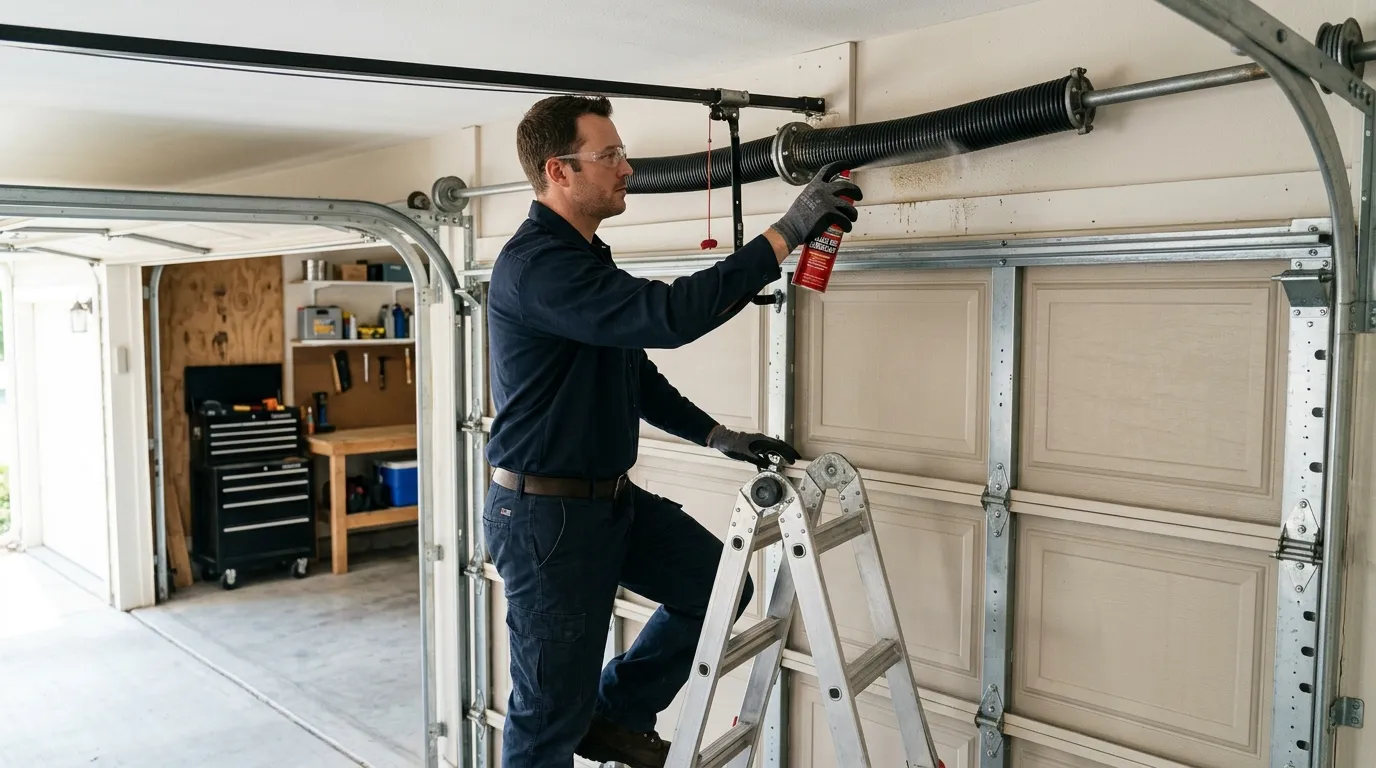
Houses in Lockhart mostly went up around 1984, noticeably earlier than the 1996 median across the rest of the service area. That gap matters more than it sounds: a door and opener installed in the mid-1980s has had roughly a decade more wear-cycles than one from a newer build, and the torsion springs on those older setups are further along in their fatigue life even if nobody's touched them. The area sits in a mild climate with occasional freezes, not the brutal swings some regions get, but even a handful of cold mornings a year is enough to stiffen old grease on a spring that's already near the end of its rated cycles - that's usually the moment it lets go. Openers from that era also tend to run older logic boards and weaker safety-reversal sensors than what ships today, which shows up as doors that don't reverse cleanly off an obstruction. Panels on original steel doors from the mid-80s have usually taken thirty-plus years of sun and the odd bump, so dents and rust at the bottom panel are common on houses that haven't replaced a door since it was built.
What the Repair Takes
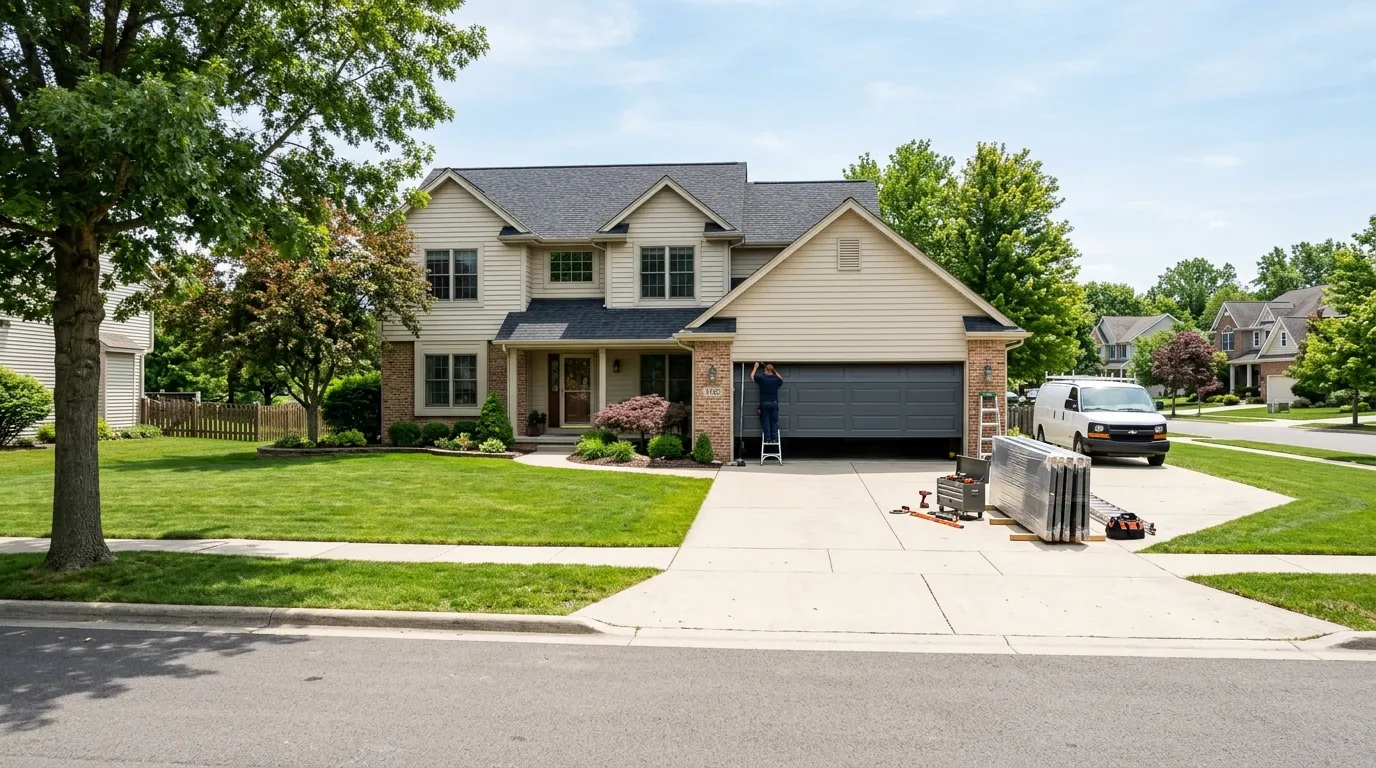
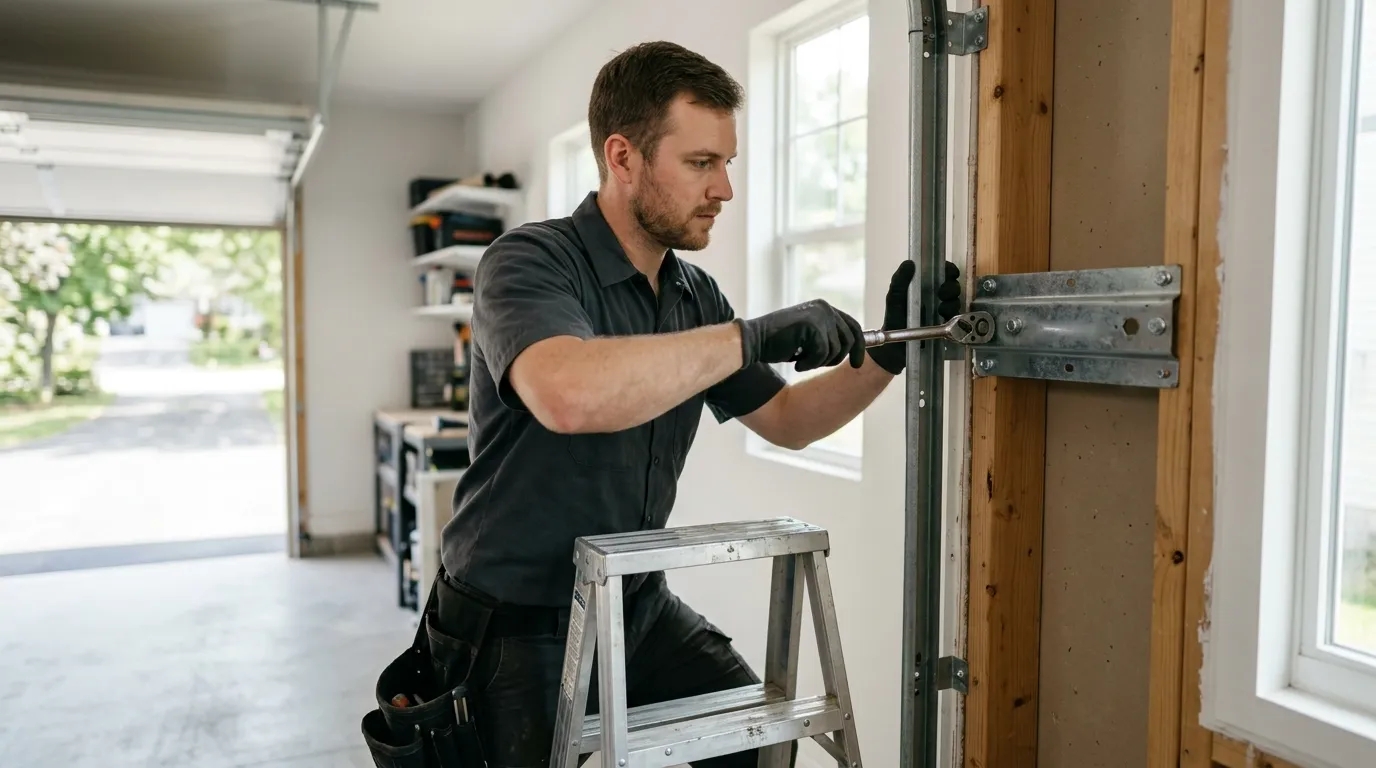
A spring replacement on a door this age is usually the fastest job we do - the springs themselves are common sizes and we carry them on the truck. Where the age of the house works against you is parts specific to an original opener or an odd-sized panel: if the door is the same one that went in with the house in the mid-1980s, matching a replacement panel exactly can mean a special order rather than something we have in stock, and that's a real limitation worth knowing before you book. Track and roller work is straightforward regardless of the door's age - bent track gets pulled and reset, worn rollers get swapped, and that's usually a same-visit fix. Opener repairs split the same way as panels: sensors and basic wiring we carry, but a full replacement logic board for a decades-old unit sometimes means the unit itself is worth replacing rather than chasing a discontinued part. We'll tell you straight when repair isn't the better call rather than stringing along a fix that won't hold.