Wimberley's commercial doors mostly date to 1994, and the $78,351 median income here changes the repair-or-replace math. We drive the 12 miles from San Marcos for the fix.
Start with the money, because it decides more than the diagnosis does. Median household income in Wimberley sits at $78,351, a bit under the wider service area's $80,830. On a commercial bay door, that gap matters: a full replacement runs into real money fast, and at this income level, most shop owners want the repair path exhausted before anyone talks about a new door.
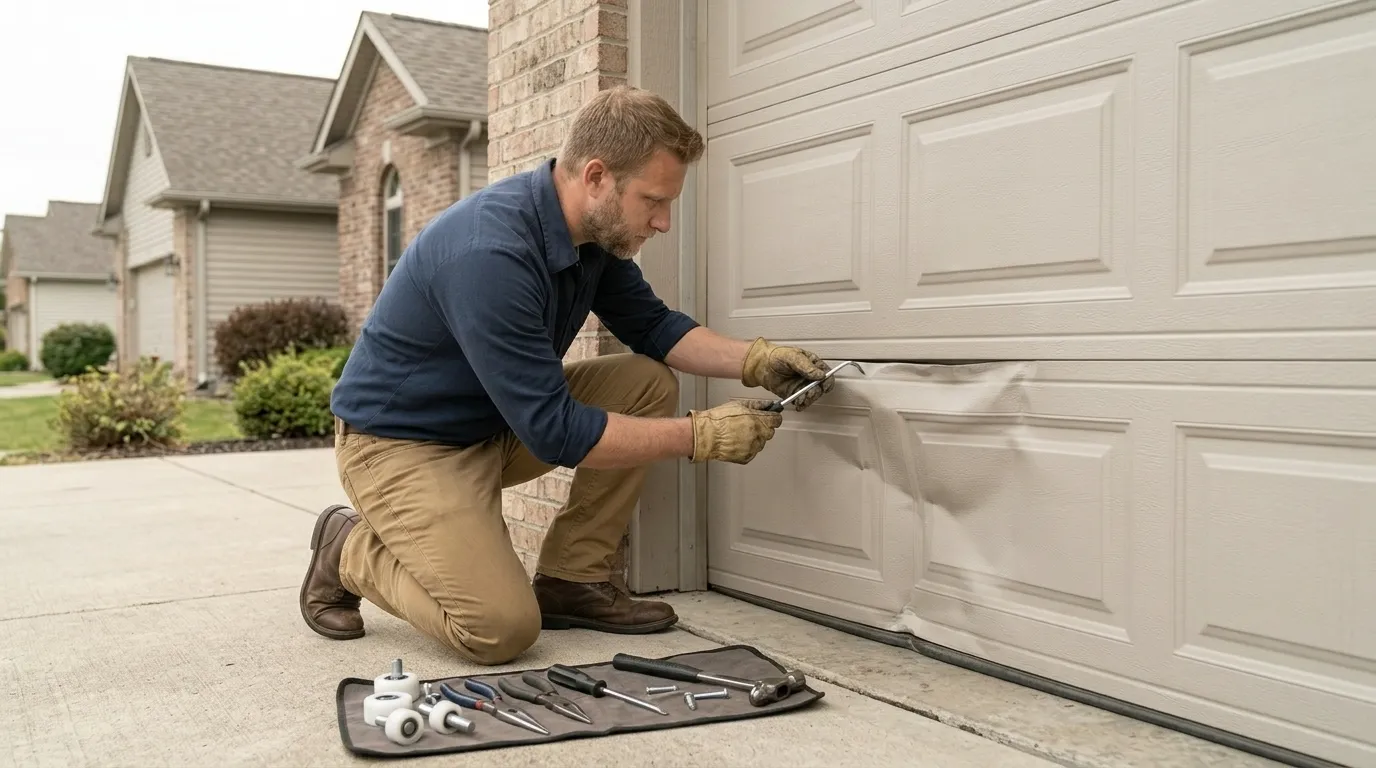
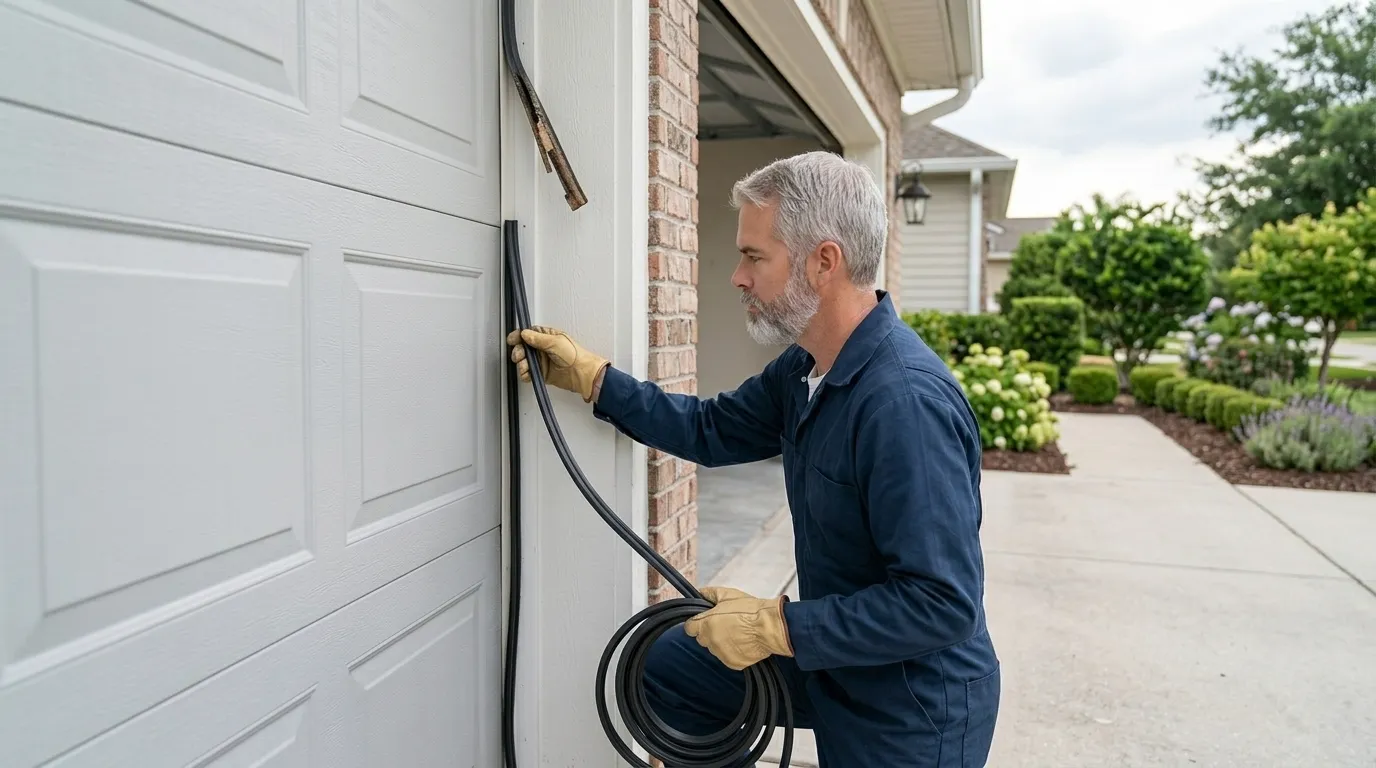
The building stock here mostly dates to around 1994. That's a specific problem set. Commercial sectional doors from that era usually run torsion springs sized for the original door weight, and after two-plus decades of daily cycling - roll-up, roll-down, dozens of times a day for a working shop or garage bay - those springs are past the cycle count they were rated for. Cable fraying at the drum, worn rollers binding in the track, and jackshaft operators that have outlived their control boards are the common calls we get from buildings this age.
We won't pretend every door built in 1994 has failed the same way. Some have been maintained, some haven't. But the era is the tell: if your building went up in the low-to-mid 90s and the door has never been touched, it's due.
Parts We Carry
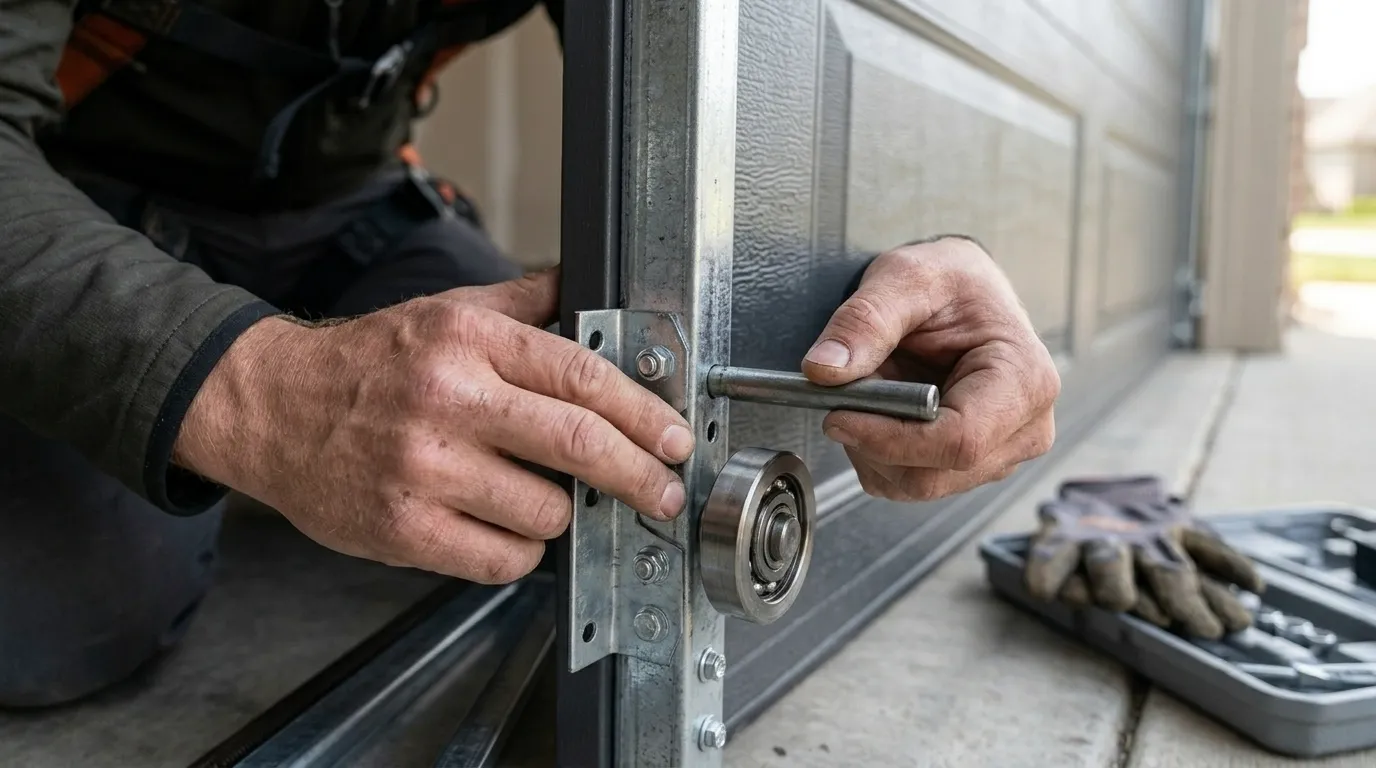
For doors from this build era we stock torsion springs in the sizes that match 1990s commercial sectional doors - heavier wind than a residential garage door, because commercial bays are wider and the panels weigh more. We carry galvanized lift cable, ball-bearing rollers rated for commercial cycle counts, and the drums and shafts that pair with them.
On the opener side, a lot of buildings from this period still run older chain-drive or jackshaft units. We keep trolley and chain-drive parts on the truck for the common models, but we'll be straight with you: if a control board from that generation has failed, sourcing the exact replacement can mean a wait, and sometimes the honest answer is a new opener rather than a hunt for a discontinued part. We'd rather tell you that up front than have you sitting on a broken bay door for two weeks waiting on a part that isn't coming.
Time on the Job
We don't keep a branch in Wimberley - this is a 12-mile run from our San Marcos base, and that's worth knowing before you call. It's not a same-block response; it's a drive, and we build that into how we schedule commercial calls out this way.
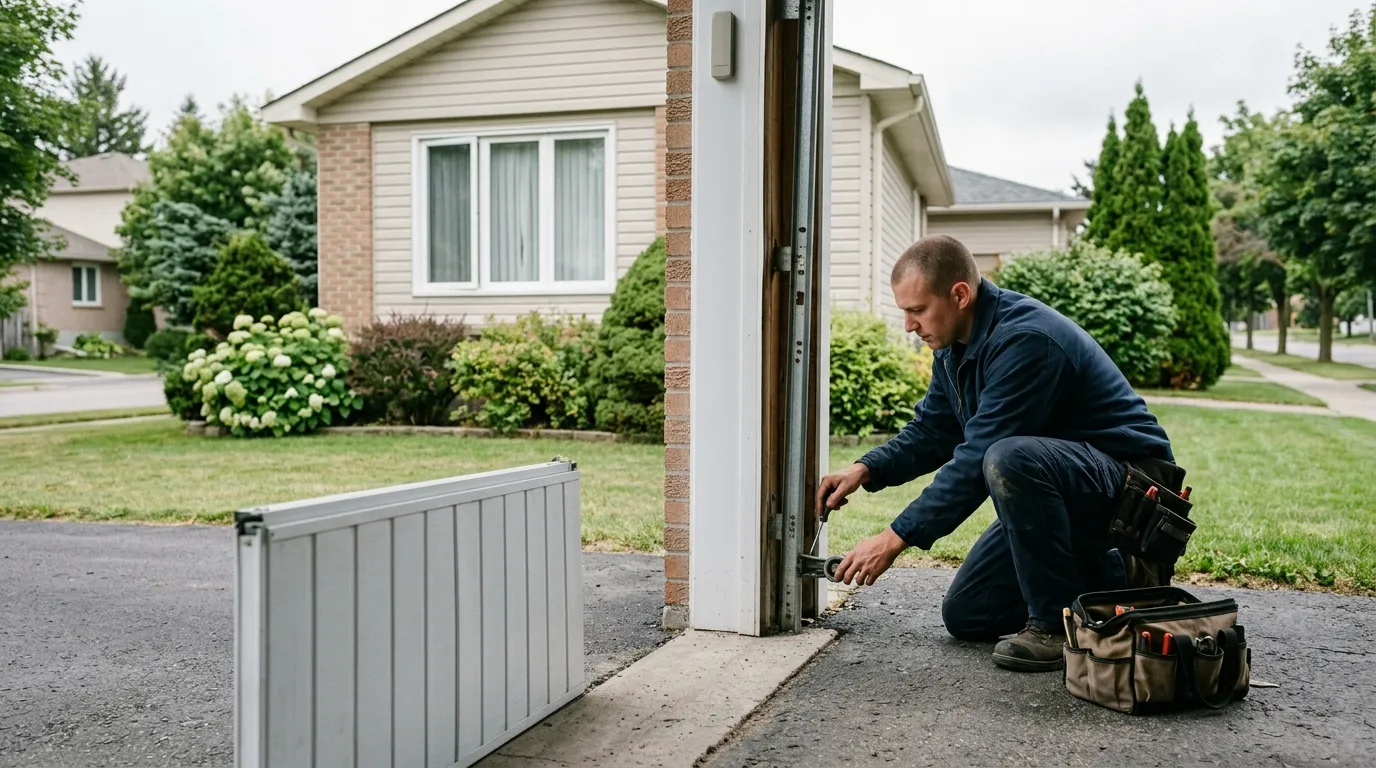
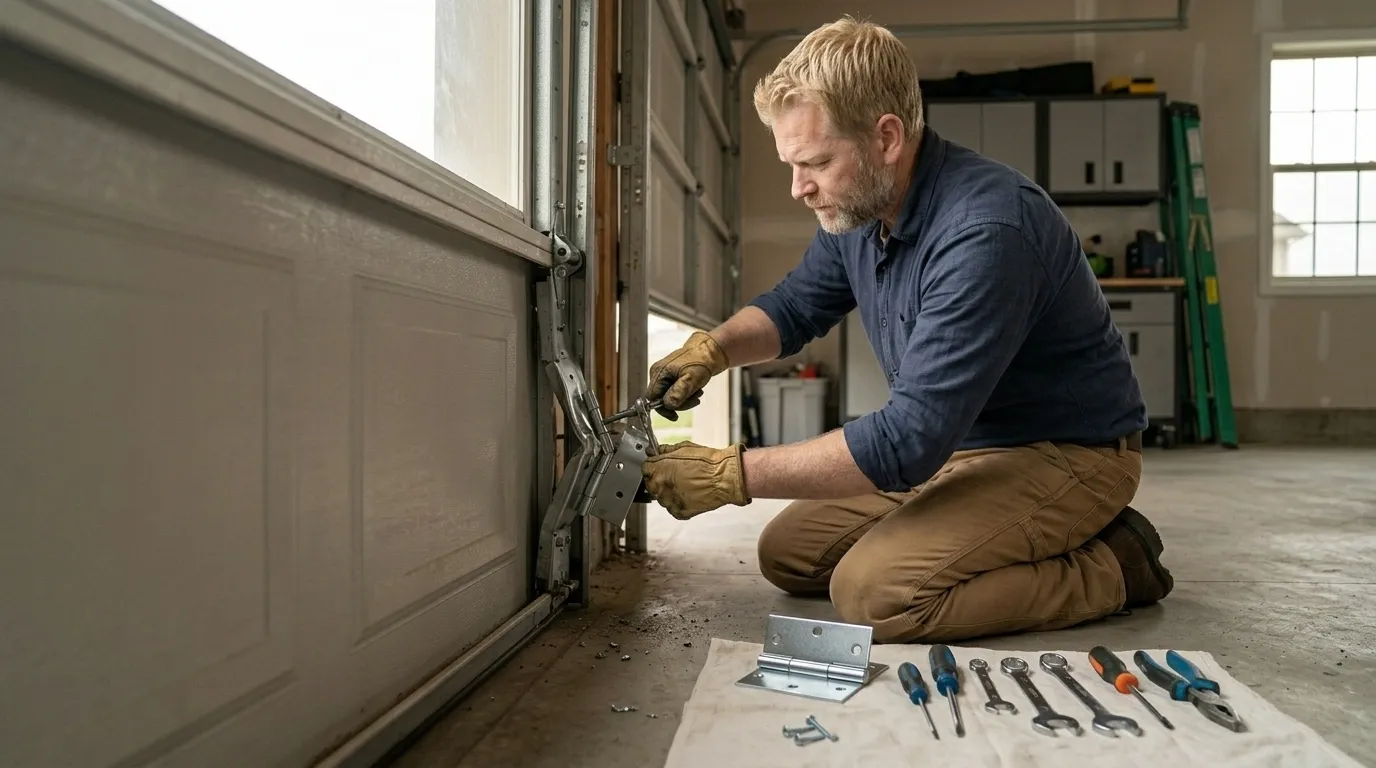
Once we're on site, the job itself doesn't run any different than it would closer to home. A spring swap on a commercial door is still a spring swap. What changes is that we try to diagnose as much as we can over the phone first - make, approximate age, symptom - so the truck rolls out with the right springs and cable sizes already loaded, rather than making two trips for one job. For a small commercial account, an extra 12 miles each way on a callback is dead time neither of us wants to pay for.
How It Shows Up
With around 1,290 households in the Wimberley area, this isn't a district with a dense strip of retail bays - it's a scattered mix of small shops, workshops, and storage buildings, most sharing that same early-to-mid 90s construction window. The failure pattern tends to be the same regardless of what's behind the door: the spring goes first, usually announced by a loud bang from the garage or a door that suddenly won't lift past knee height.
After that, it's usually the opener struggling to compensate - a motor straining against a spring that's no longer doing its share of the lift, which shortens the life of the opener too. If you've noticed the door getting louder, slower to close, or catching partway on the track, that's the same aging hardware working its way through the same sequence we see on other buildings from this era. Catching it at the spring stage is cheaper than catching it at the opener stage.
How it works
From “it’s stuck” to “it’s fixed”
01
Tell us what’s wrong
Describe the symptom - won’t open, loud bang, opener runs but the door won’t move.
02
On-site diagnosis
A technician tests the door under power and by hand and finds what actually failed.
03
Clear, up-front plan
You get the fix that’s needed and what drives the cost - before any work starts.
04
Repaired & tested
The repair is done, the door is set true and tested, and the work area left clean.
Serving San Marcos, TX - tell us what your door’s doing and we’ll take it from there.
Do you have a shop or dispatch point in Wimberley?
No. We run out of San Marcos, and Wimberley is about a 12-mile drive from there. We serve commercial accounts out this way regularly, but we schedule the trip rather than promising a local walk-in response.
Is it worth repairing a commercial door built in the 1990s, or should I just replace it?
Depends what's failed. A spring, cable, or roller repair on a door from that era is usually worth doing - the door itself is often fine. If the opener's control board is dead and the model is discontinued, replacement can end up cheaper than the parts hunt. We'll tell you honestly which side of that line your door is on.
Why do commercial springs cost more to replace than residential ones?
Commercial bay doors are wider and heavier than a standard garage door, so the torsion springs have to be sized and wound for that extra weight and higher daily cycle count. It's a heavier part doing more work, which shows up in the price.
Ready to get your garage door sorted?
Tell us what it’s doing and where you are in San Marcos - we’ll take it from there.