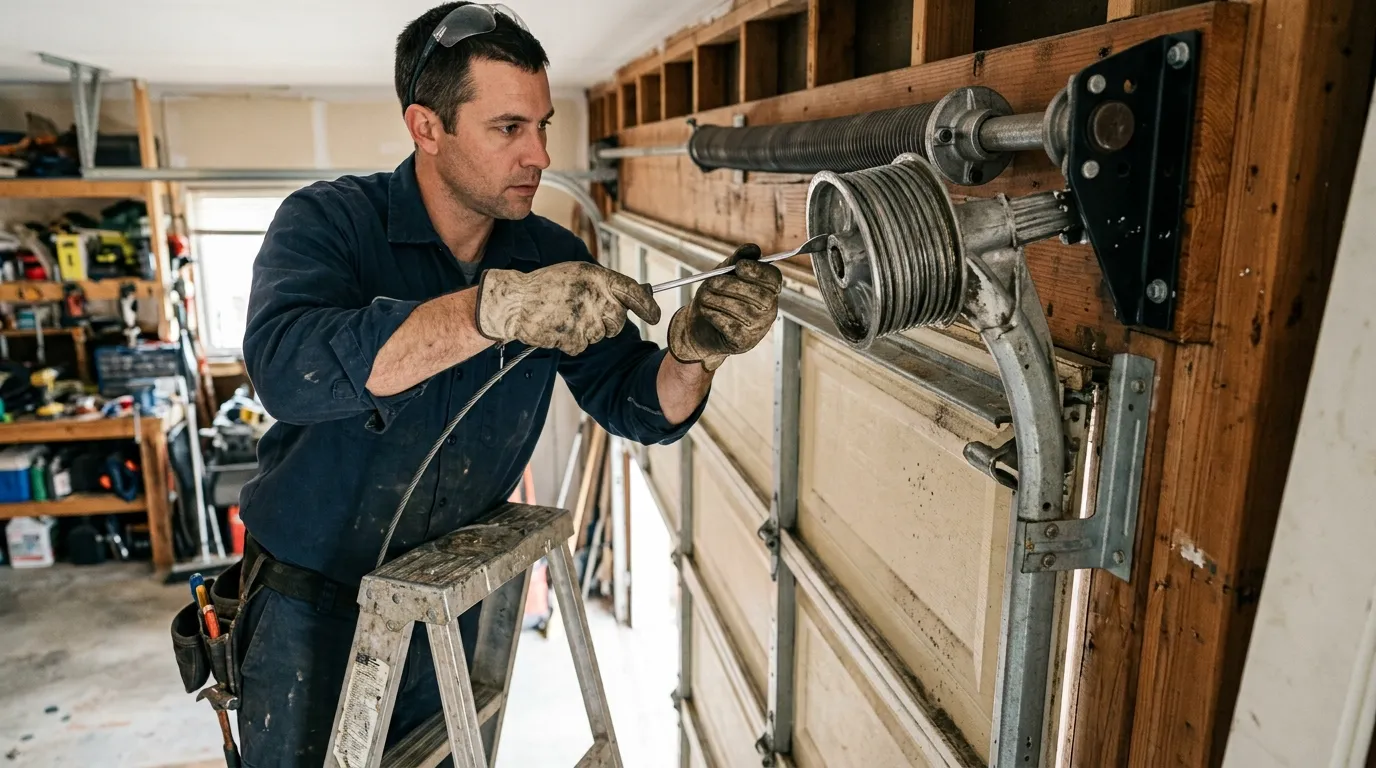
The call we get from Martindale almost always starts the same way: the door won't budge, or it slams down the last foot of travel instead of easing shut. That's a torsion spring giving out, and in this pocket of the service area it's not a surprise - most houses here went up around 1989, which puts the original springs (if nobody's touched them) well past the 10,000-cycle mark most torsion springs are rated for. A spring that age doesn't fail gently. It lets go on a random Tuesday, usually with a bang you can hear from the yard.
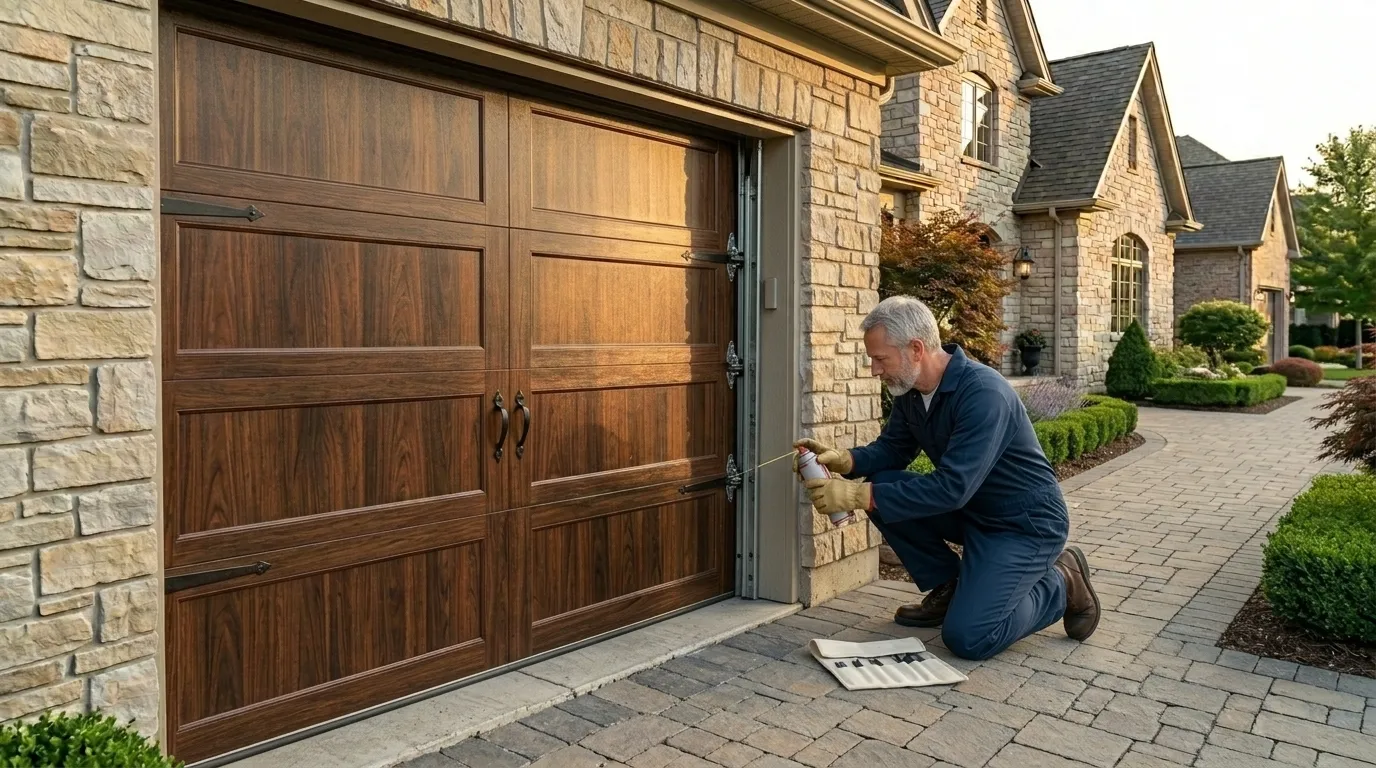
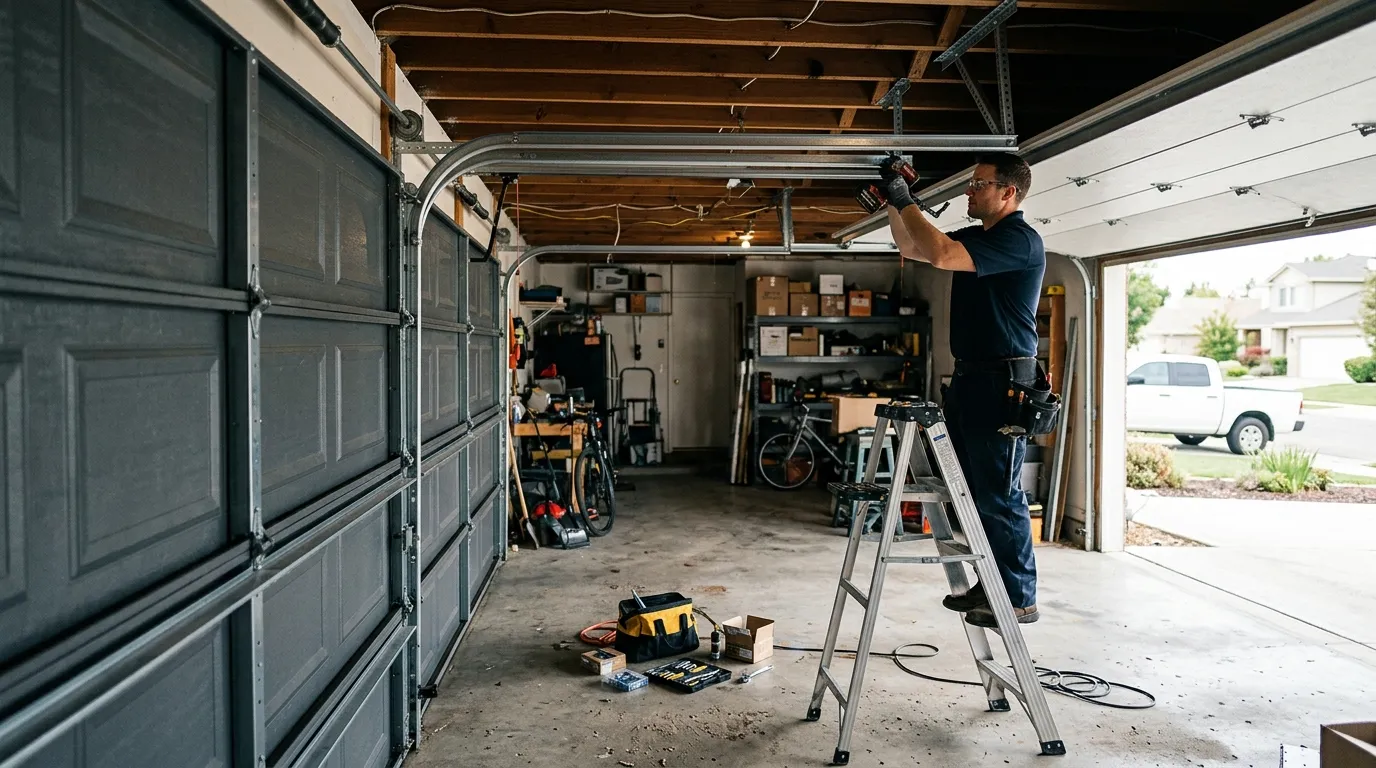
Repair means matching wire size, coil diameter, and wind direction to the door you actually have, not swapping in whatever's on the truck. A 1989-built house in this area typically carries a single 16x7 or 8x7 door on a standard two-spring torsion setup, and getting the wind direction backwards is how a door ends up worse than when we started. We test the balance after the swap - a door that drifts up or down on its own after we leave hasn't been fixed, it's been half-fixed.
The honest limitation: if the track or the bottom bracket has rusted into the spring anchor, which happens on some doors from this era that never got repainted, that's not a spring job anymore. We'll tell you before we start, not after we've billed for one.
How to Book
We run out of San Marcos, about 6 miles up the road, so there's no separate Martindale crew and no local branch - just a truck that comes out for the call. Book through the site or by phone same as any other stop on the route; we'll ask the door size, whether it's one spring or two, and how old the opener is, since a dead spring often takes the opener's drive gear down with it if the door's been forced.
With roughly 427 households in this immediate area, we're not running back and forth every day, so a scheduled window works better than a same-hour ask - tell us what you're seeing (door stuck open, stuck down, or crooked) and we'll bring the right spring size instead of guessing on-site.
Parts We Carry
For a town built out mostly in the late 1980s, the parts list is short and predictable: standard torsion springs in the common wire gauges for residential double and single doors, extension springs for the handful of older or converted setups, and the safety cables that should run through every torsion spring but often don't on original installs. We carry both directions of wind, left and right, because the anchor bracket doesn't care what's convenient for us.
What we don't stock on the truck is anything custom - odd-length doors, commercial coil stock, or springs for openers that were already discontinued when this house was built. If your setup needs one of those, we order it and come back, and we'll say so up front rather than pretend it's a same-visit fix.
How It Shows Up
In this climate band - mild most of the year with the occasional freeze - spring steel doesn't crack from cold the way it does further north, so the failure here is almost always fatigue, not weather. A spring installed when the house was built in 1989 has had over three decades to work through its rated cycles, and most homeowners never touch the thing until it snaps.
What you'll notice first: the door feels heavier than it used to when you lift it manually, or the opener strains and reverses partway up. Either one means the spring is losing tension before it fully breaks, and catching it there is cheaper than catching it after. Median household income in this area runs close to $79,250, and a spring repair called in early is a fraction of what a full torsion conversion costs once the cable or drum gets damaged in the same failure.
How it works
From “it’s stuck” to “it’s fixed”
01
Tell us what’s wrong
Describe the symptom - won’t open, loud bang, opener runs but the door won’t move.
02
On-site diagnosis
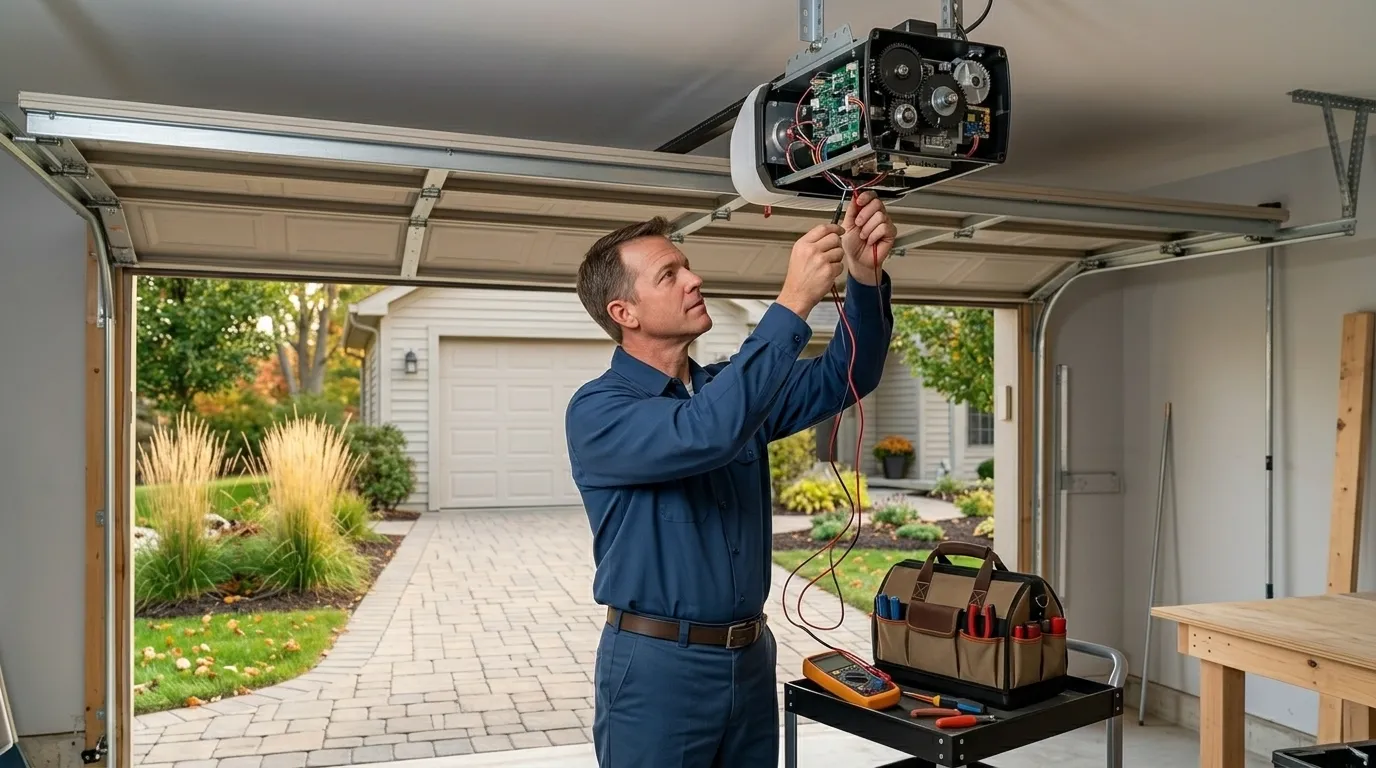
A technician tests the door under power and by hand and finds what actually failed.
03
Clear, up-front plan
You get the fix that’s needed and what drives the cost - before any work starts.
04
Repaired & tested
The repair is done, the door is set true and tested, and the work area left clean.
Serving San Marcos, TX - tell us what your door’s doing and we’ll take it from there.
Why do doors in Martindale need spring repair around the same age?
Most homes here were built close to 1989, so the original torsion springs were all installed around the same time and are wearing out on a similar clock. If your spring just failed, a neighbor's may not be far behind.
Do you have a branch in Martindale?
No. We're based in San Marcos, about 6 miles away, and drive out for the call. There's no separate depot here, just a scheduled visit like any other stop on the route.
Is it ever not worth repairing the spring?
If the track or anchor bracket has rusted through, a spring swap alone won't fix the door - that's a bigger job, and we'll tell you before we quote a spring repair that won't hold.
How fast do springs wear out on a 1980s-built house?
Torsion springs are typically rated for around 10,000 cycles. On an average household's usage, that works out to roughly 7-15 years, so a door from a house built in 1989 has likely already had at least one replacement, maybe two.
Ready to get your garage door sorted?
Tell us what it’s doing and where you are in San Marcos - we’ll take it from there.