What It Costs
We don't have a published price list to hand you here, and quoting a number without seeing the door is a good way to lowball or overcharge somebody. What we can tell you is what drives the number: whether it's one spring or two, whether the door is a standard 7-footer common in Kyle's post-2000 construction or a taller custom size, and whether the drums, cables, or bearings went with the spring when it broke.
Kyle's median household income sits at $89,645, noticeably above the $80,830 median across the broader service area, and newer subdivisions here tend to run heavier doors - insulated steel, sometimes with windows - which need a spring rated for more weight than the lighter uninsulated doors common on older housing stock elsewhere. That's not a cost we can put a dollar figure on without knowing your door, but it is a real difference between Kyle jobs and older-neighborhood jobs.
One honest limitation: if your opener motor is also failing, or the track is bent from someone trying to force the door with a broken spring, that adds to the visit. We'll always separate the spring cost from anything else before we start.
Parts We Carry
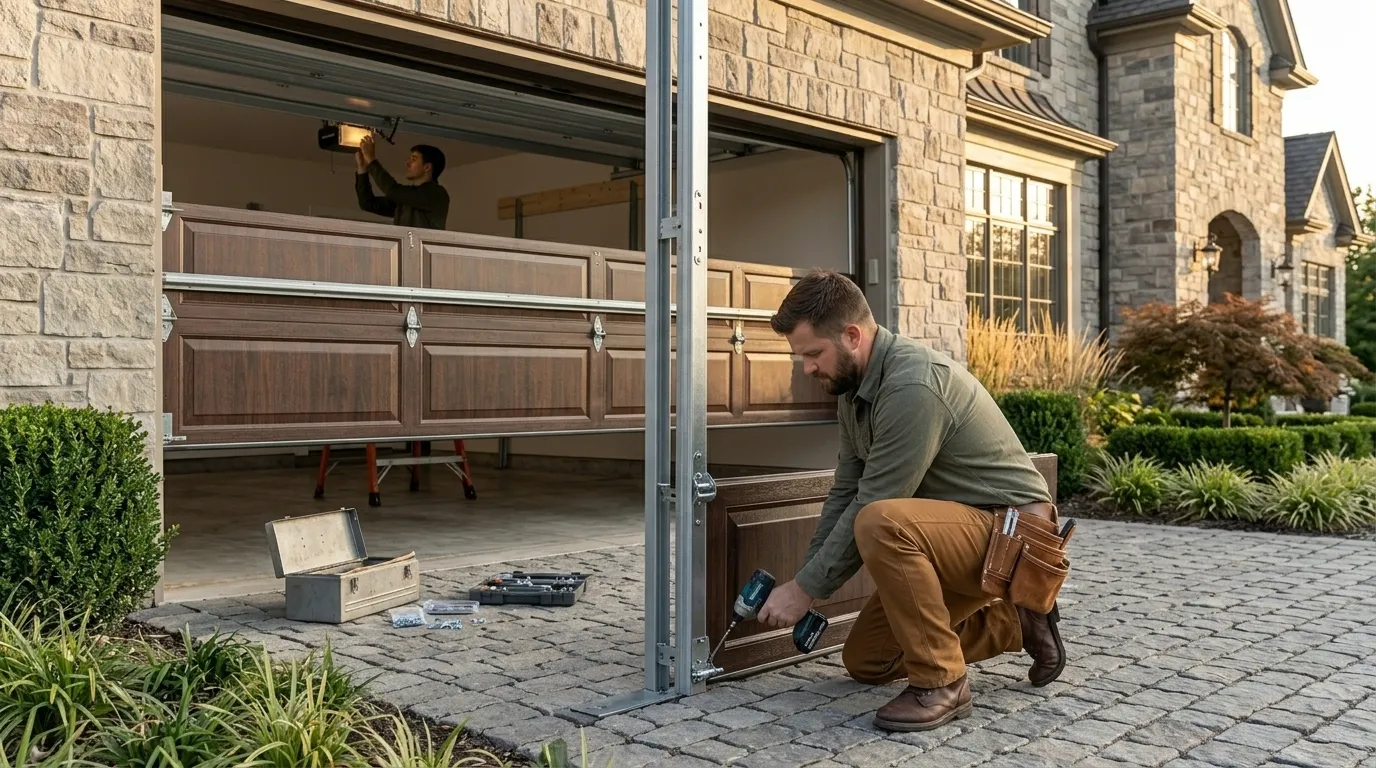
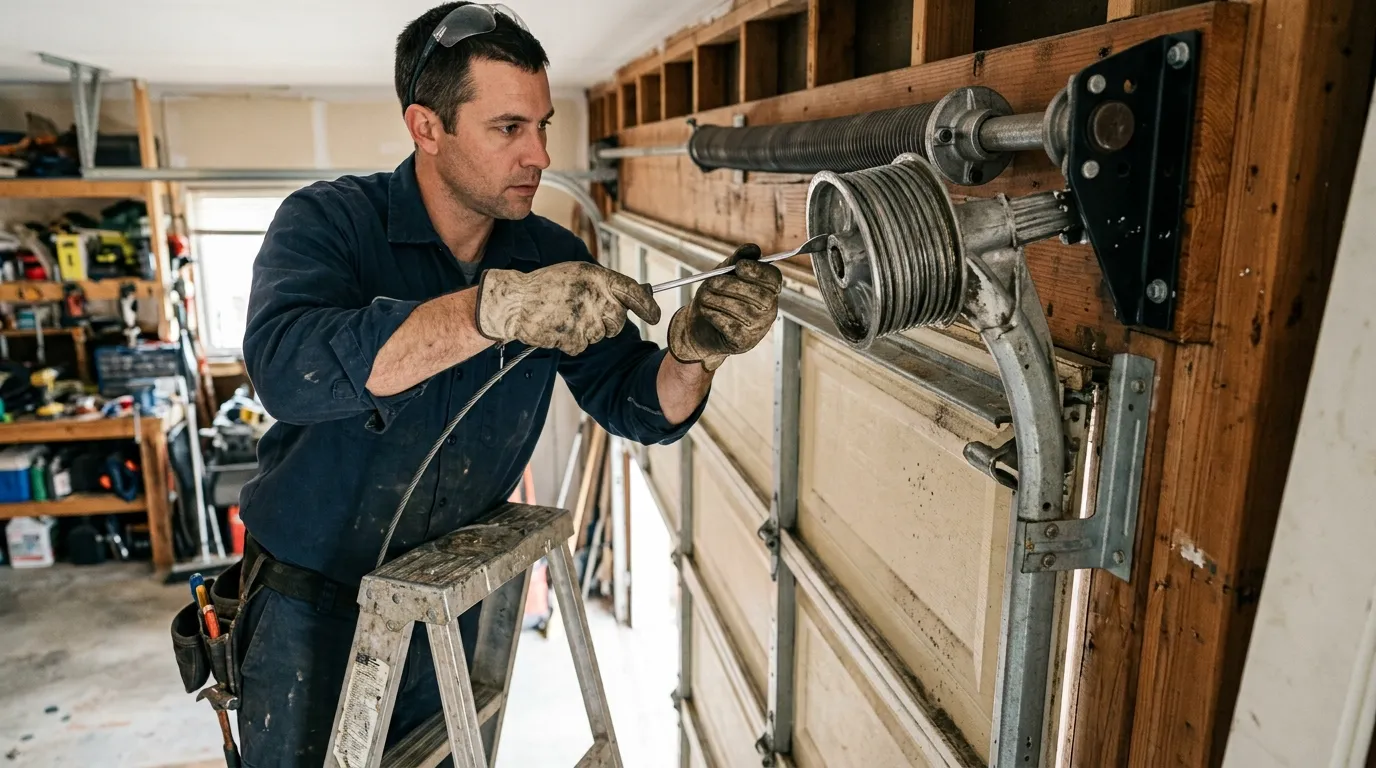
For Kyle, most of the stock we bring matches houses built in the 1990s-through-2010s range, since that's what the area is mostly made of: dual torsion springs sized for standard steel sectional doors, high-cycle springs for the heavier insulated panels common in newer construction, and the drums and end bearings that usually fail alongside a spring on a door that's been running for a decade or more.
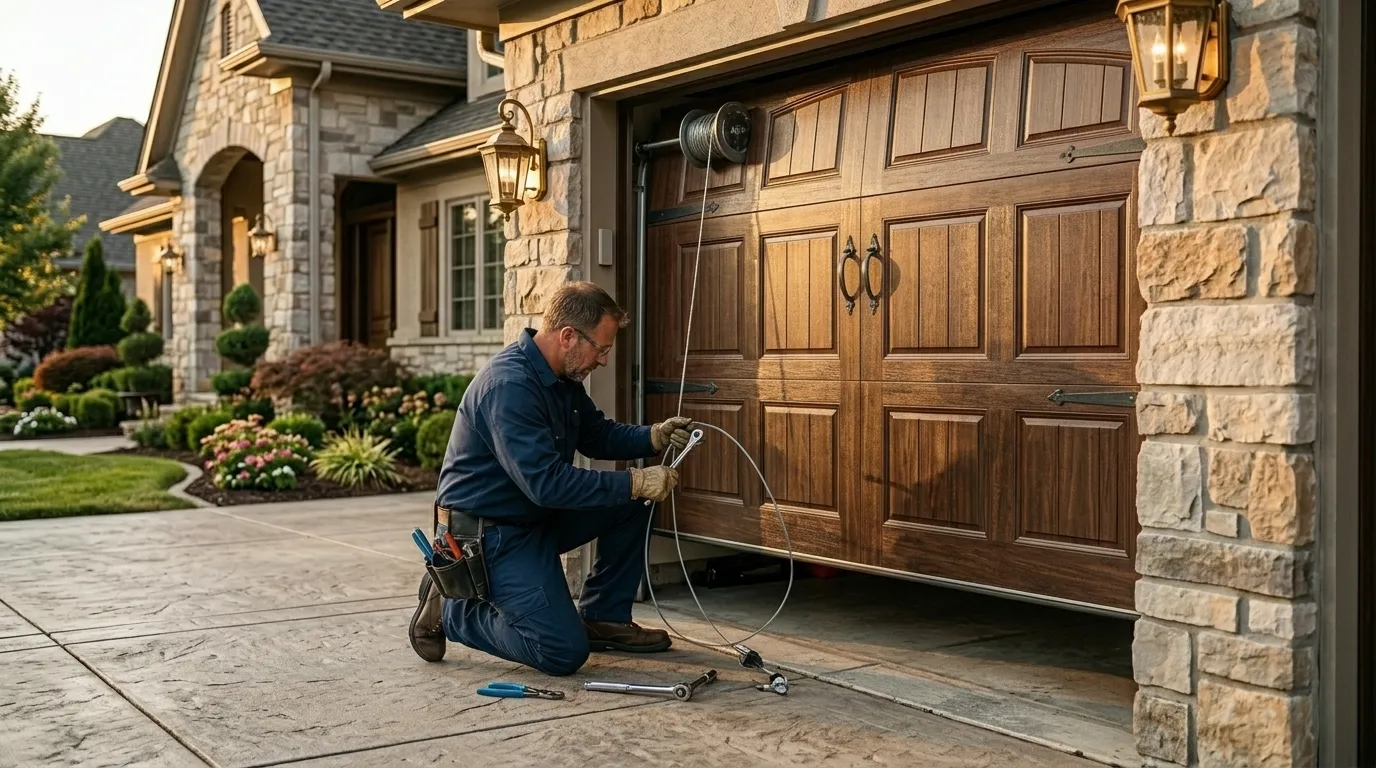
We carry fewer of the old-style extension springs and stretchy safety cables that you'd find on a house built before torsion setups became standard, because that hardware is rare in Kyle's newer stock. If your house is one of the older ones nearby - say closer to the wider area's 1996 median build year rather than Kyle's own 2009 - tell us on the call, since that changes what rides on the truck.
The climate here is mild with occasional freeze conditions, which is easier on springs than a harsh freeze-thaw climate, but it's not zero wear - temperature swings still stiffen and fatigue steel over years of cycles, same as anywhere else in the region.